Wallex Exchange · 2021–22
Pump
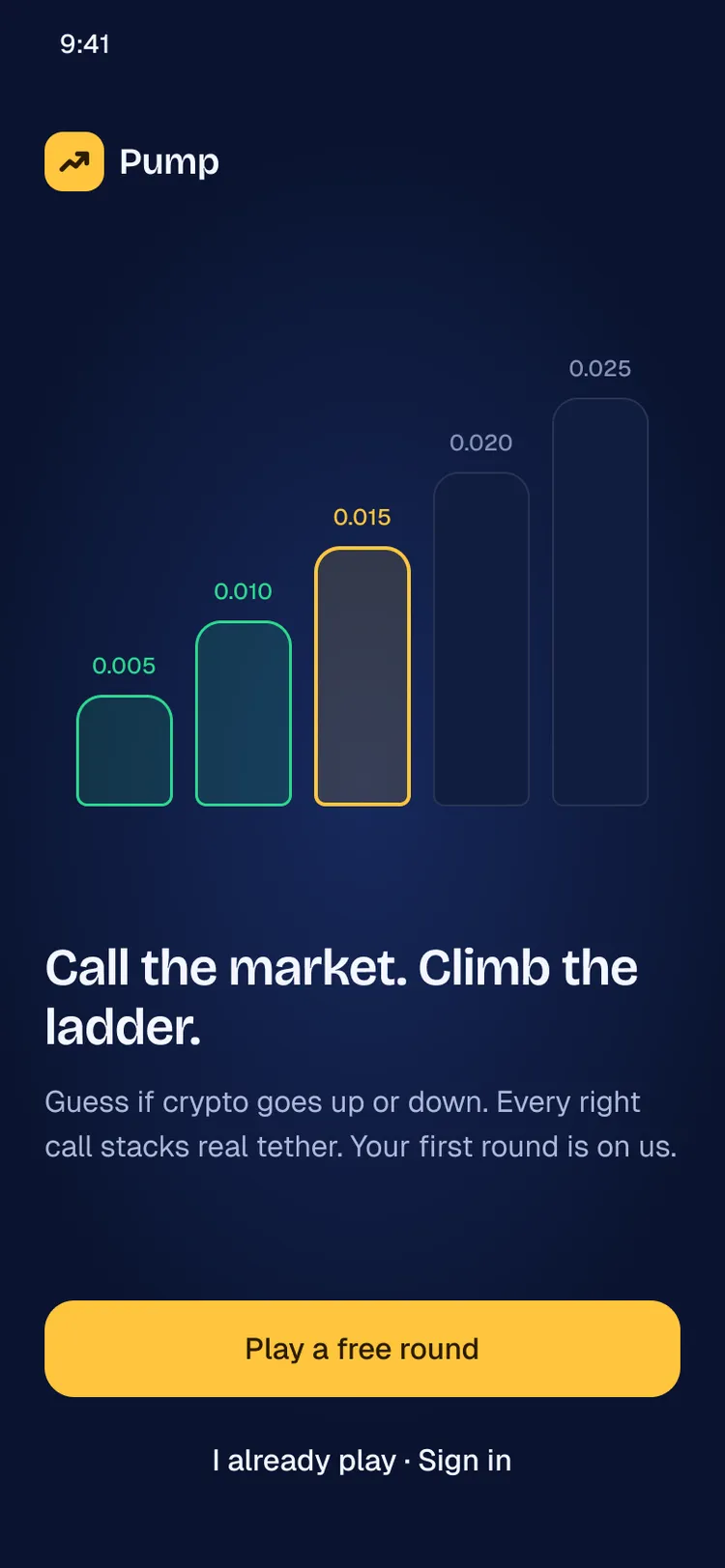
A 30-second game that lets people feel how crypto moves without risking their own money: call Ethereum up or down, climb a ladder, and win real tether.
1M+
new users came through Pump Game, as Wallex reports
30+
people interviewed over two weeks
30 s
per call, up or down
00 / Summary
- Role
- Product designer
- When
- 2021–22
- Platform
- Mobile web app · Persian, right to left
- Method
- User interviews, usability tests, gamification
- Colour
- #1F2A6B
- Problem
- Many new Wallex users signed up and verified their identity, then never made a trade. Some found the tools too complicated; others were curious but didn't trust crypto with real money.
- What I did
- With one other designer, turned the idea into a game: a free first round, a ladder of 30-second calls on Ethereum, tickets instead of stakes, missions and invites to earn more, and a withdrawal that brings players into Wallex.
- Result
- Launched in 2025 as Pump Game. Wallex reports more than a million new users came through it.
01Context
Signed up, verified, never traded.
Wallex had a puzzle. Many new users went through sign-up and identity checks, then never made a single trade, and some left. We interviewed more than 30 people over two weeks to find out why.
Two groups came out of it. Some found the trading tools too complicated. Others were curious but didn’t trust crypto. Under both sat the same three fears: losing real money in a market they didn’t understand, crypto feeling too risky, and not being able to see where their money goes. Before Wallex could ask anyone for money, it had to earn their trust. Both groups needed a safe place to learn by doing.
02The bet
Play first, pay never.
The question we worked from: how might people experience crypto trading without the fear of losing real money? Our answer was a game. You make a 30-second call on Ethereum, up or down, with nothing of your own at stake. If people could feel how the market moves without risk, they would come to Wallex when they were ready.
The path had three steps. Learn: short missions about crypto and Wallex earn tickets. Play: a ticket starts a run, and every right call climbs a step and grows the prize. Connect: to take the prize out, you withdraw it to a Wallex wallet.
03First version
It looked like another exchange screen.
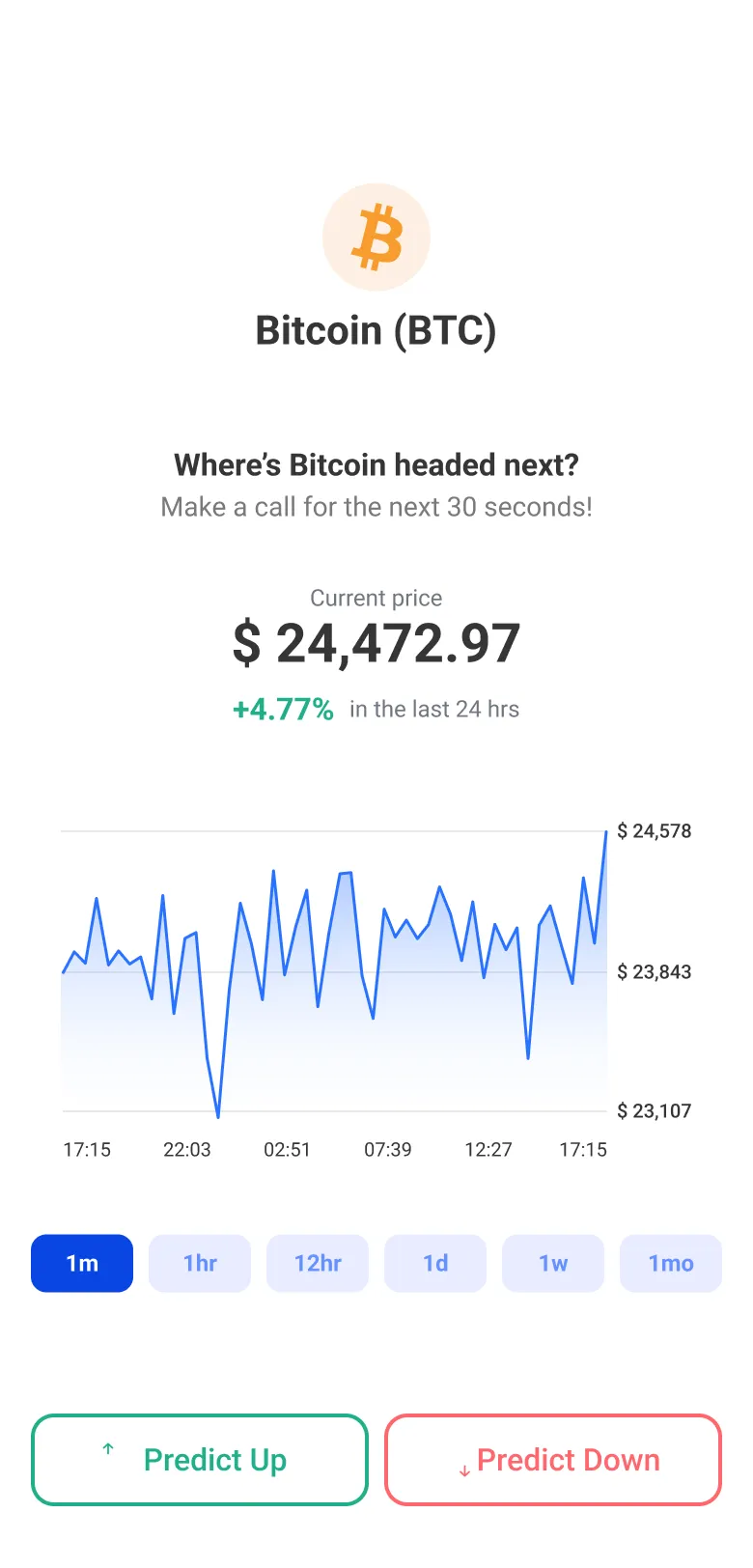
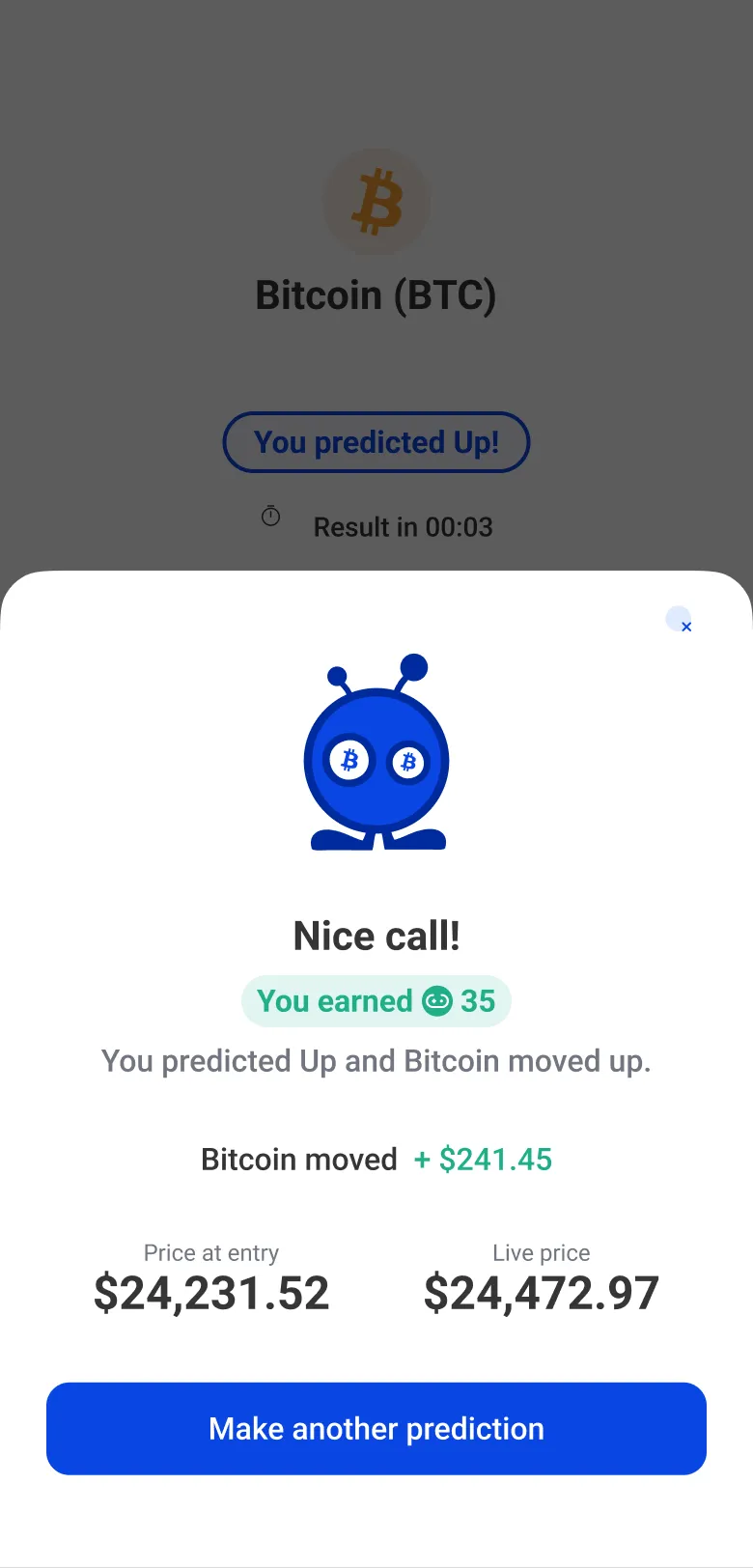
The first version was called Clinkoin. It followed Wallex’s design system, so it had light pages, a price chart with time ranges, two outline buttons, and its own coin, Clinks. Tests with players and a design review said the same thing: people wanted a game, not a trading screen. The chart and the buttons asked them to think like traders, which was exactly what scared them.

04From feature to game
A ladder, big buttons and a countdown.
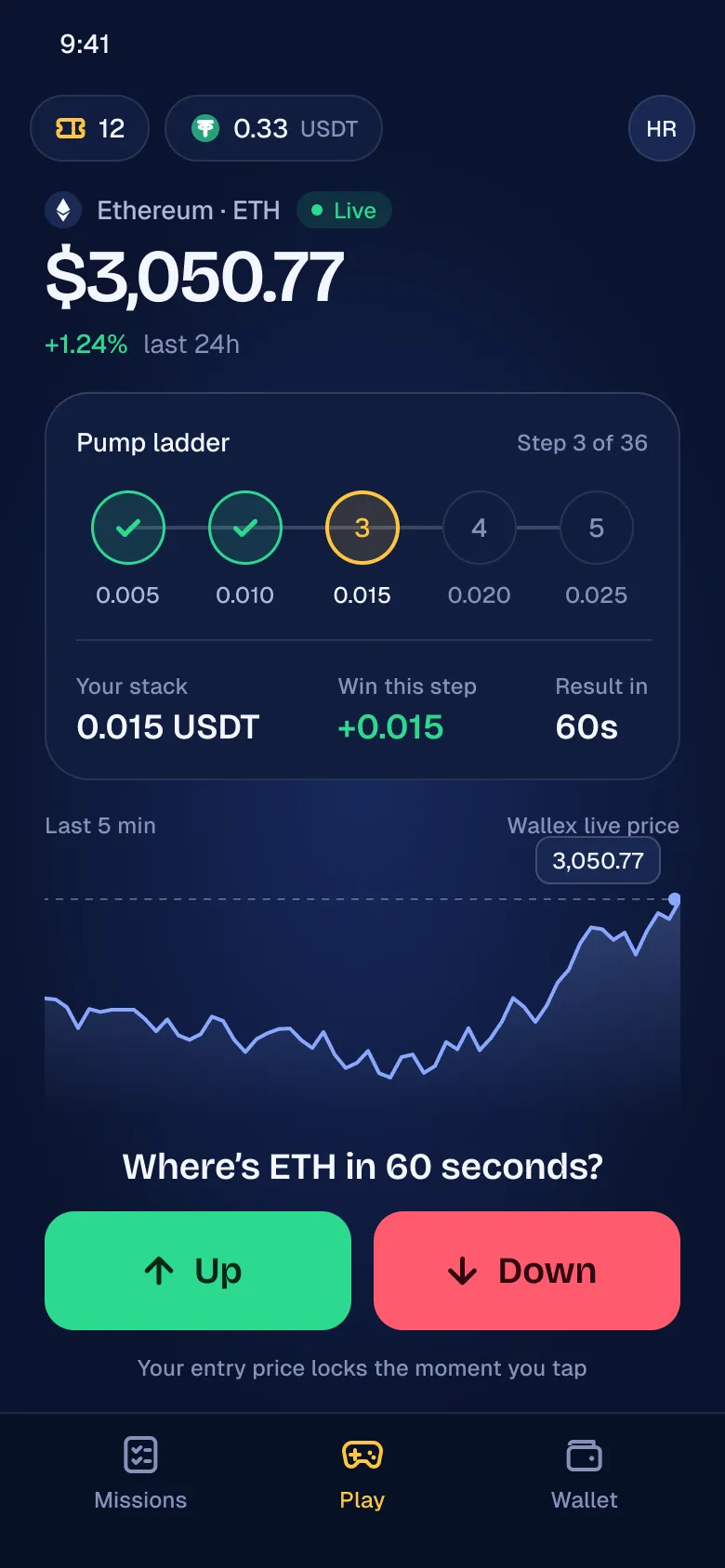
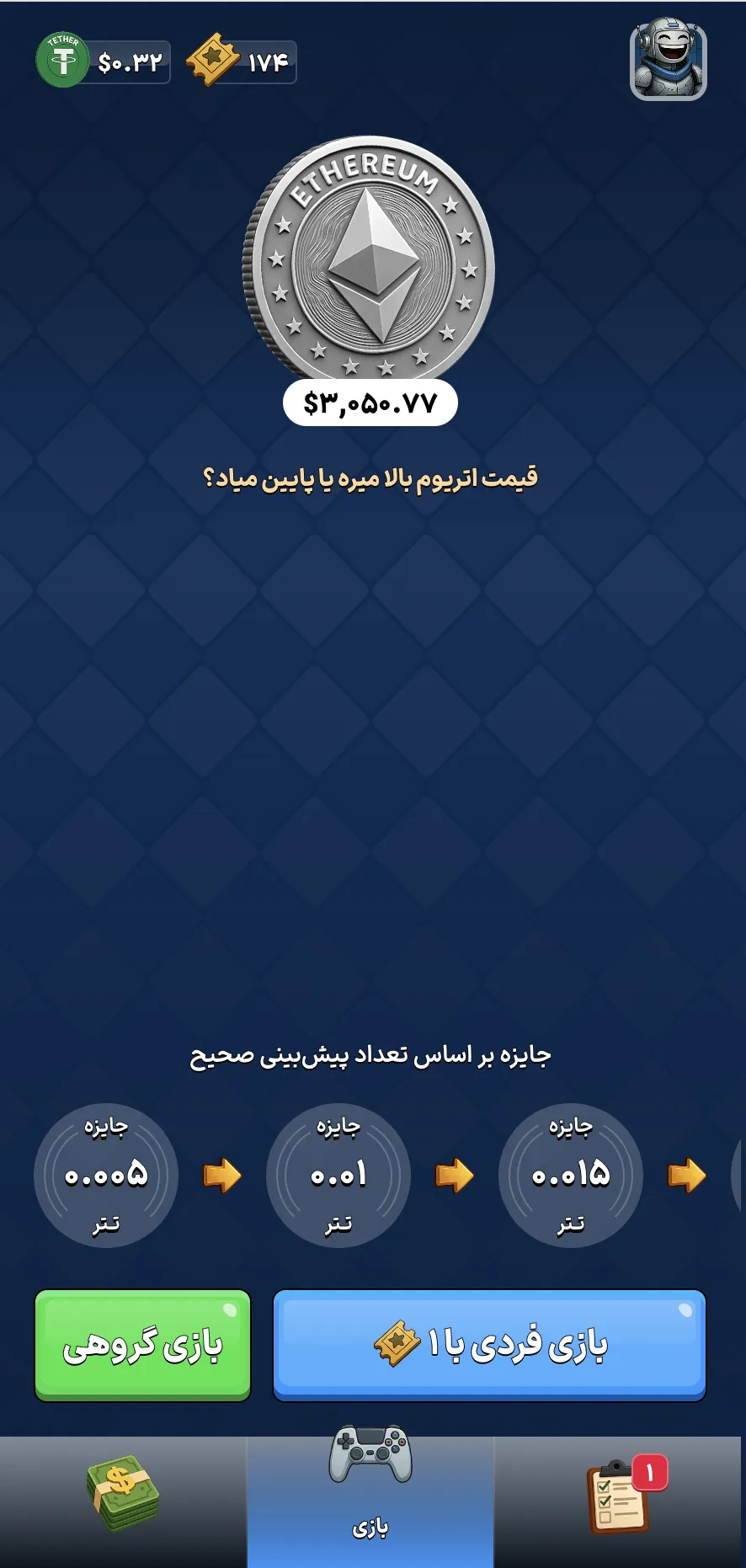
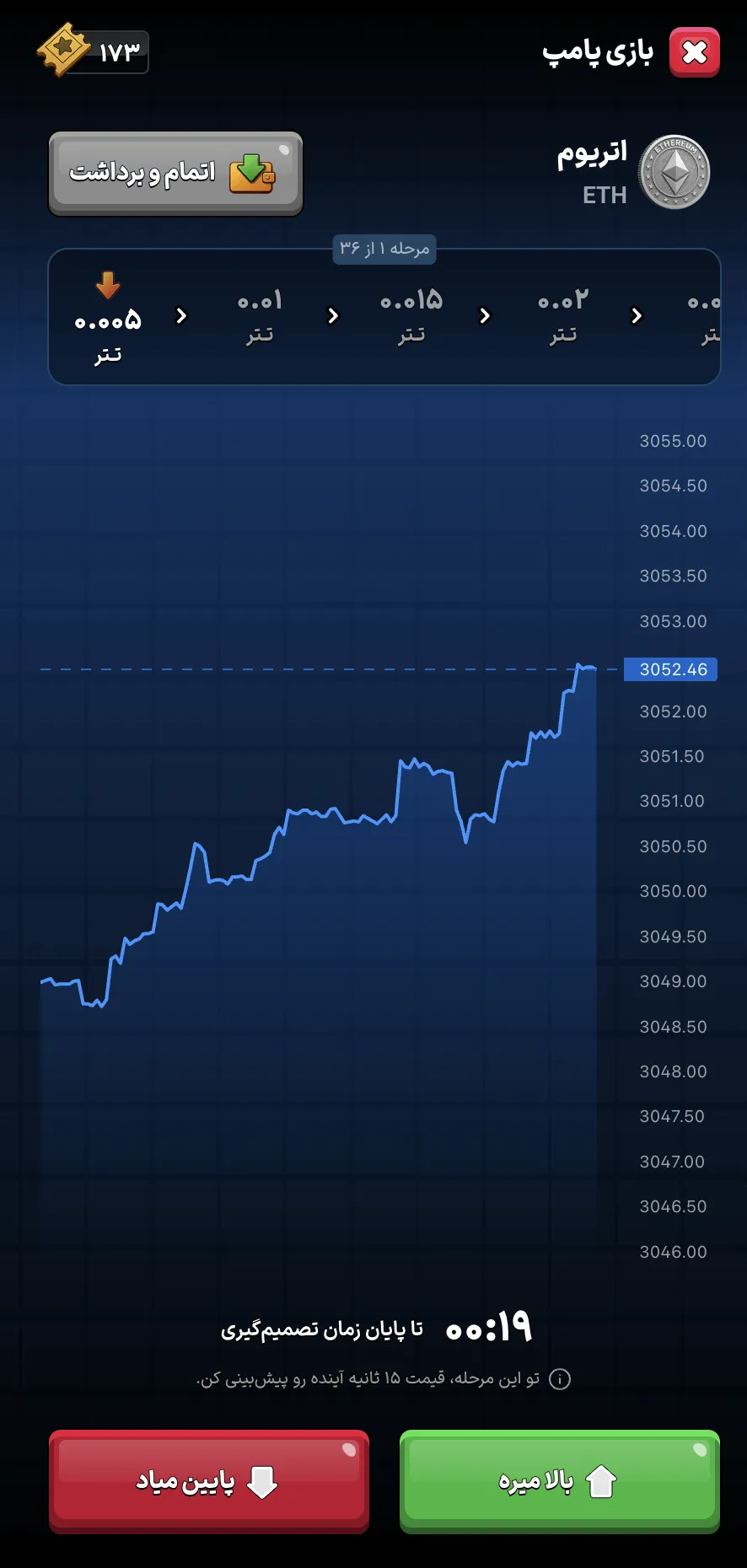
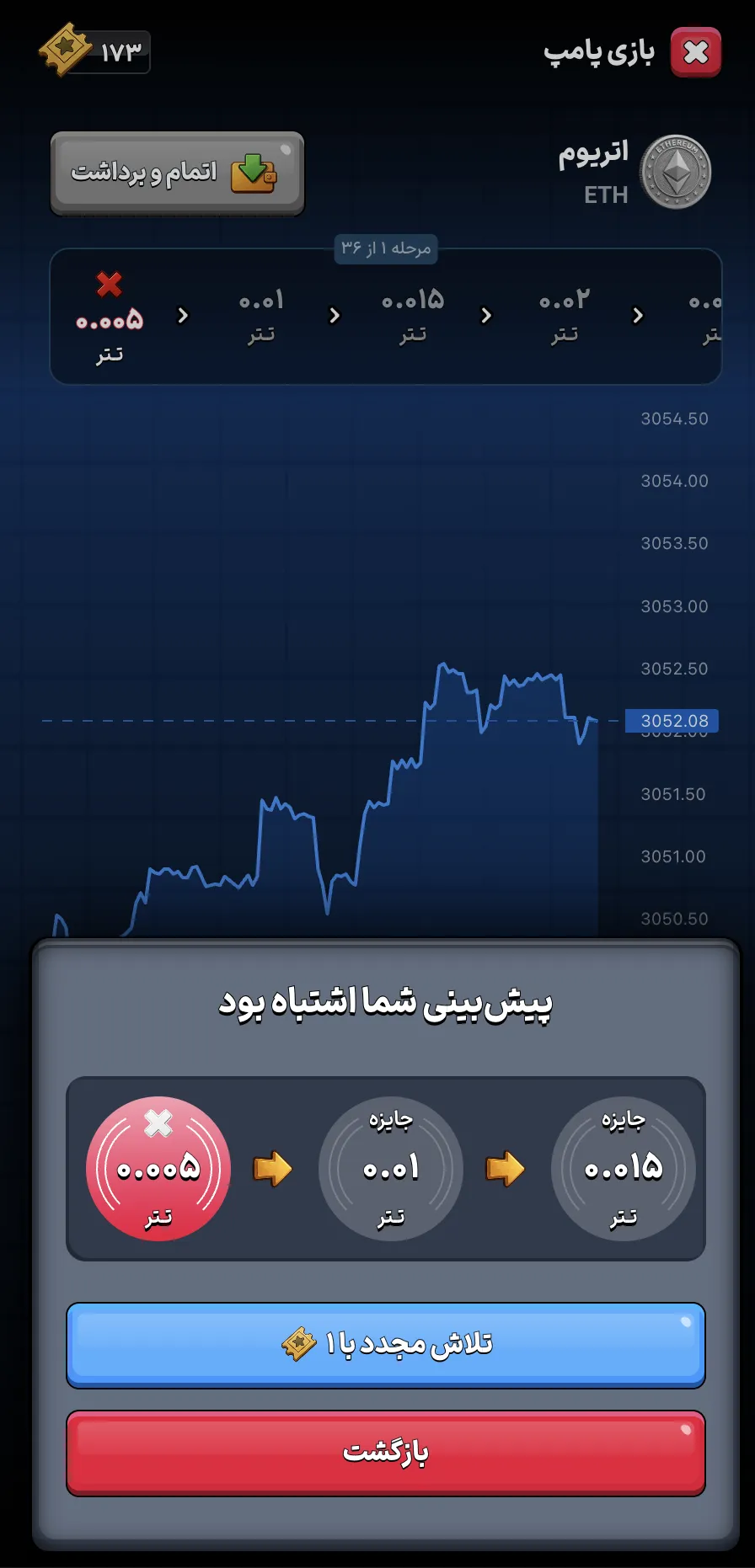
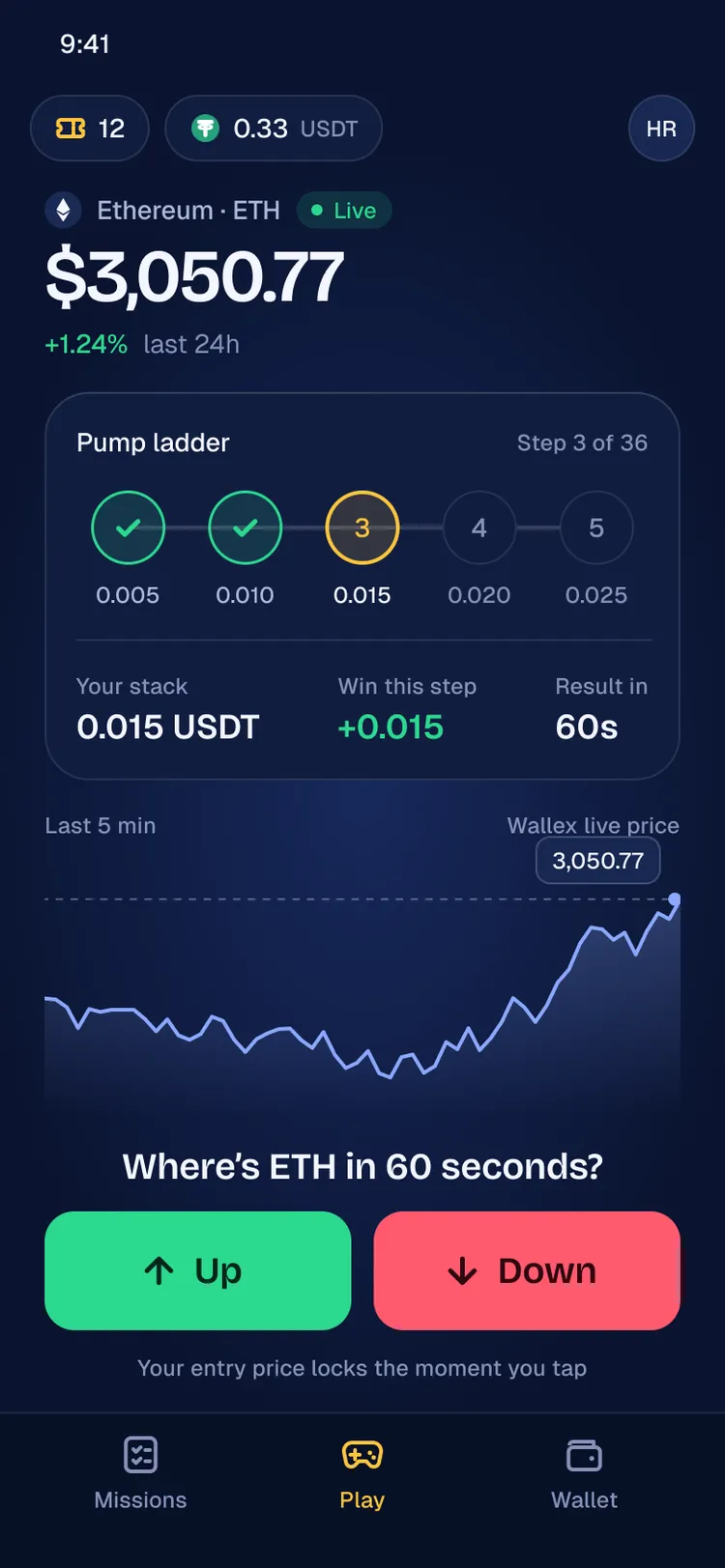
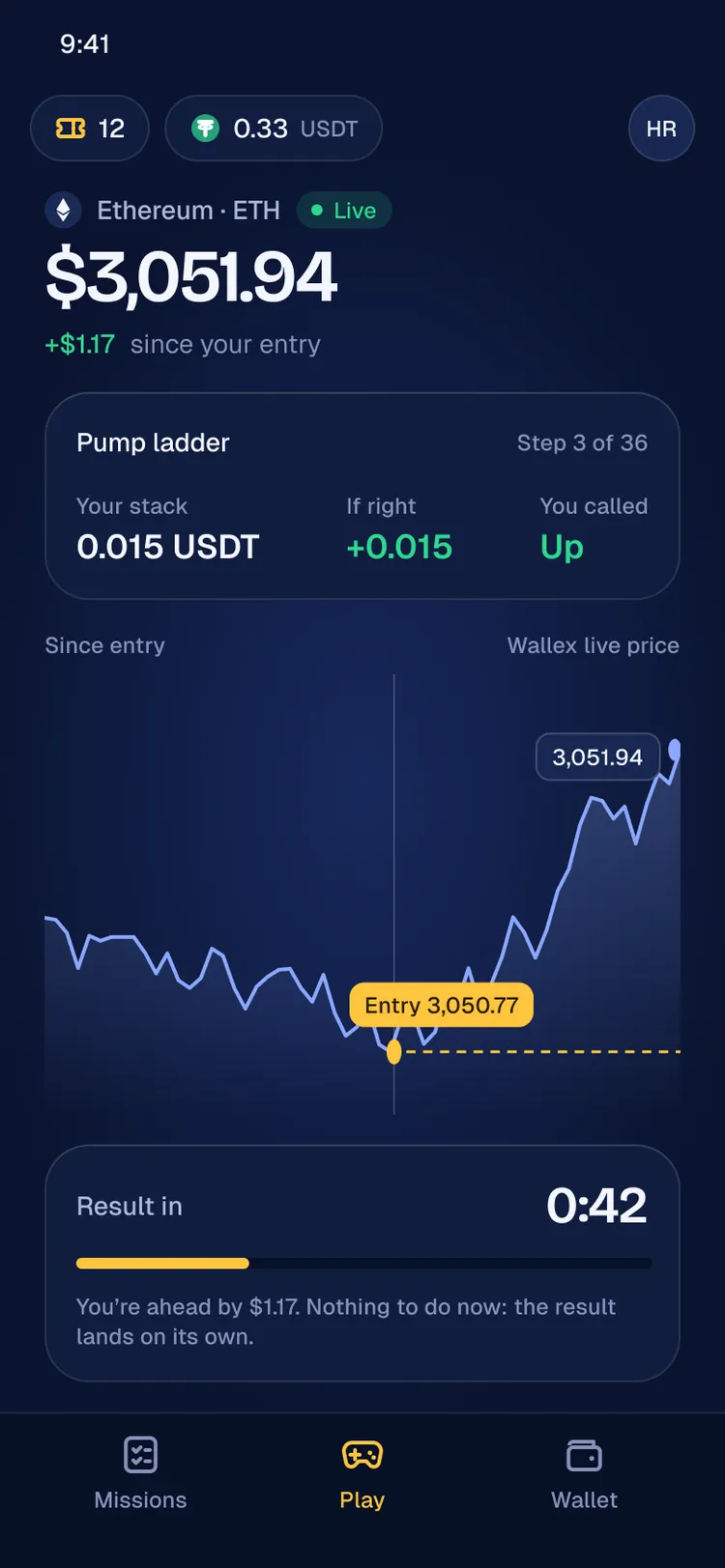
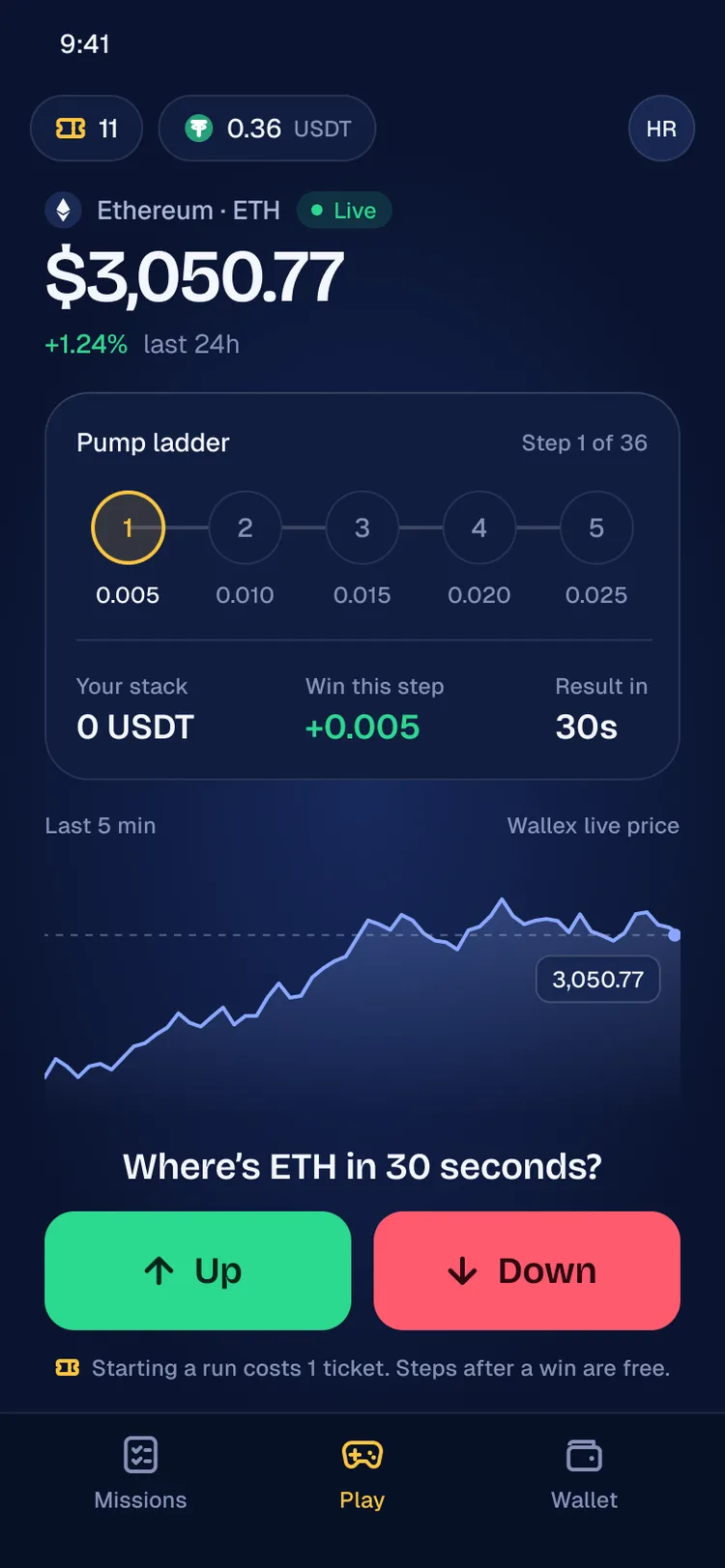
So we rebuilt it as a game, and named it Pump. Each right call climbs a step on a prize ladder that sits above the chart, so every call shows what it’s worth. Up and Down became large buttons that press down. While you wait, a countdown and a gold line at your entry price show at a glance whether you’re winning. Clinks went away: tickets are what you play with, and tether is what you win.
It went live in Persian, right to left.
05The ladder round
Every call shows what it’s worth.
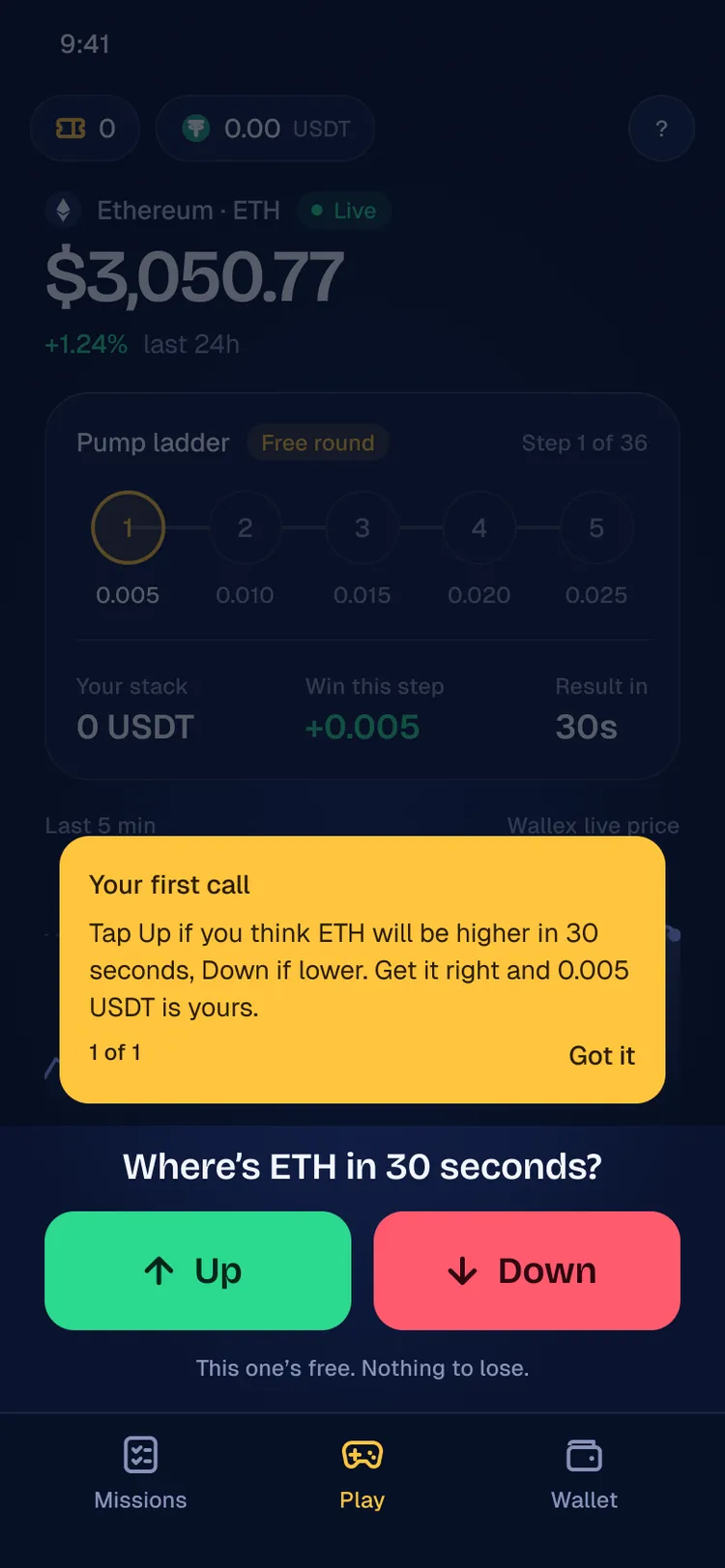
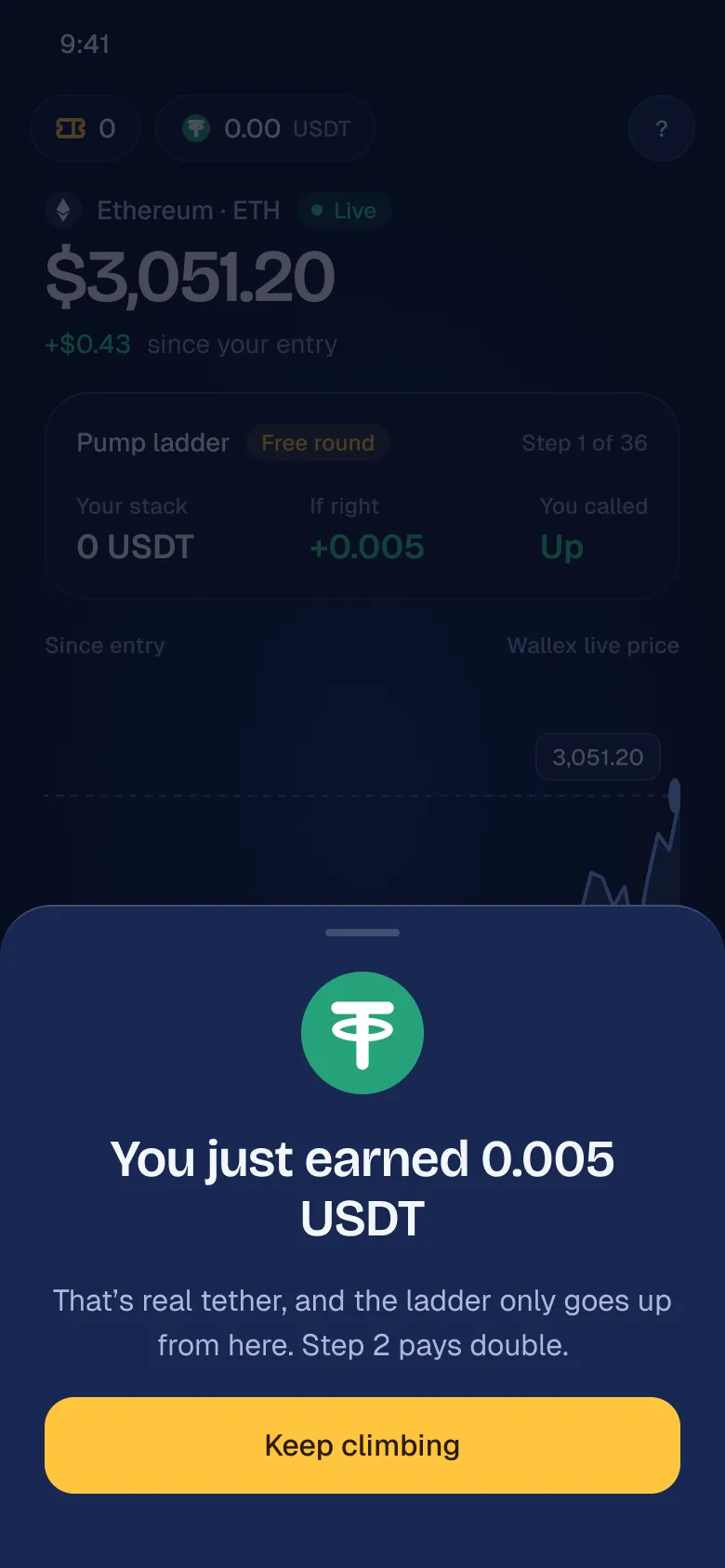
The round is the whole product, so it has the most care. Balances carry a unit and an icon, so tickets and tether are never just numbers. The ladder is the hero: your stack, what the next step pays, and what you called sit above the chart, so you know what’s at risk before you tap. The chart shows one honest five-minute window of the live Wallex price, with no time-range chips that mean nothing on a 30-second call. Green and red are kept for Up and Down; gold is the only other colour that asks for a tap.
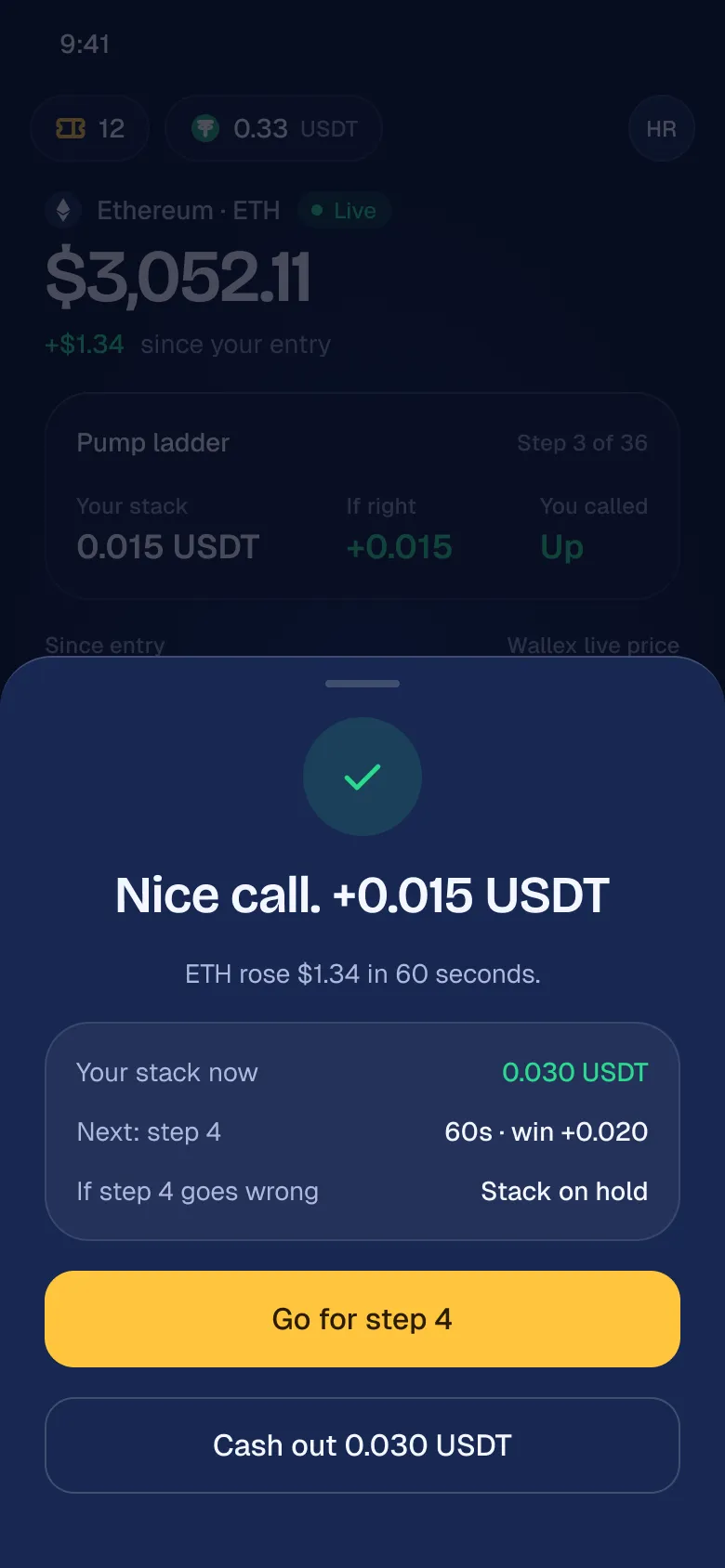
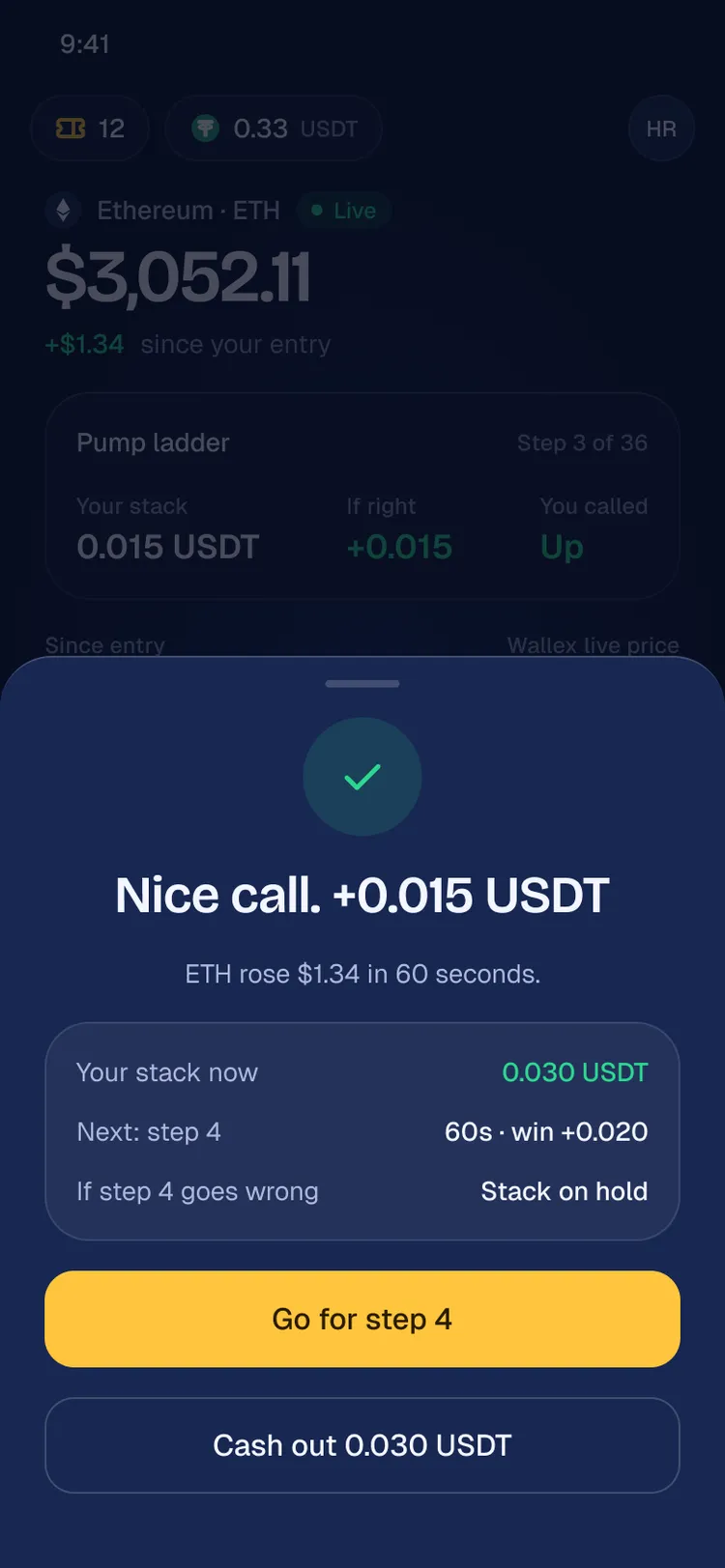
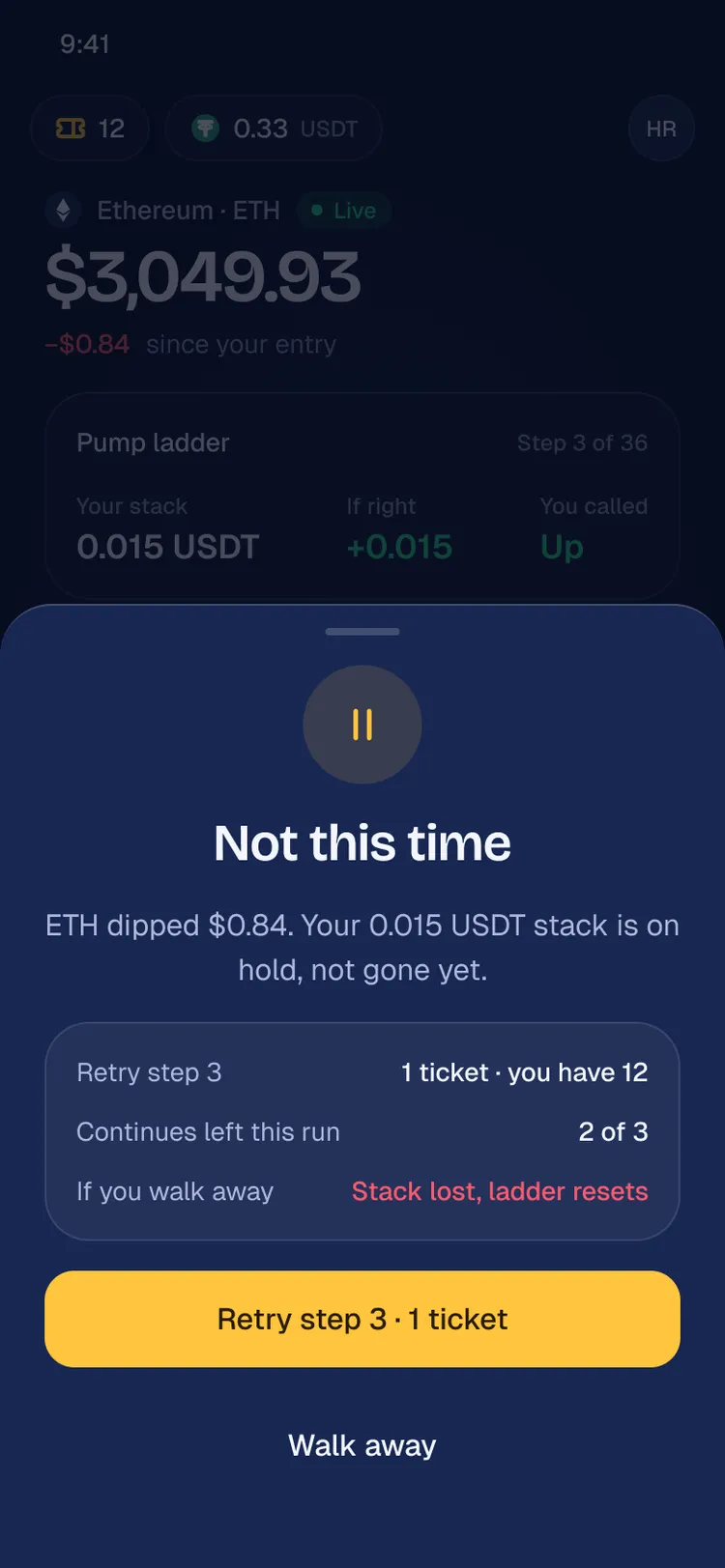
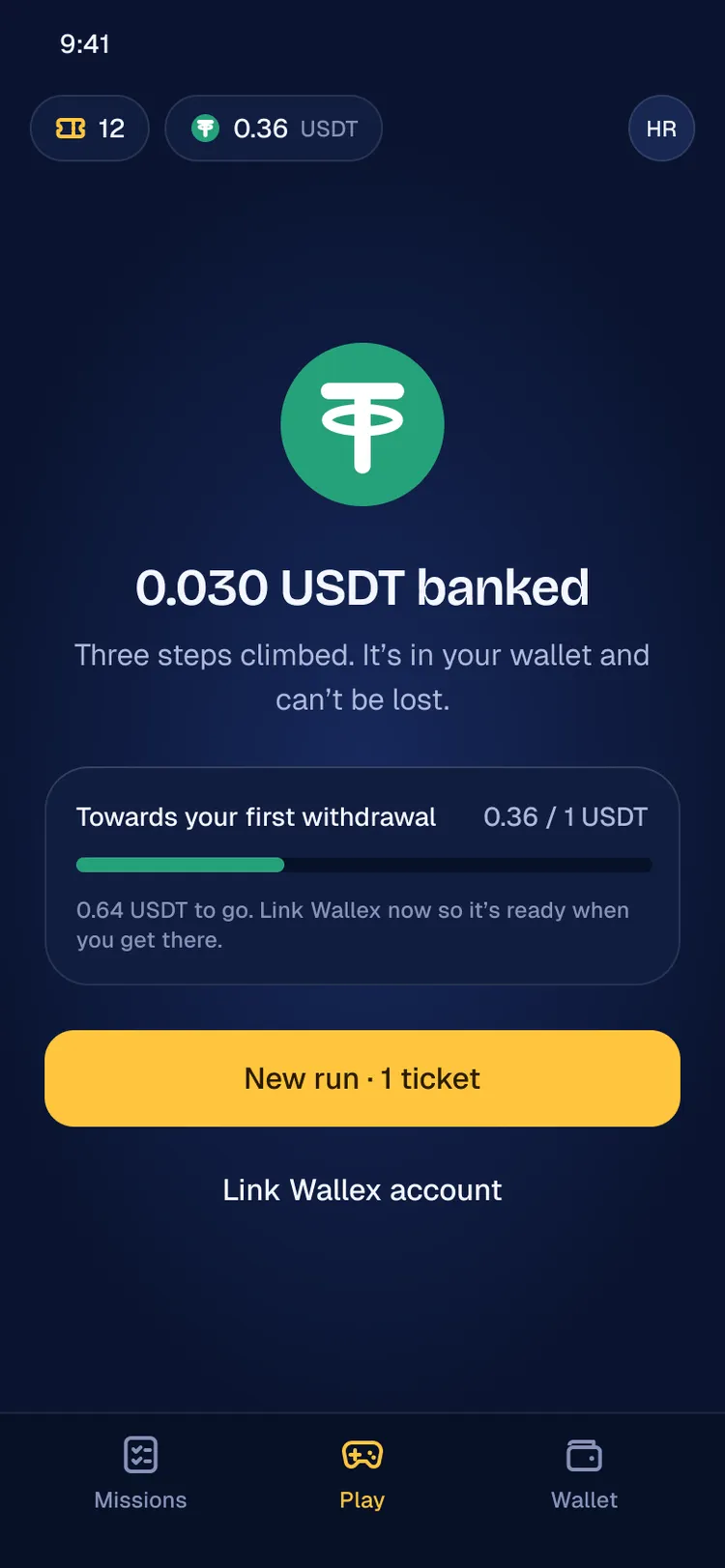
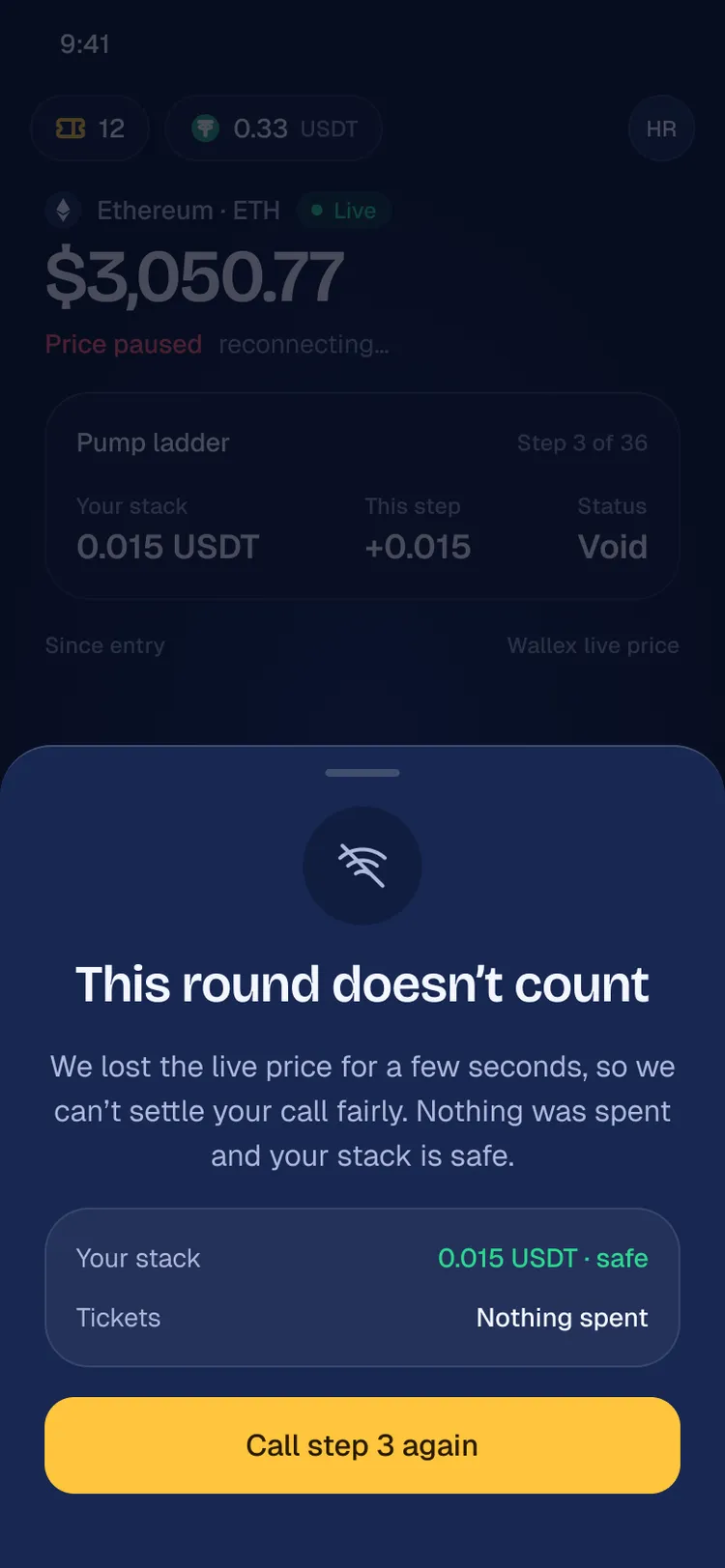
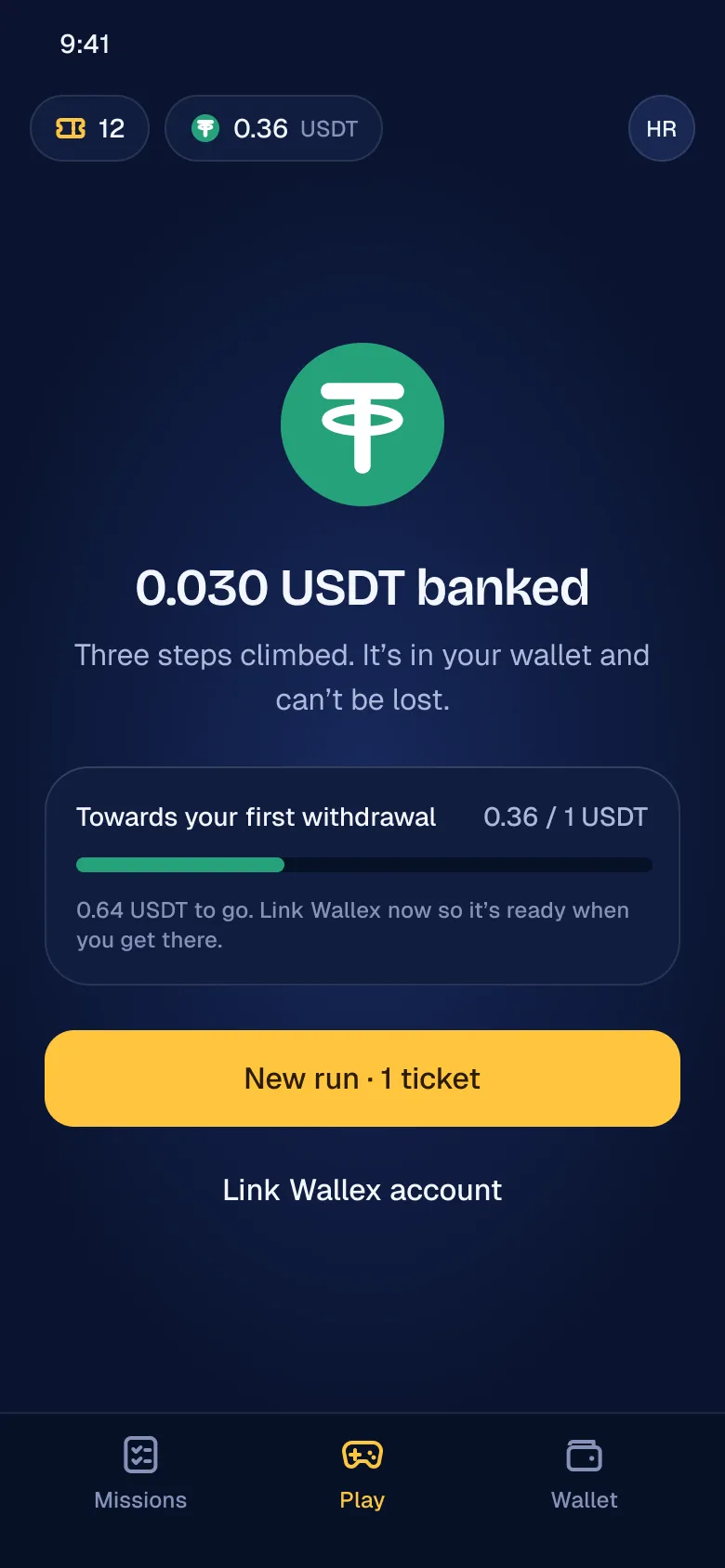
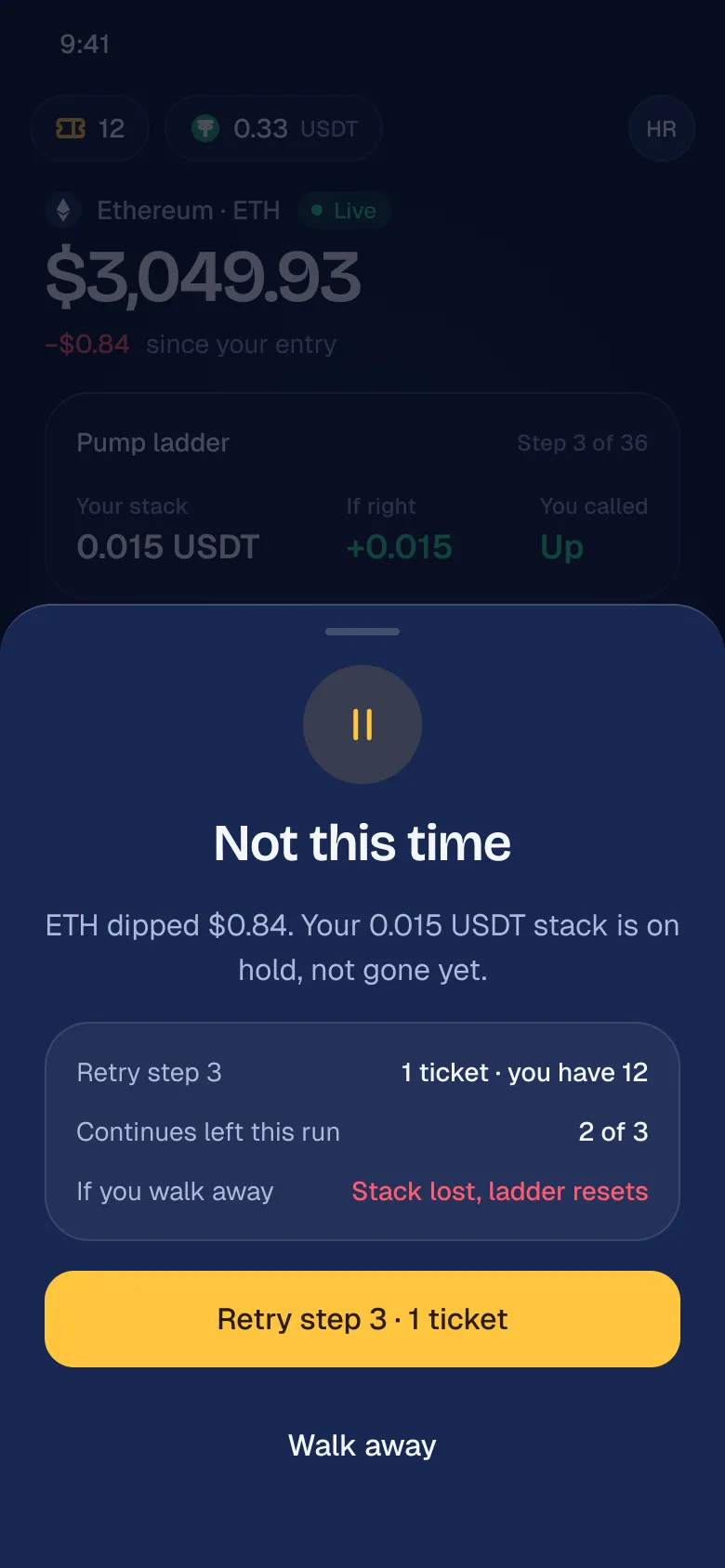
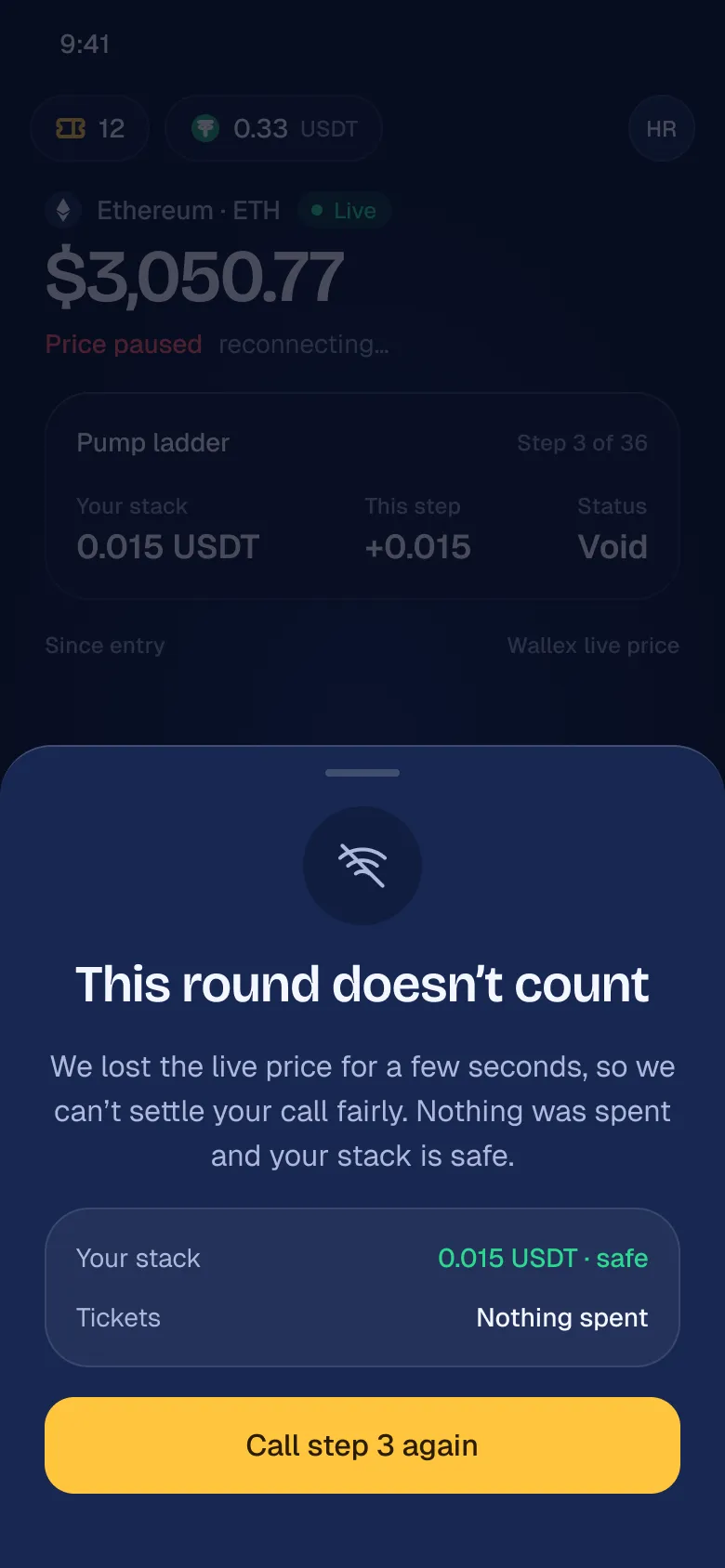
After a win the game asks the question that makes it a game: go for the next step, or cash out. Cashing out banks the tether, and banked means safe. A wrong call is a pause, not a punishment: your stack is on hold until a ticket retries the step, and only walking away resets the ladder. And if the price feed drops mid-round, the round says it doesn’t count and that nothing was spent.
06First run
Celebrate first, ask later.
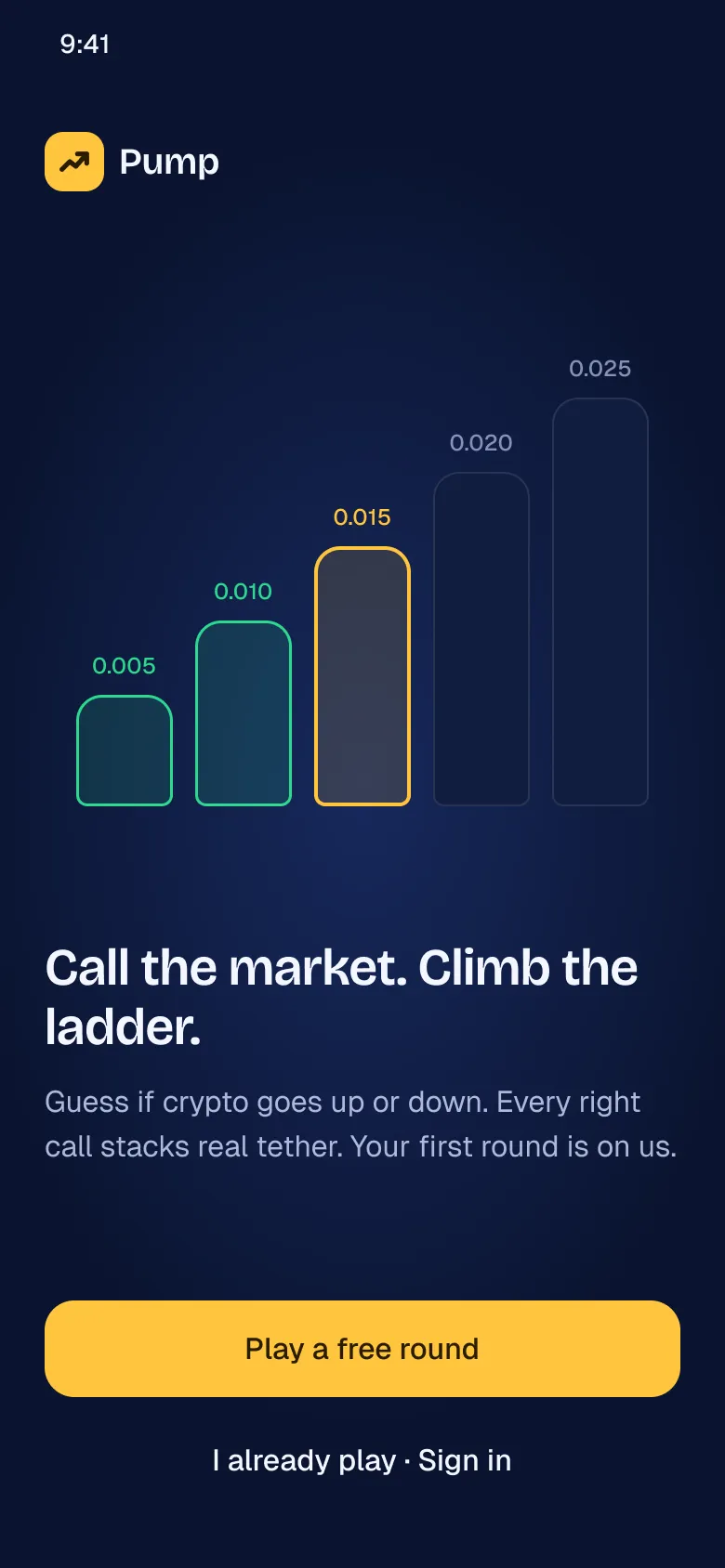
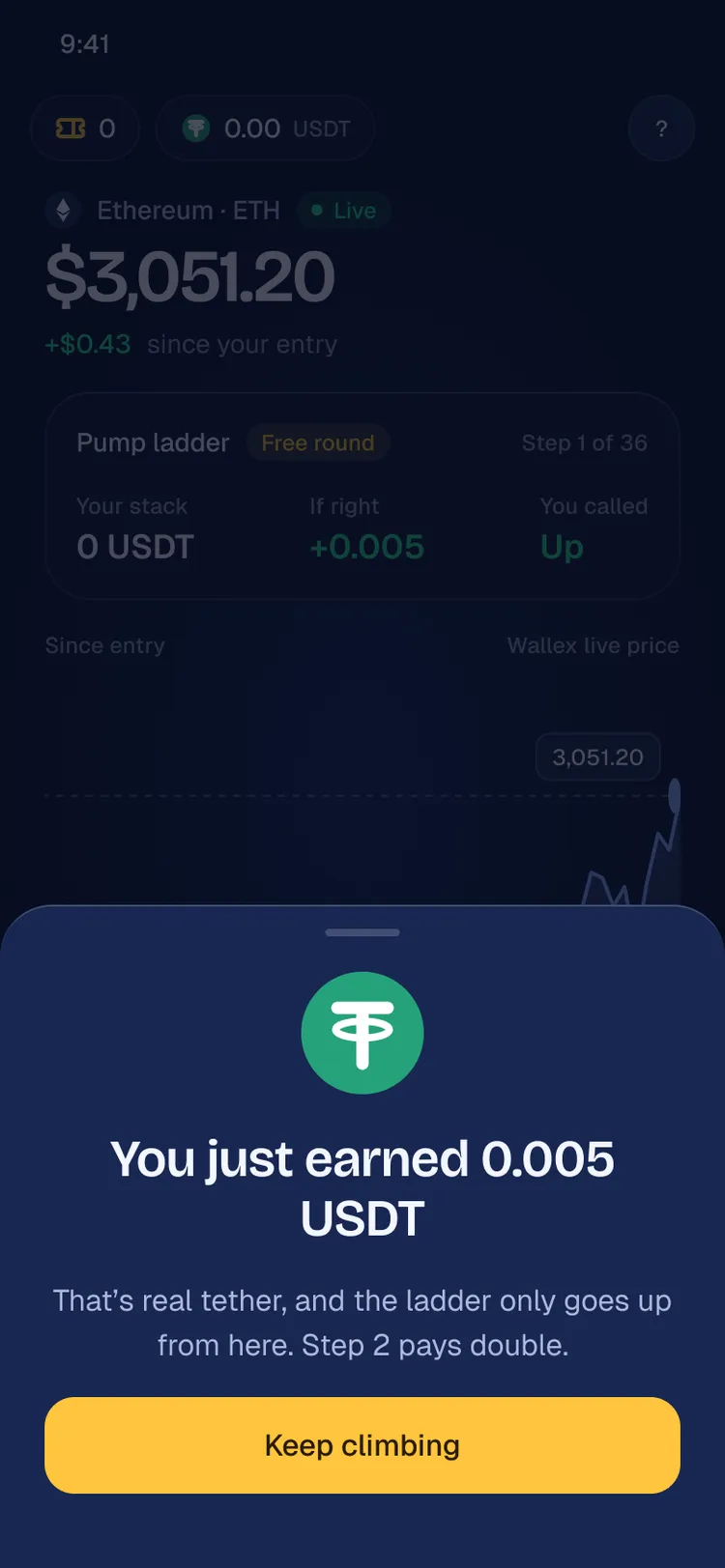
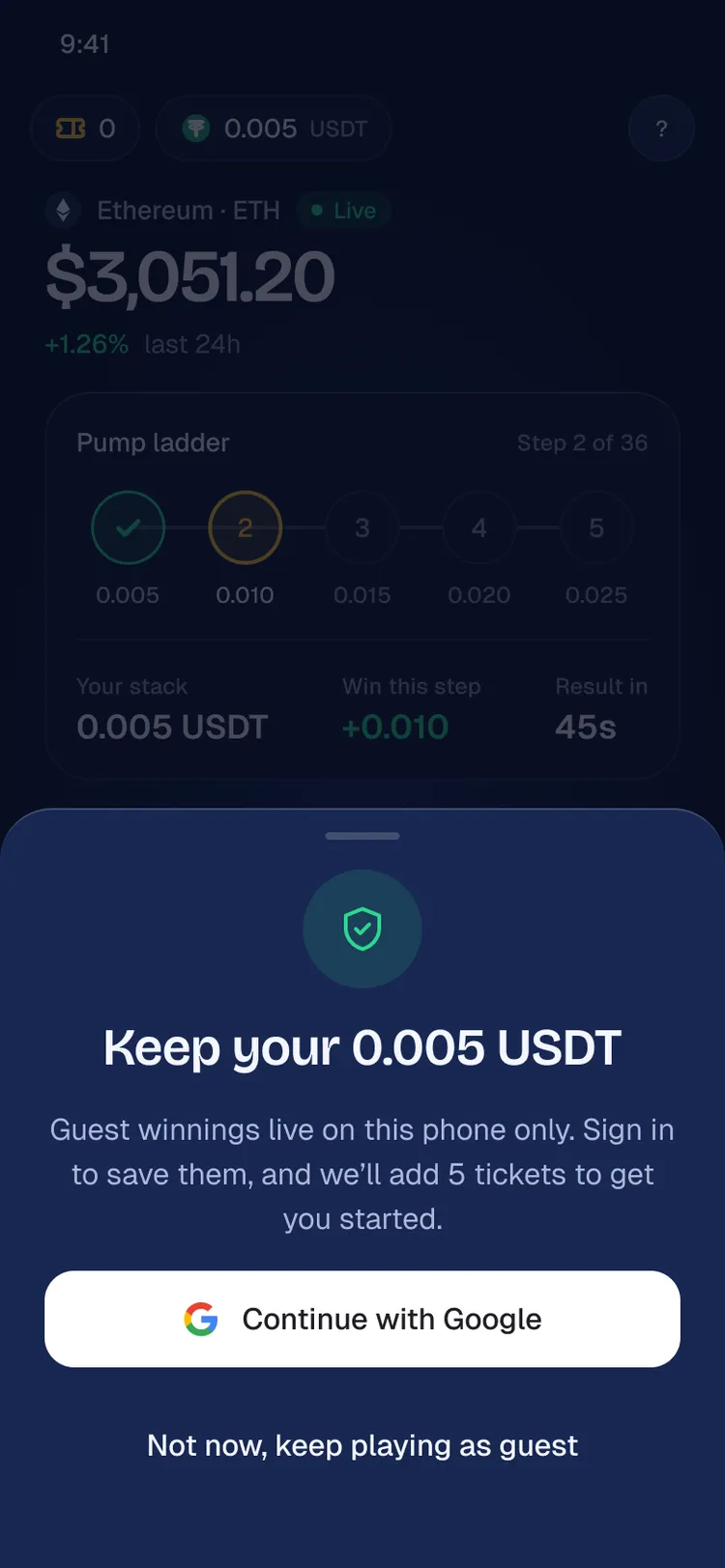
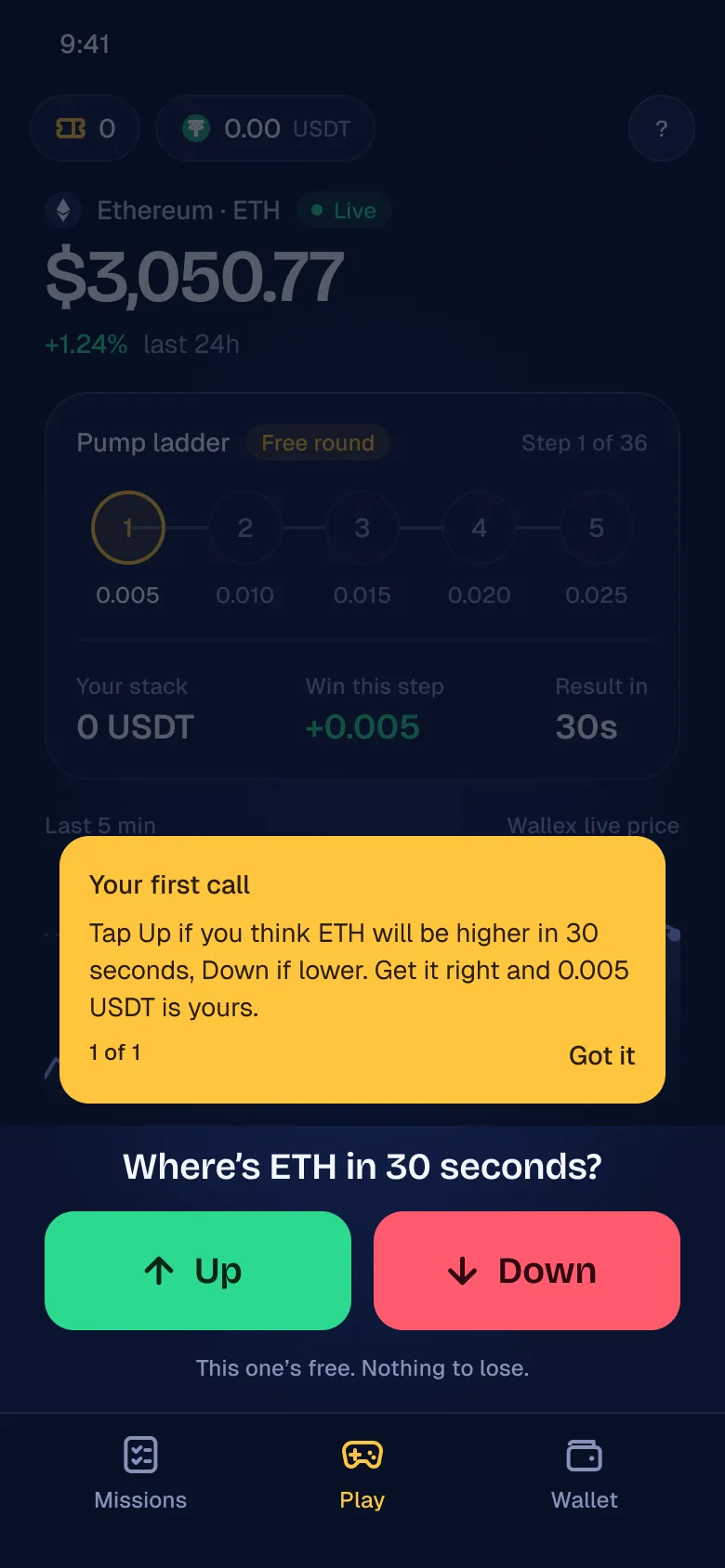
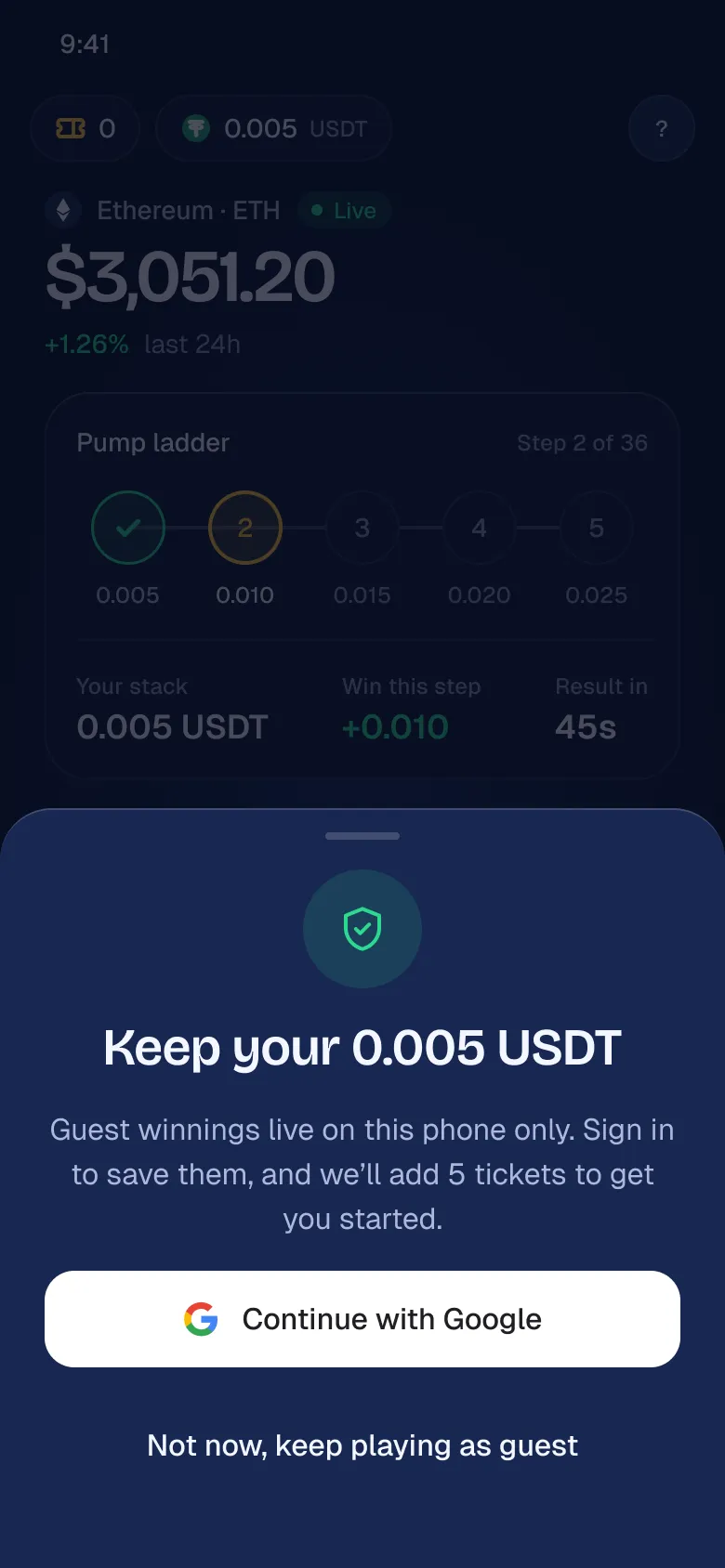
A new player gets one screen and one button: play a free round. There’s no tutorial carousel. The first round teaches in the real screen, with one coach mark that points at the only thing to do, and zero balances that make it plain you can’t lose anything yet. The win gets its own moment, with no sign-in request attached. Only after it, when there’s something worth keeping, do we ask you to sign in, and “not now” never blocks play.
07Tickets and missions
Tickets set the pace, not money.
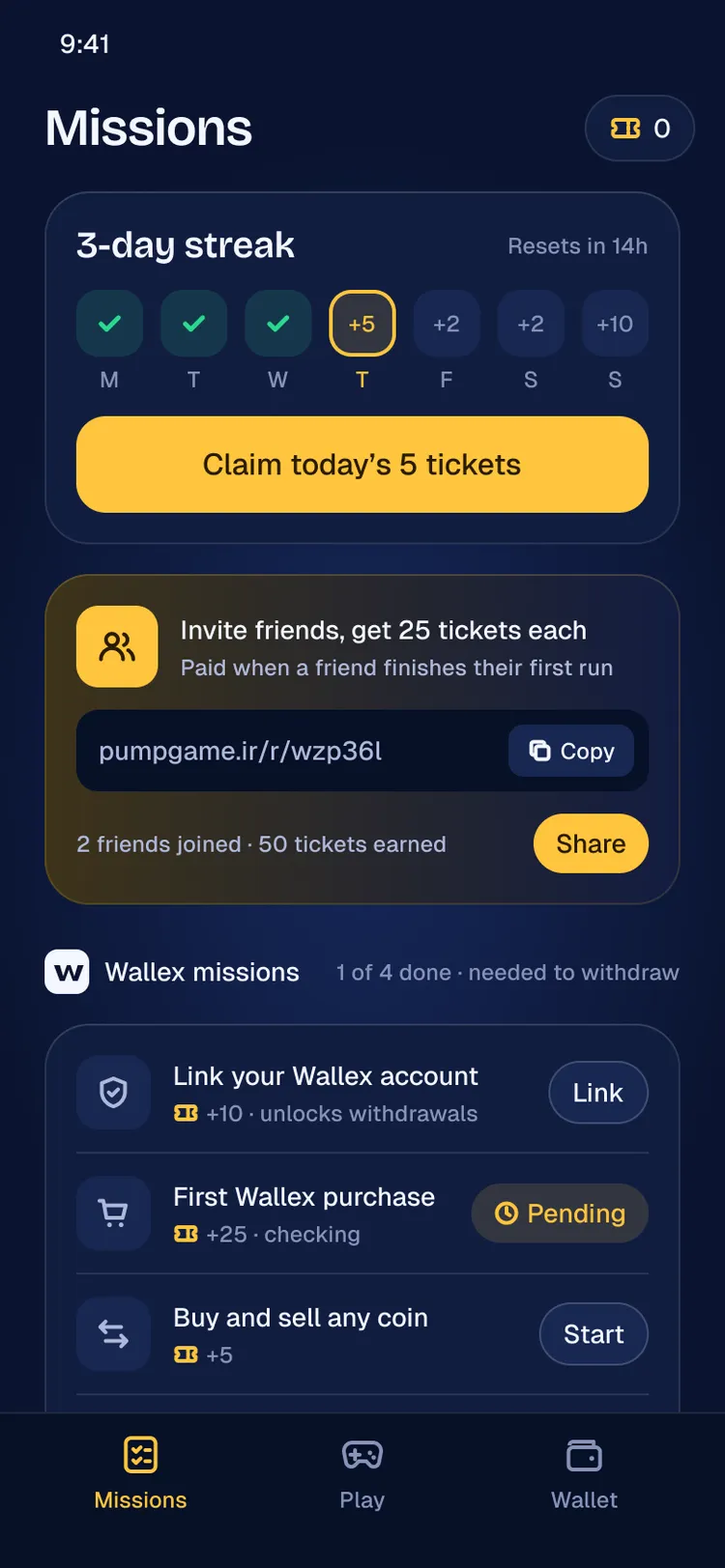
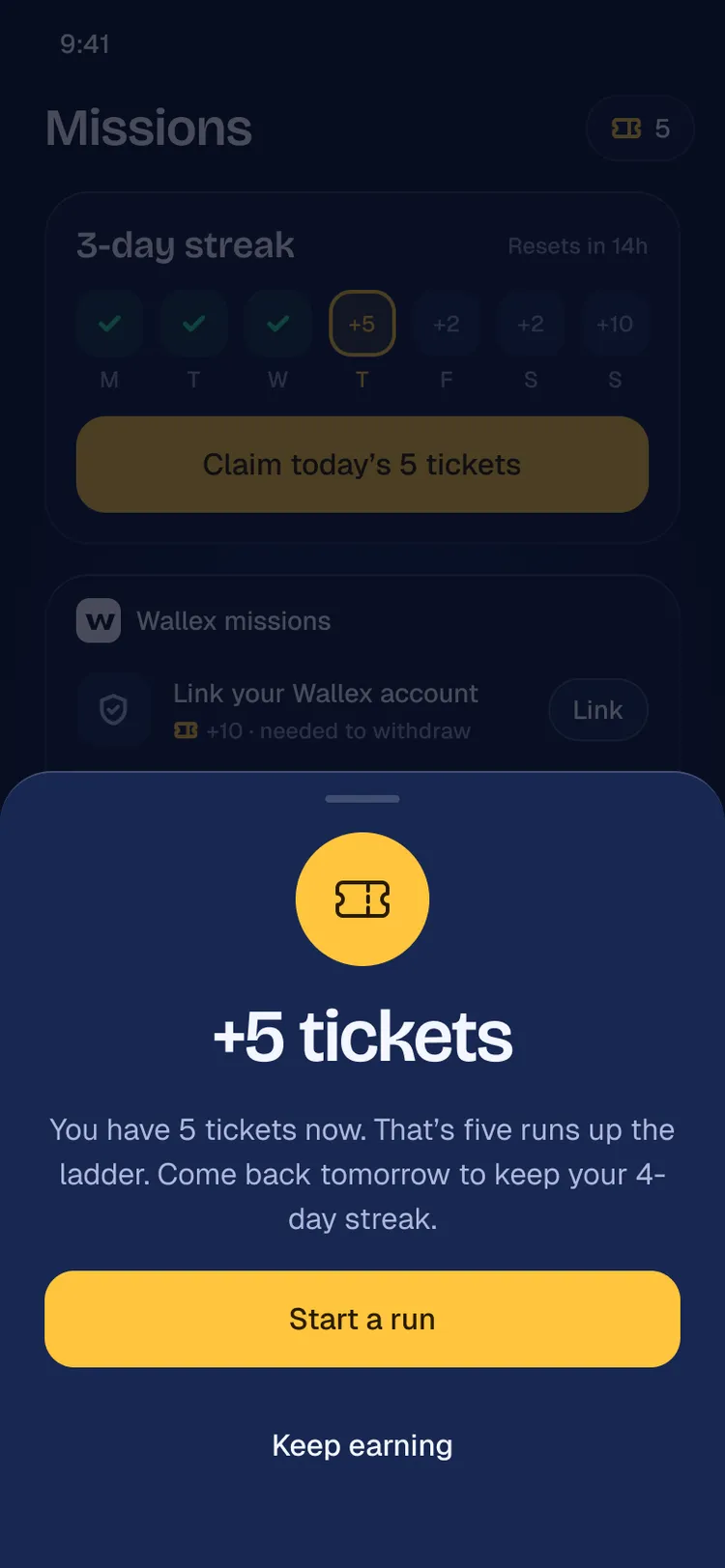
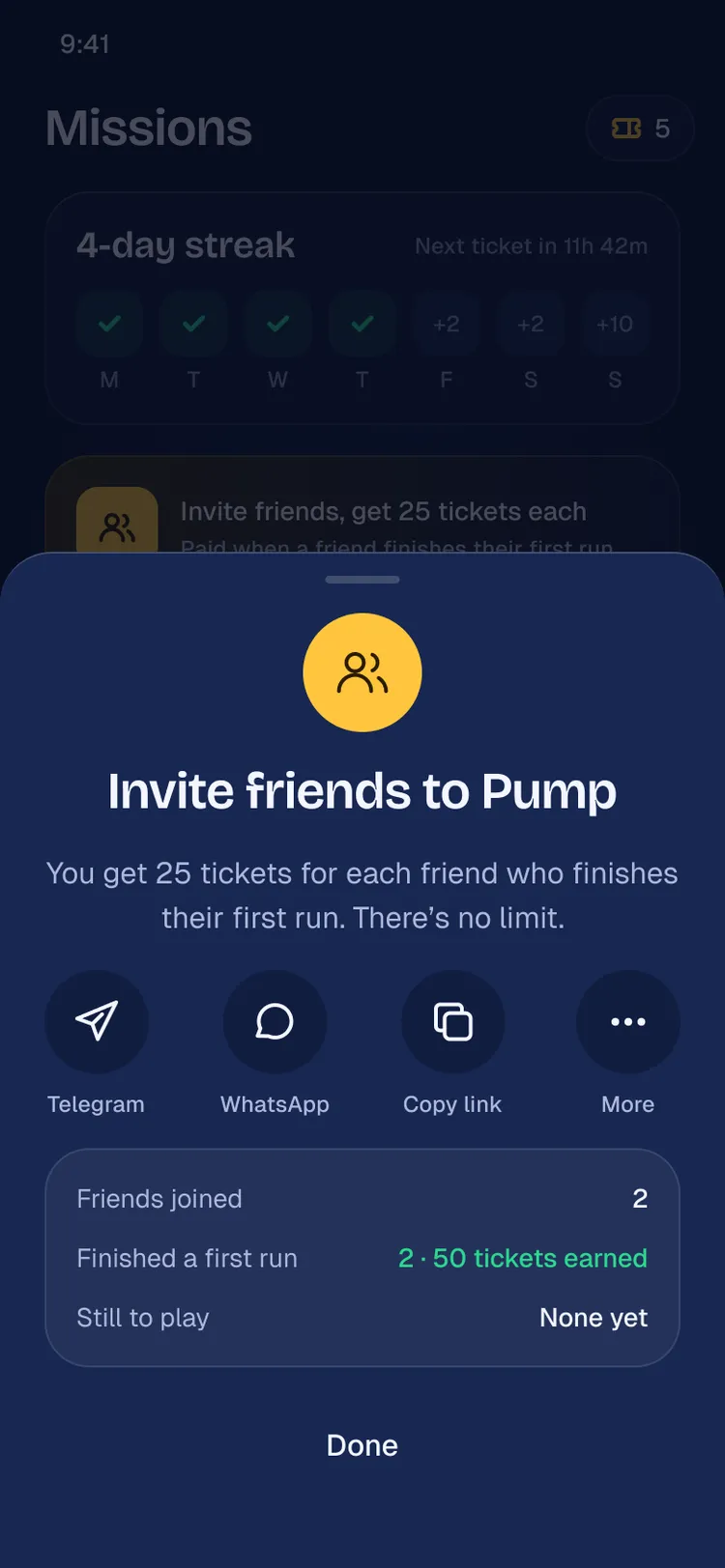
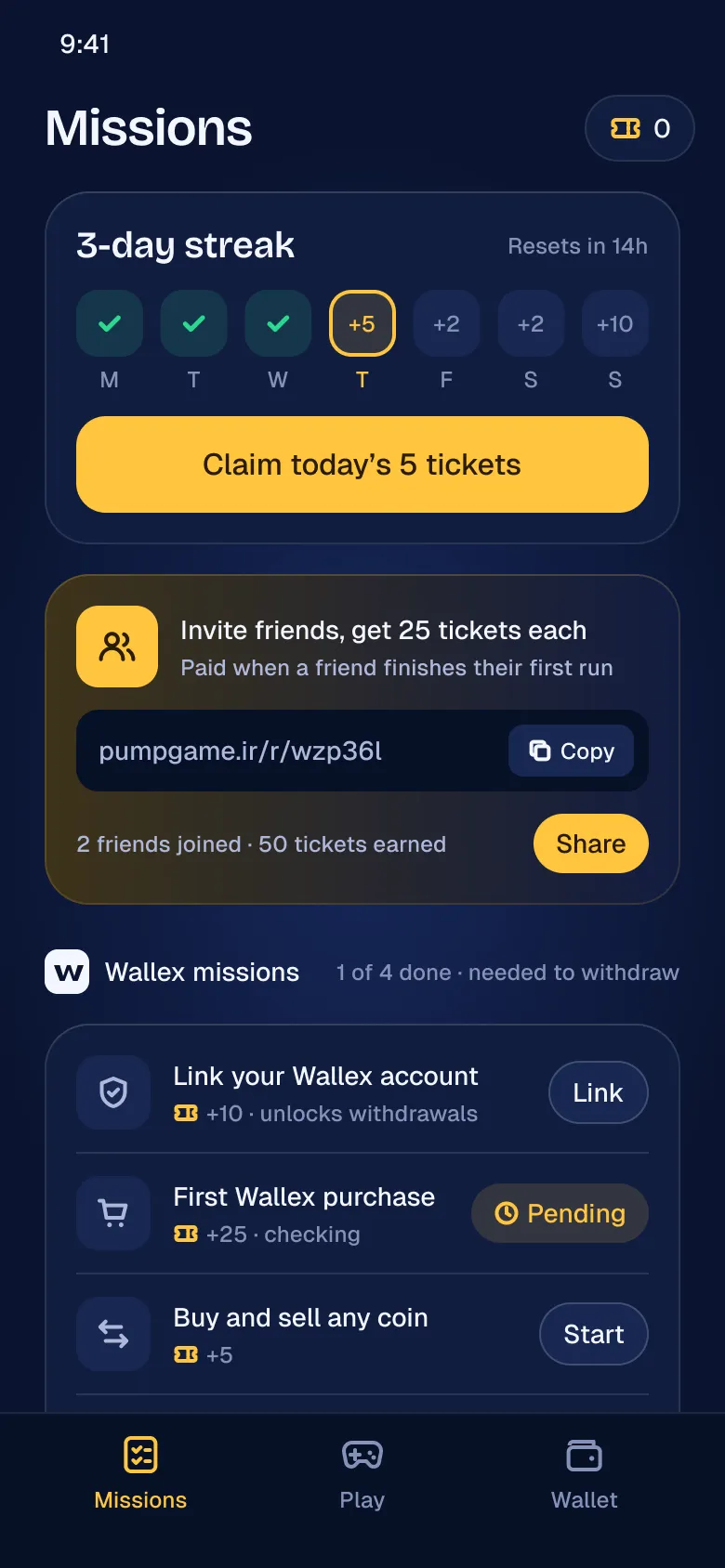
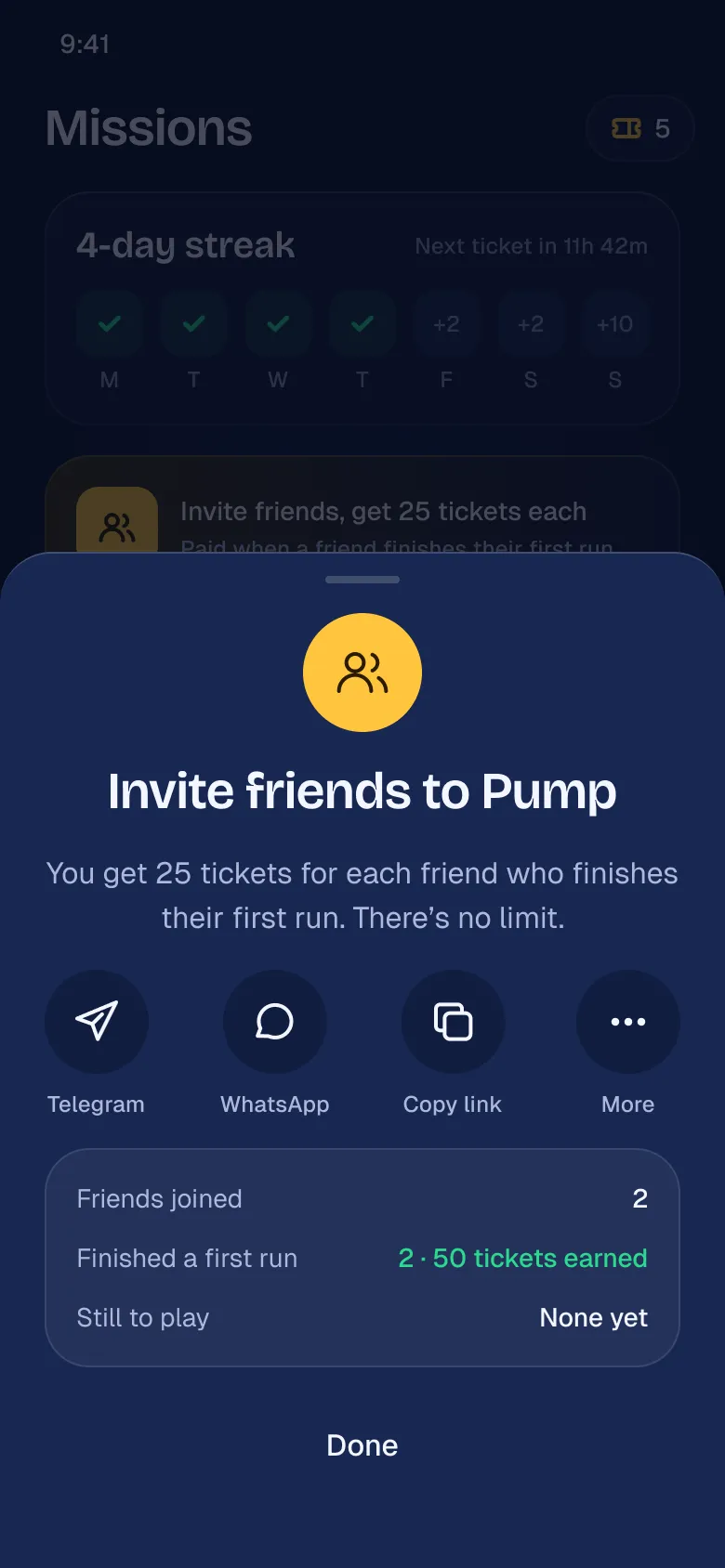
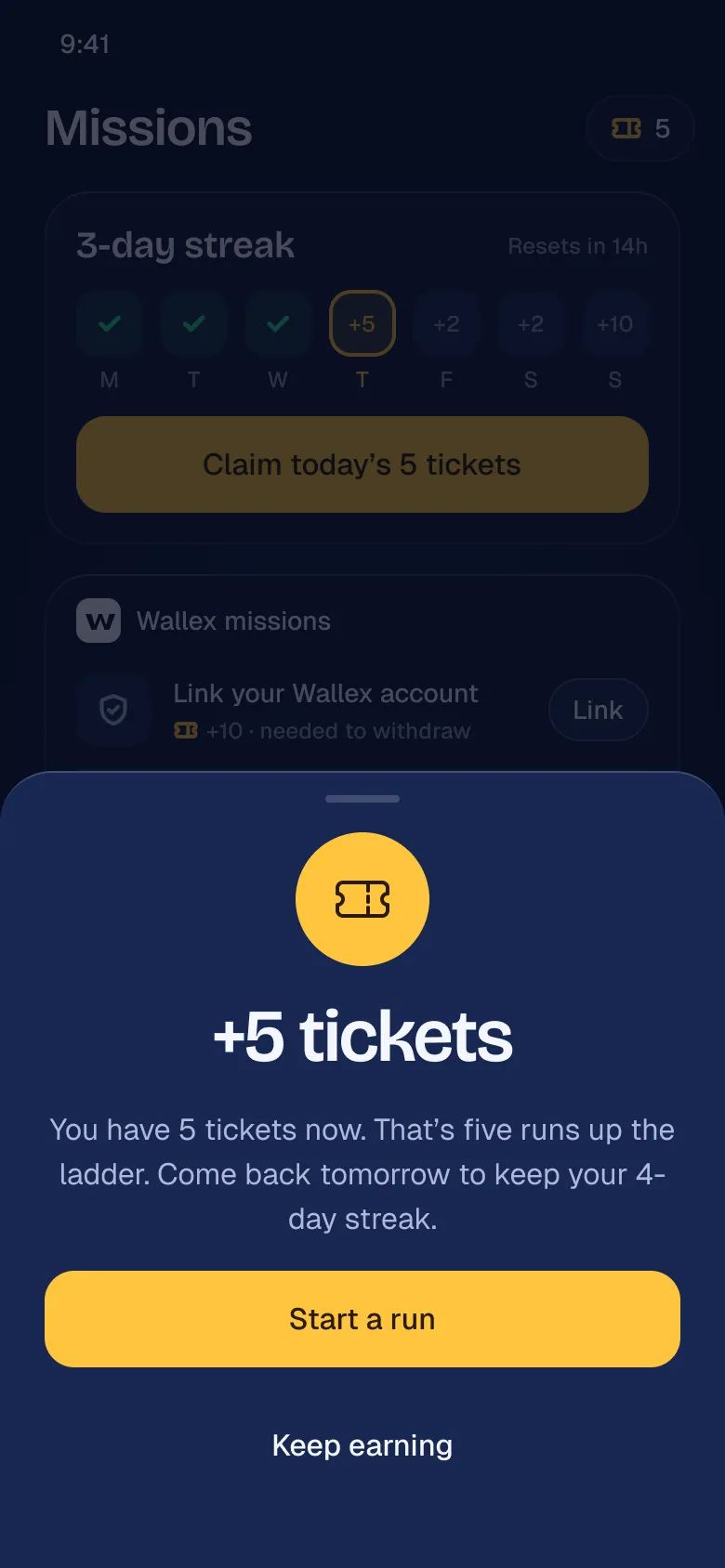
Players never stake their own money, so Pump stays a game rather than a gamble. Tickets start runs, and there are two loops for earning more. The return loop: daily check-ins and a streak, plus missions that teach crypto and Wallex. The social loop: every player has an invite code, and when a friend joins and plays, both get tickets. A leaderboard ranks players.
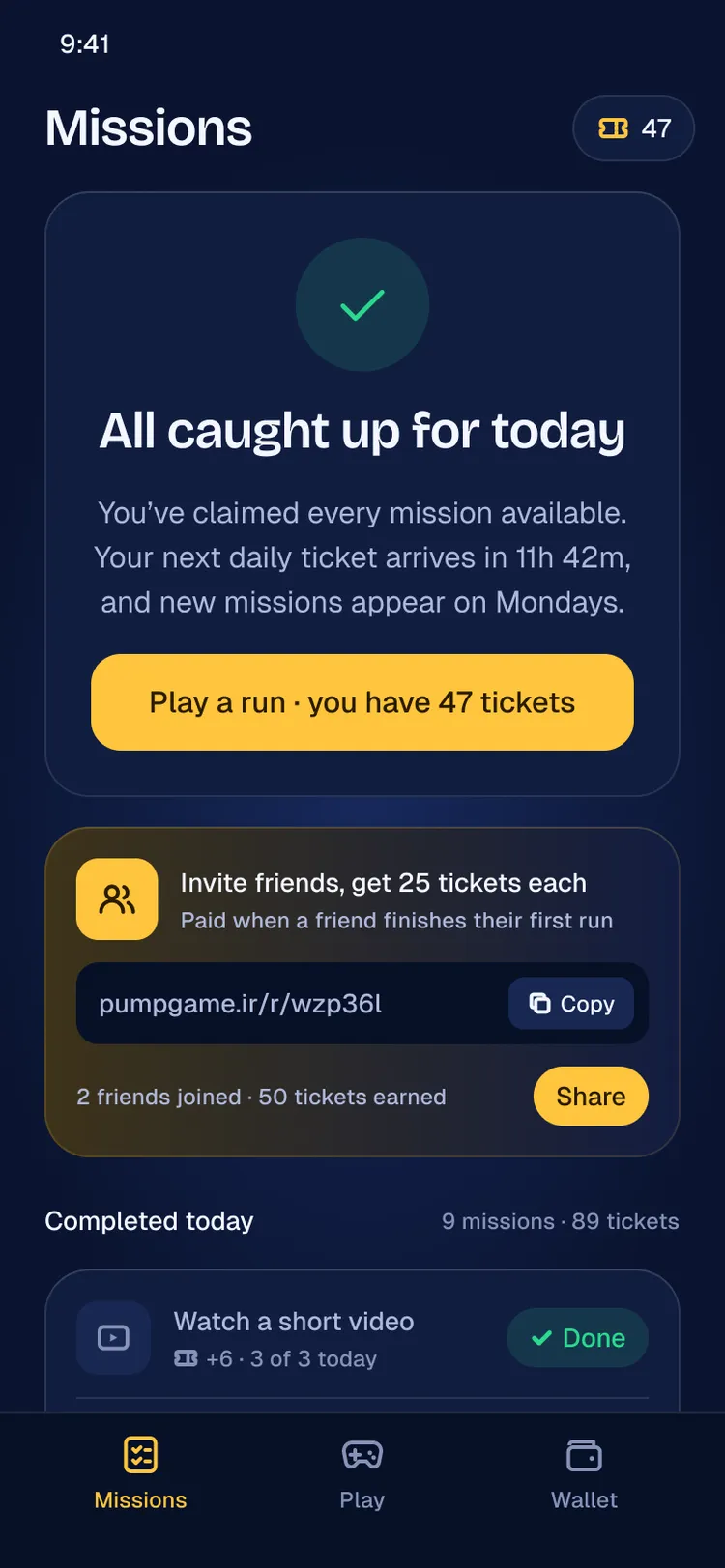
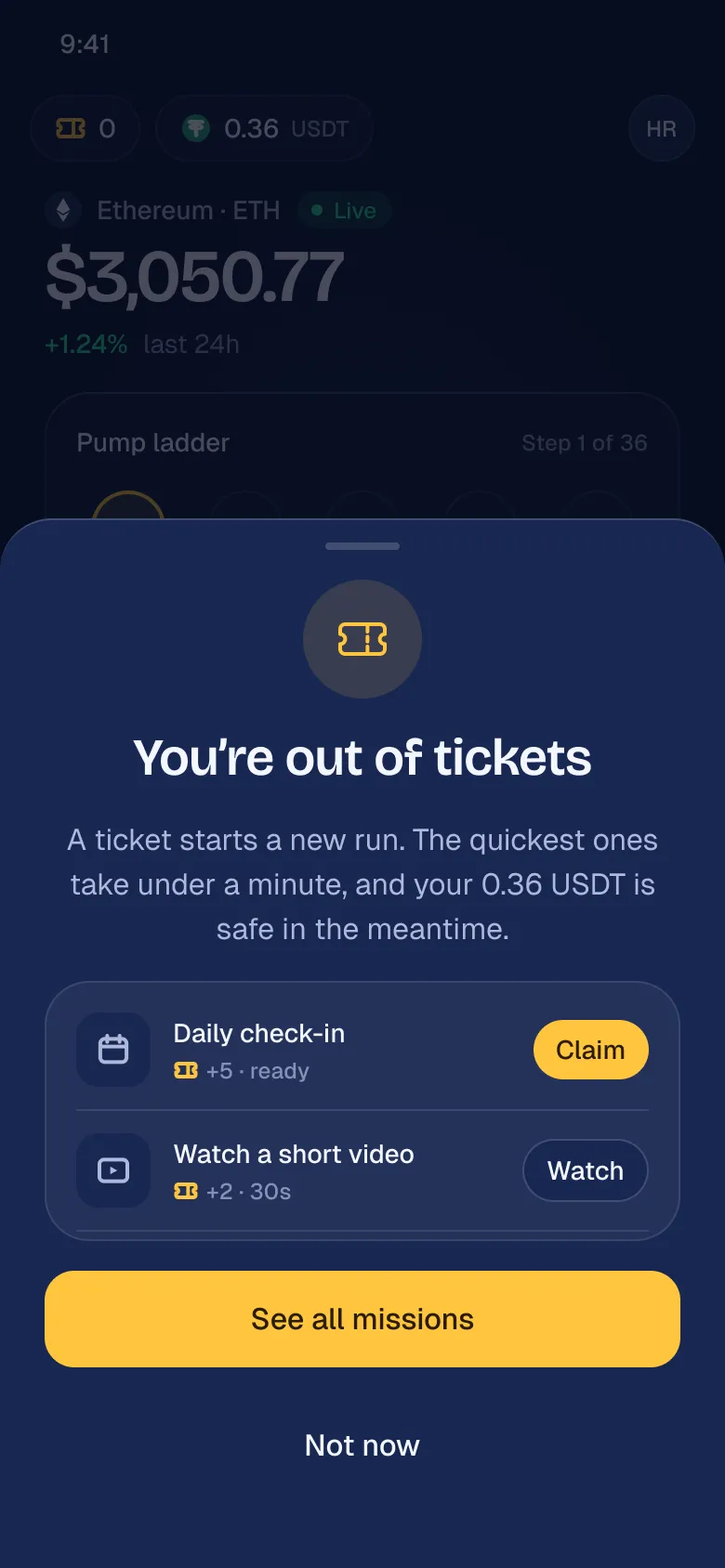
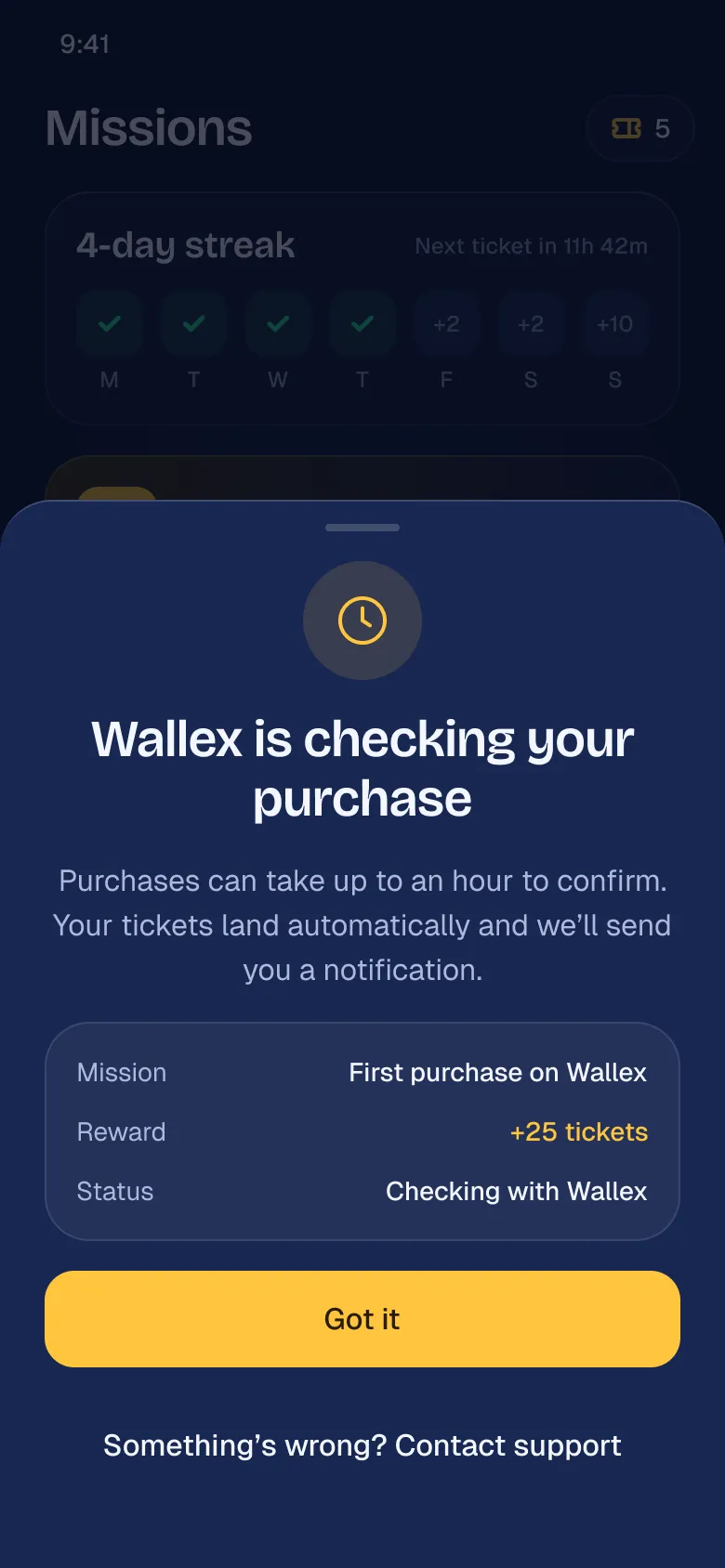
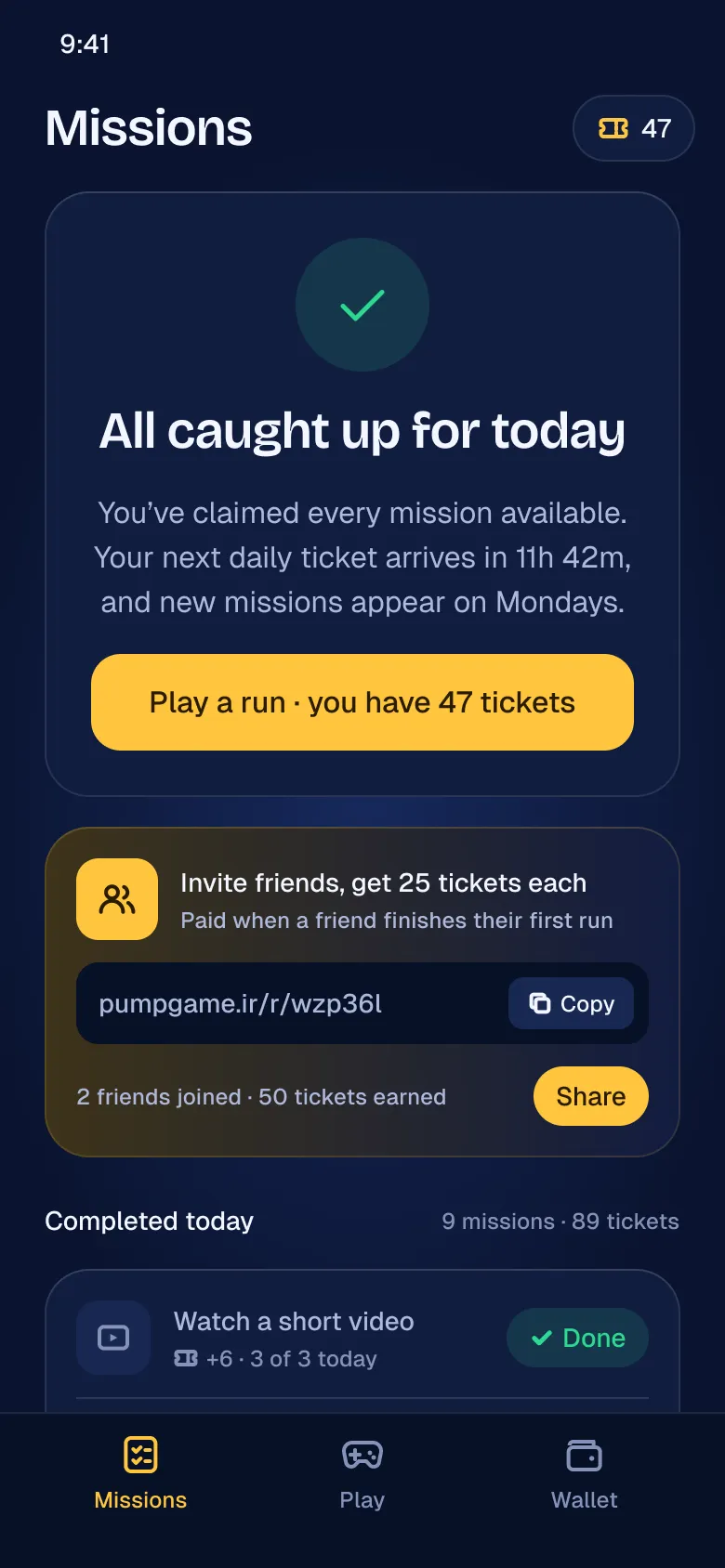
Running out of tickets is where people are most likely to leave, so it’s a doorway, not a dead end: the two fastest ways to earn sit right in the sheet, and it reminds you your tether is safe. Wallex missions are checked by Wallex, so they get a pending state with a time estimate. And when there’s nothing left to claim, the tab says so and tells you when the next ticket arrives.
08Withdraw
The withdrawal is the way into Wallex.
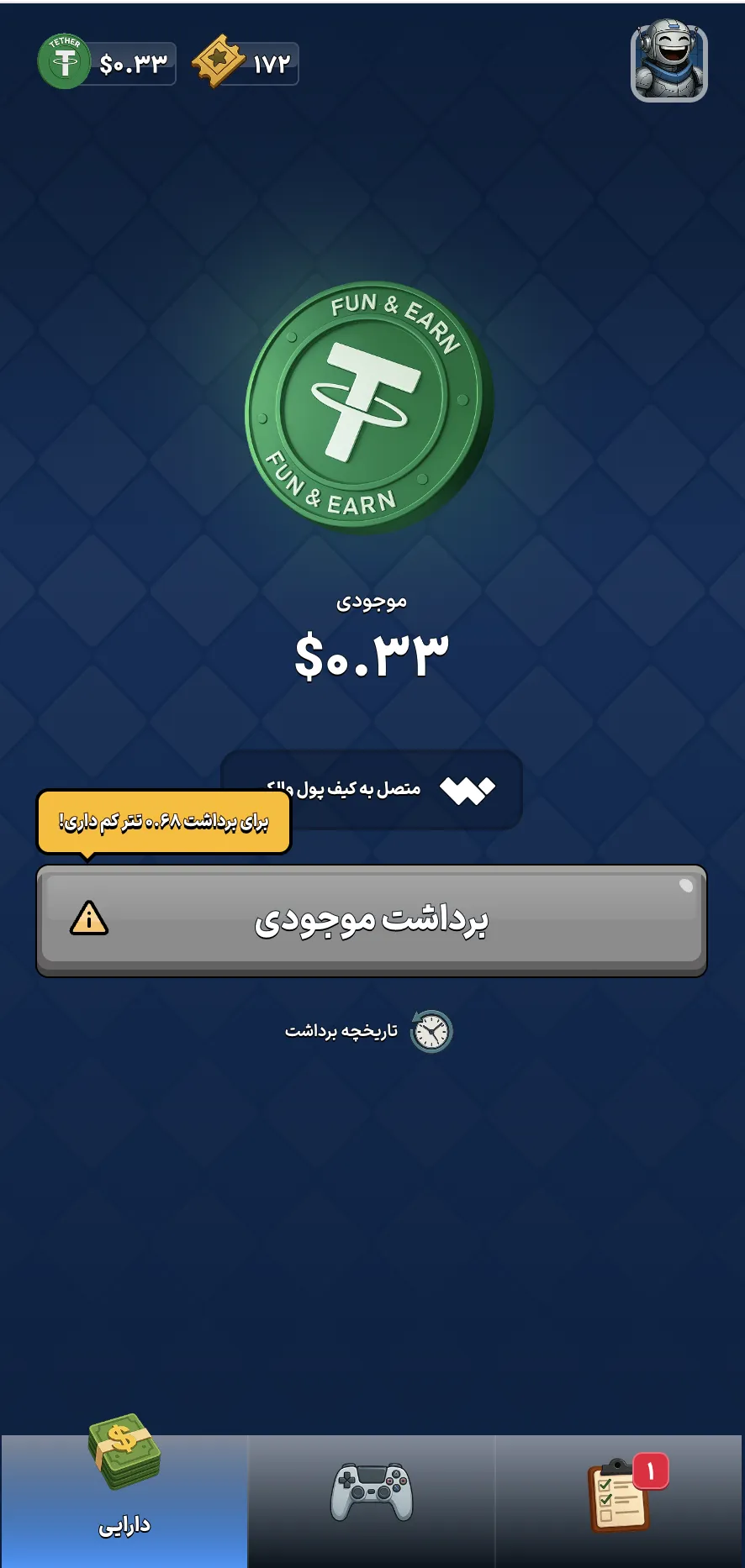
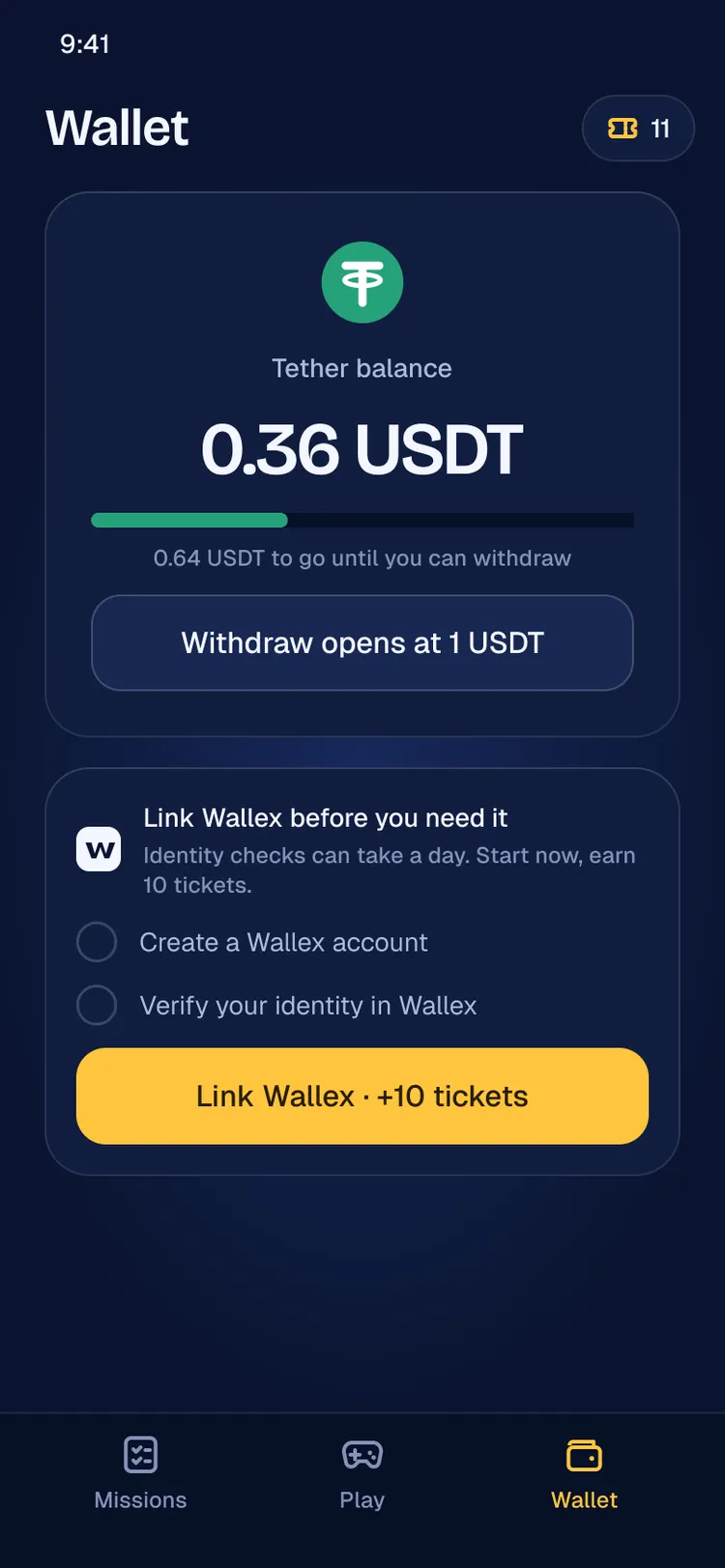
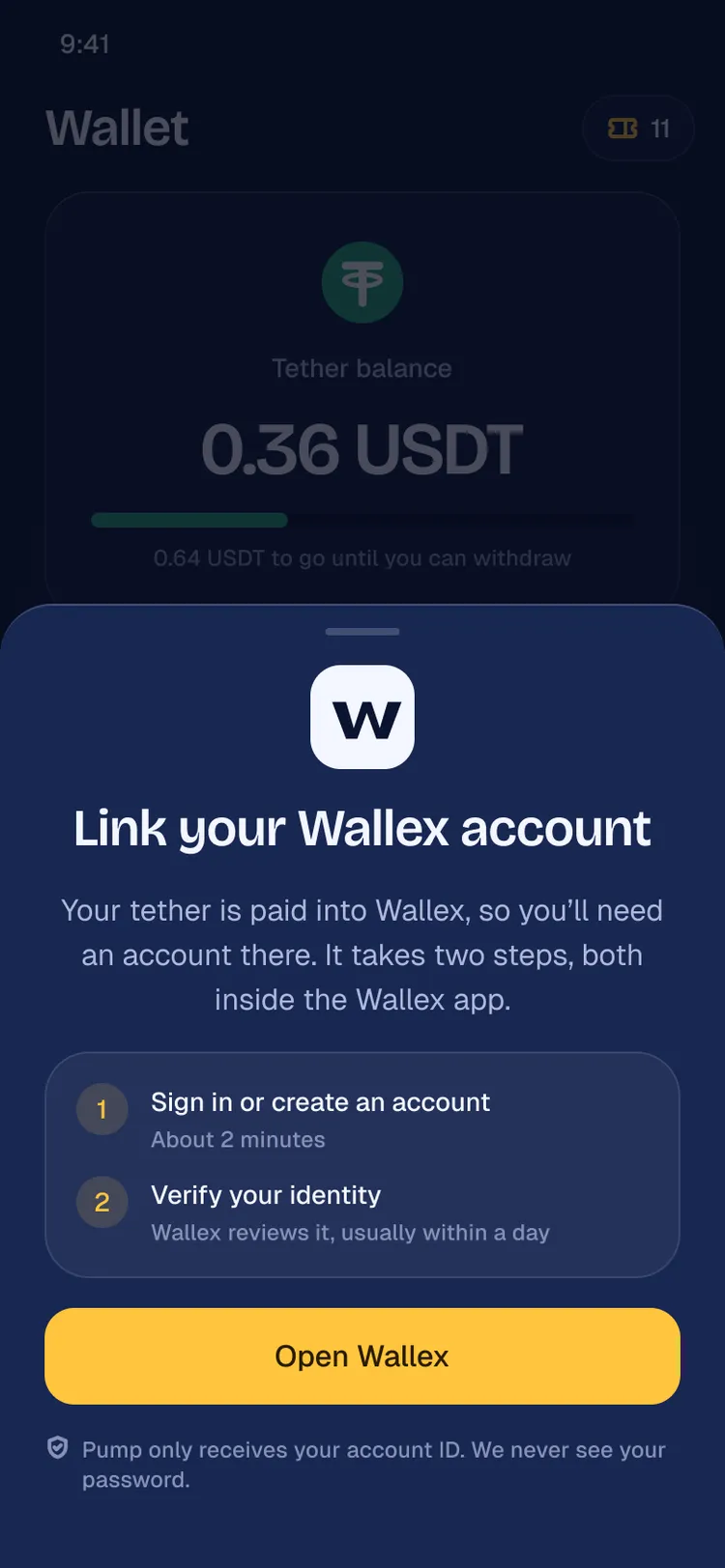
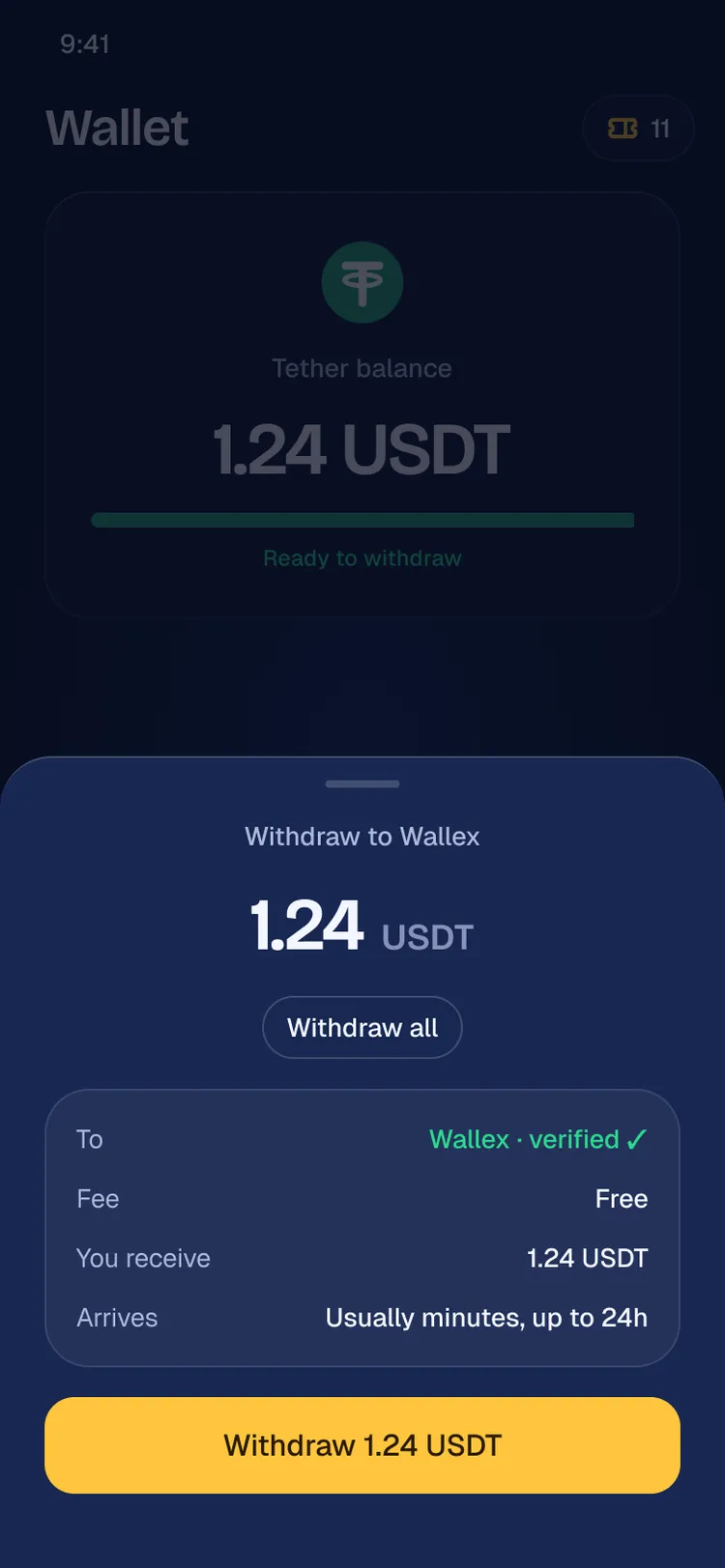
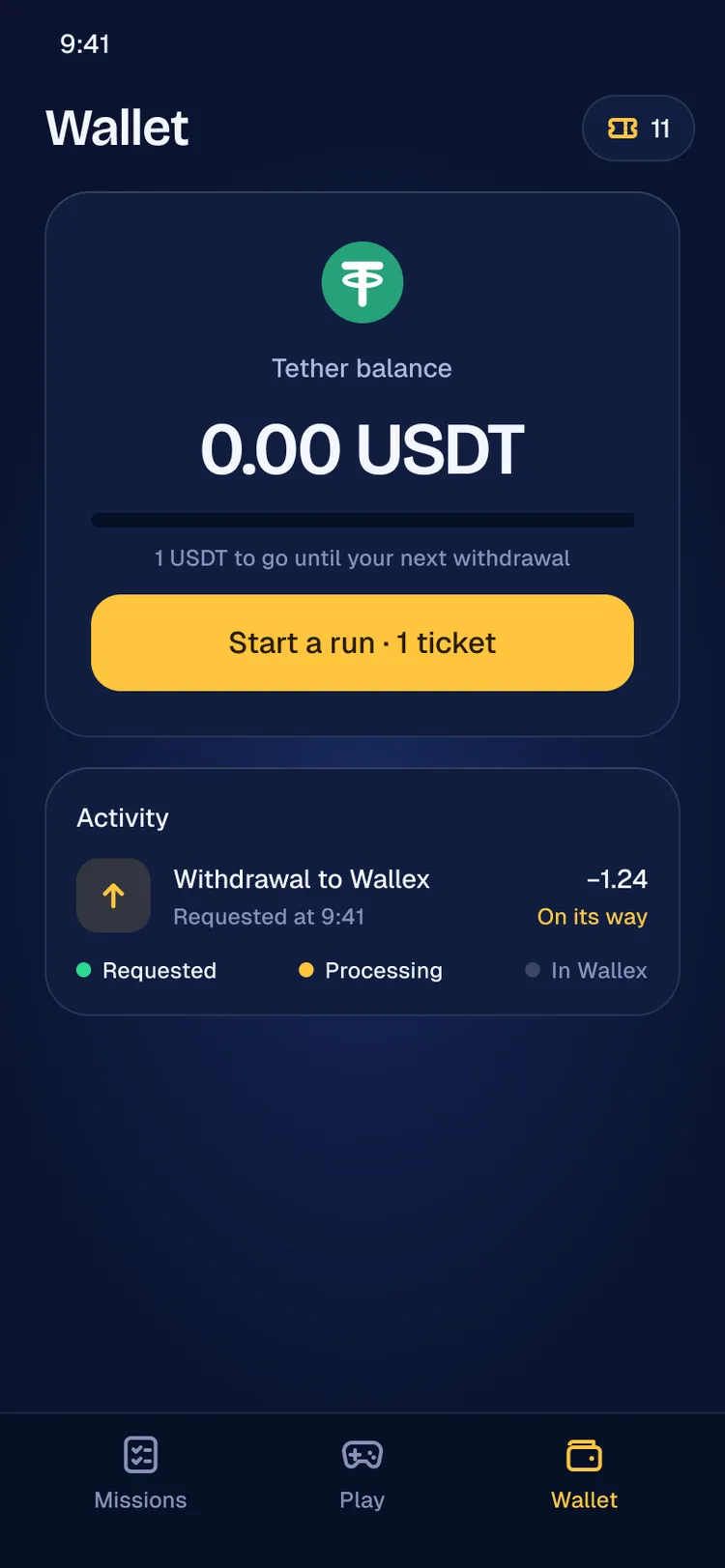
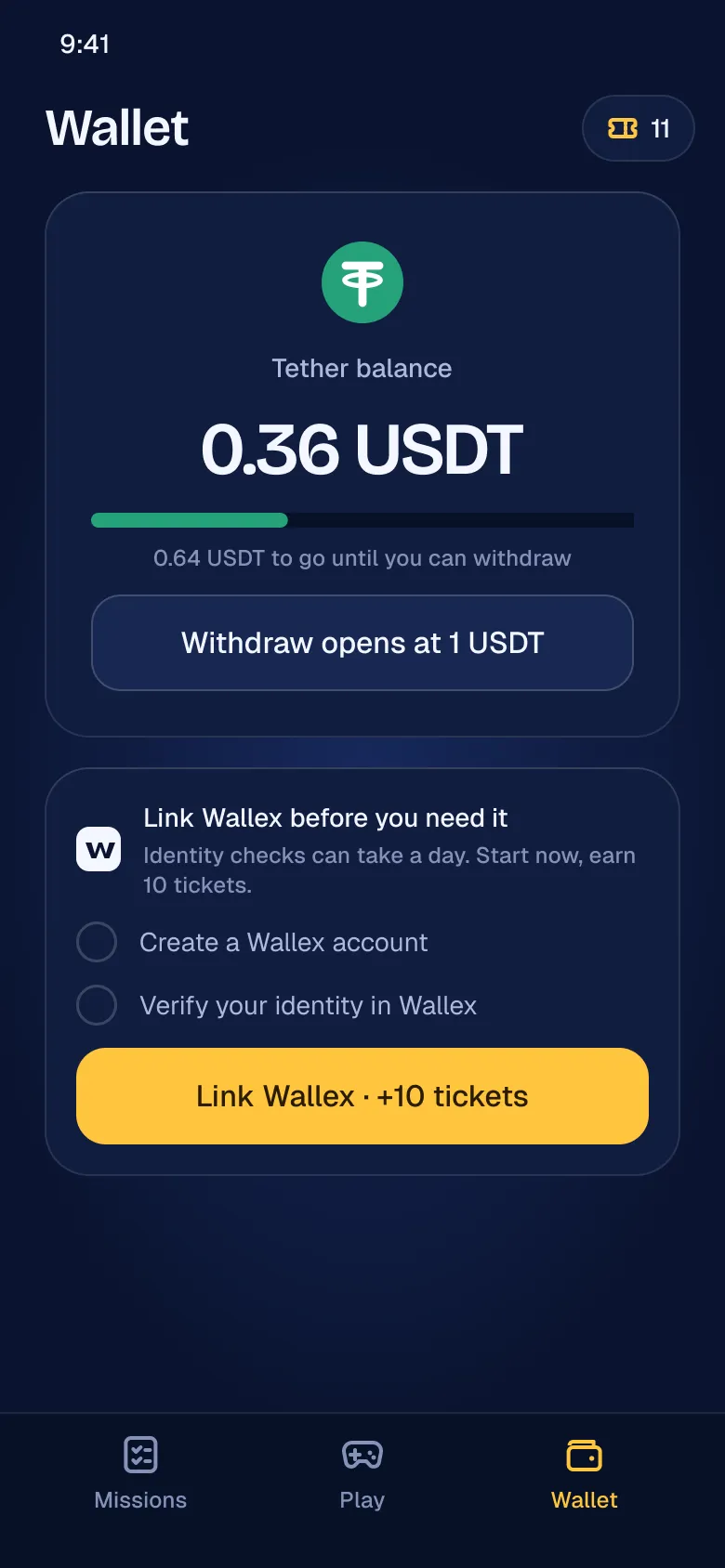
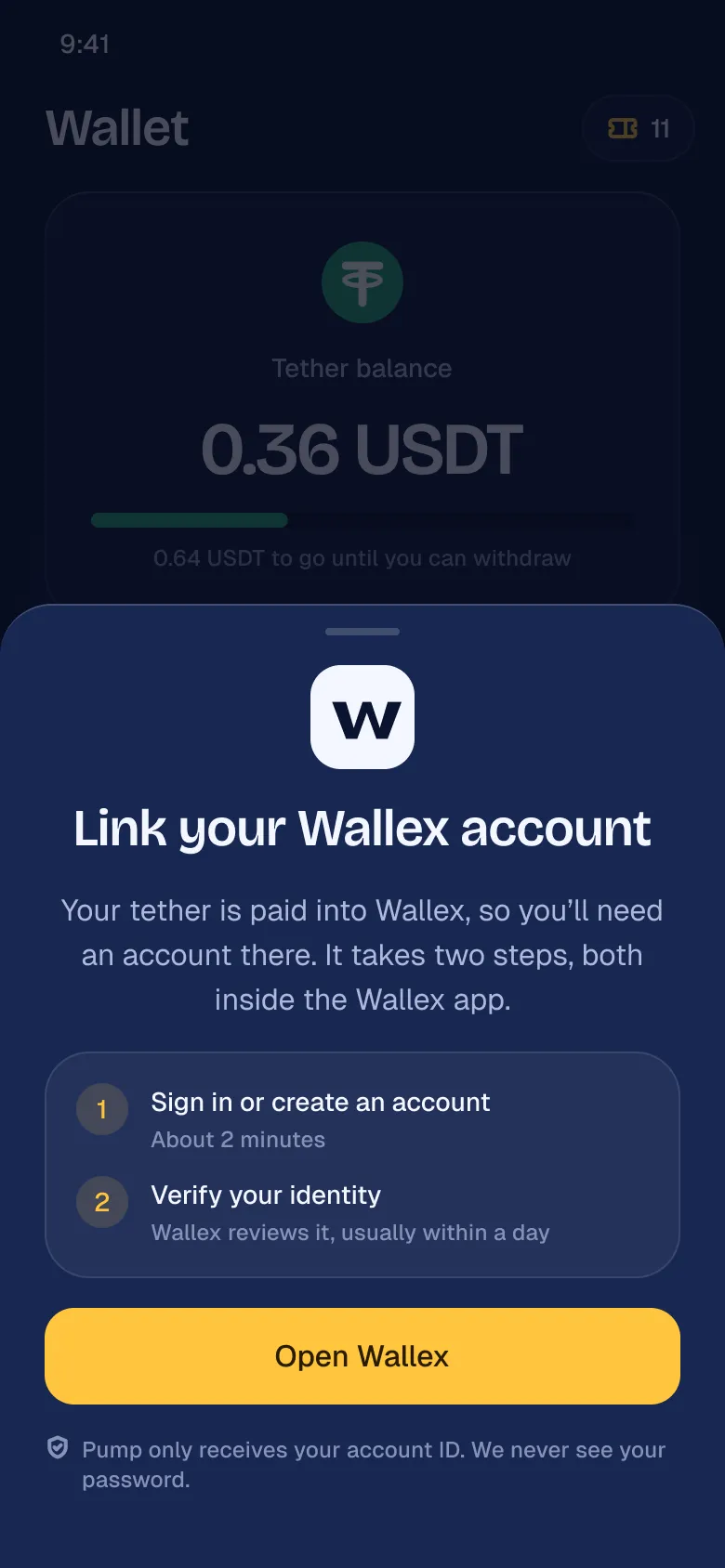
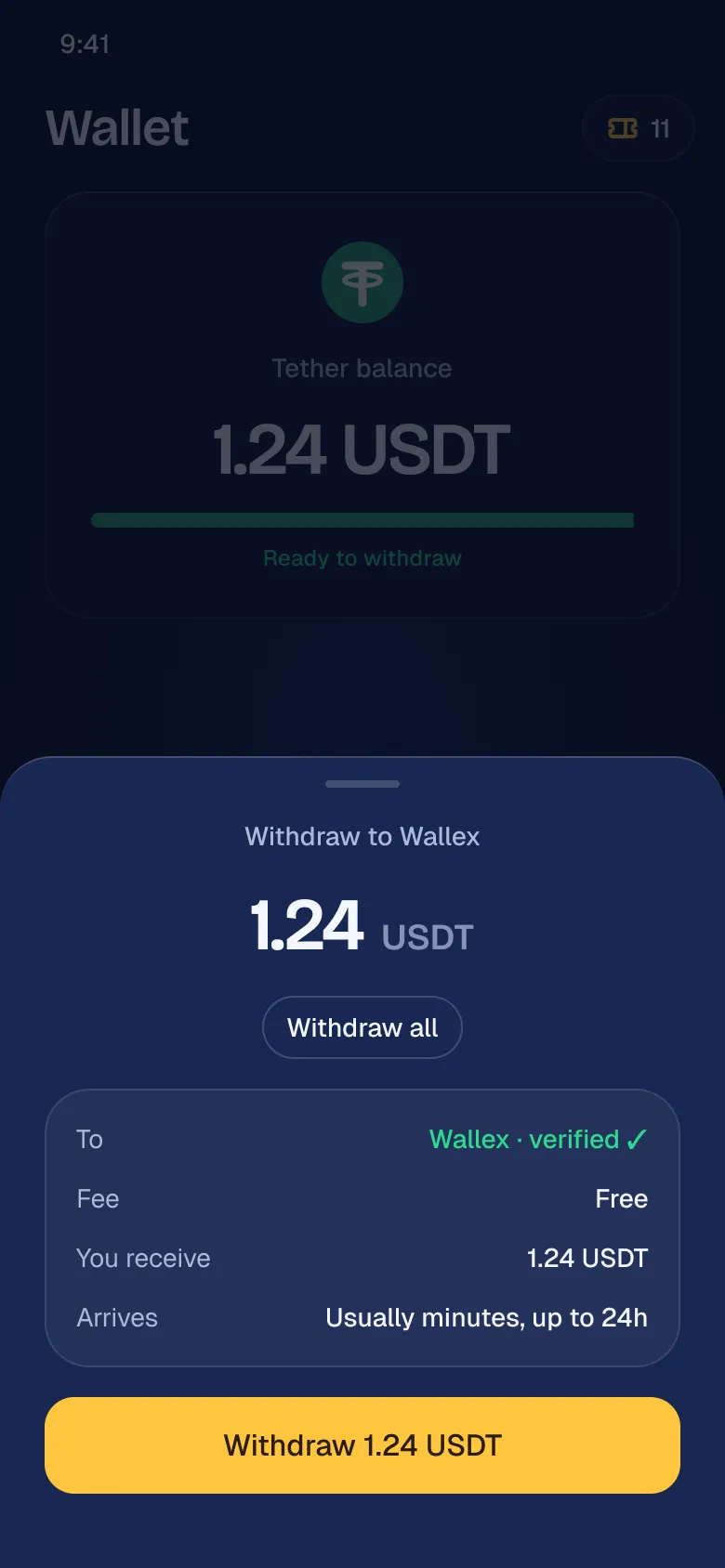
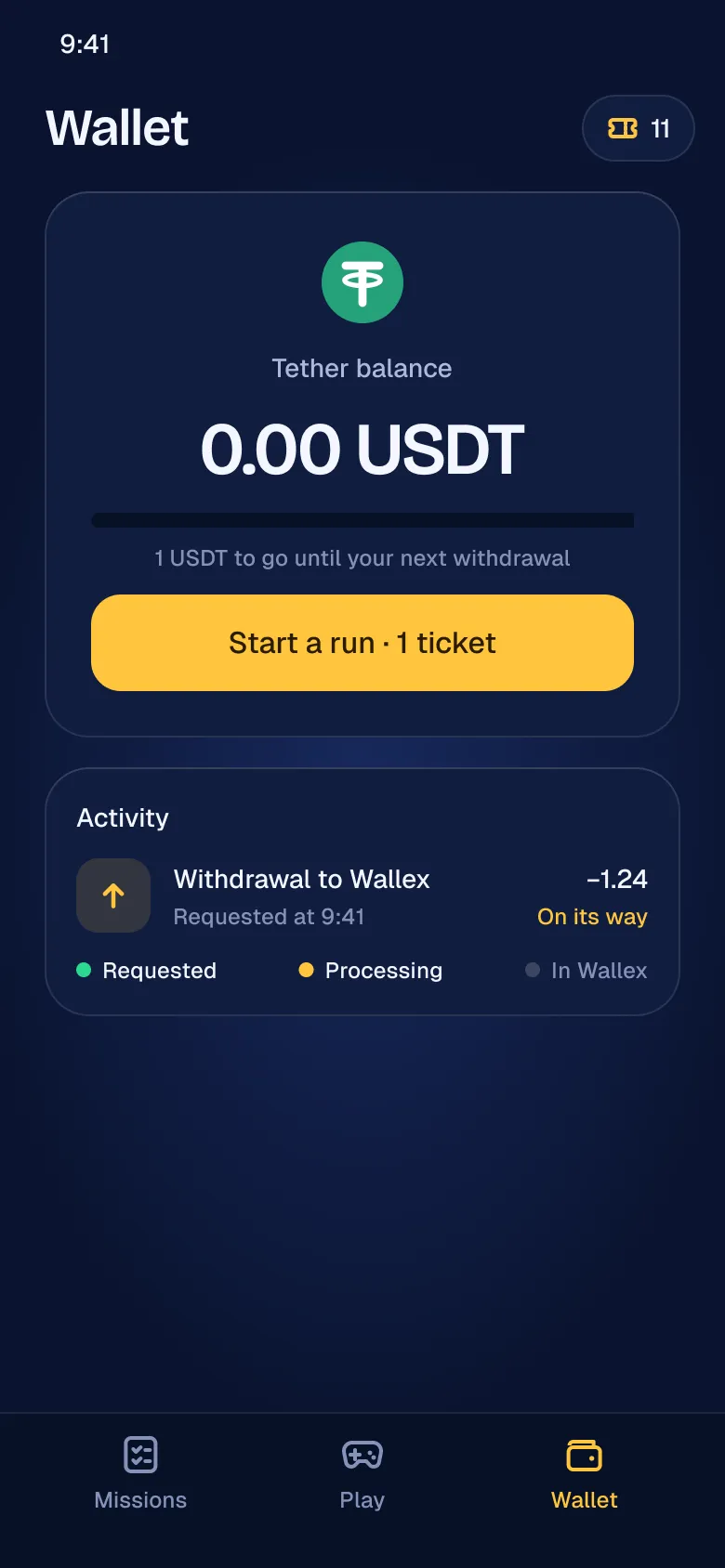
Tether you win is real, and to take it out you need a Wallex account: sign up, verify your identity, link it to Pump. That’s where the game meets the business. The wallet shows the 1 USDT minimum as a goal with a progress bar, not an error, and suggests linking Wallex early, with a ticket bonus, because identity checks take time and shouldn’t surprise the first withdrawal. The fee, the amount, where it goes and when it arrives are all stated before the button, and a withdrawal stays visible on a short timeline until it lands.
09Outcome
A game that brought people in.
Pump launched in 2025 as Pump Game, in Persian. Wallex reports that more than a million new users came through it. The numbers we’d watch next are the share of players who come back within seven days, and how many runs end in a cash-out rather than a walk-away.
The missions taught more about crypto than we expected, which led to a later idea: a Duolingo for crypto. And invites could grow into teams that predict together and compete.
10Reflection
What I took from it.
The happy path is the easy part. Next time I’d design the hard moments first: losing, a price feed that drops mid-round, running out of tickets. They decide whether someone trusts the game enough to come back.