Client project · 2022
Fanoos
A play-to-earn games platform for the Middle East and North Africa, in English and Arabic, built in about three months as a market test.
3
months from kickoff to a built product
EN + AR
English and Arabic, right to left
2
designers, with product managers and developers
00 / Summary
- Role
- Product designer
- When
- 2022
- Platform
- Mobile app and web app · English and Arabic
- Method
- Platform design, design system, motion
- Colour
- #18744C
- Problem
- A client wanted to test a new market fast. People play short casual games, win rewards and an in-app token, and enter tournaments with prize pools, in English and Arabic.
- What I did
- With one other designer, designed the platform around the games: sign-in, home, the game library, the frame every game runs in, tournaments and prize pools, leaderboards, rewards, wallet, shop and avatars.
- Result
- Built and tested. Then the crypto bear market arrived and it didn't reach the results the client wanted.
01Context
Play a game, win a reward.
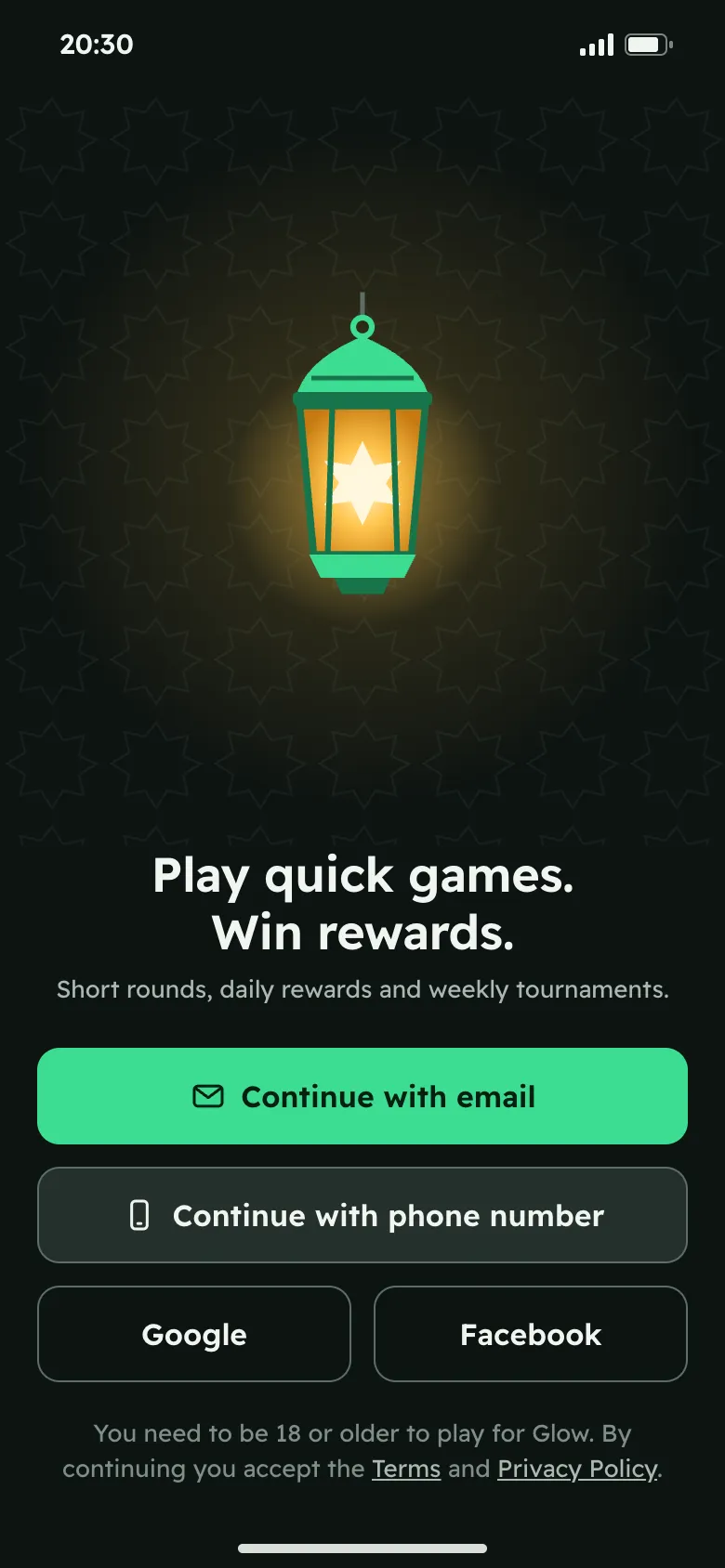
A client wanted to test a new market quickly: casual players across the Middle East and North Africa. The idea was simple. You play short games, win stars, tickets and an in-app token, and enter tournaments where a prize pool is shared by the best scores. Everything had to work in English and in Arabic.
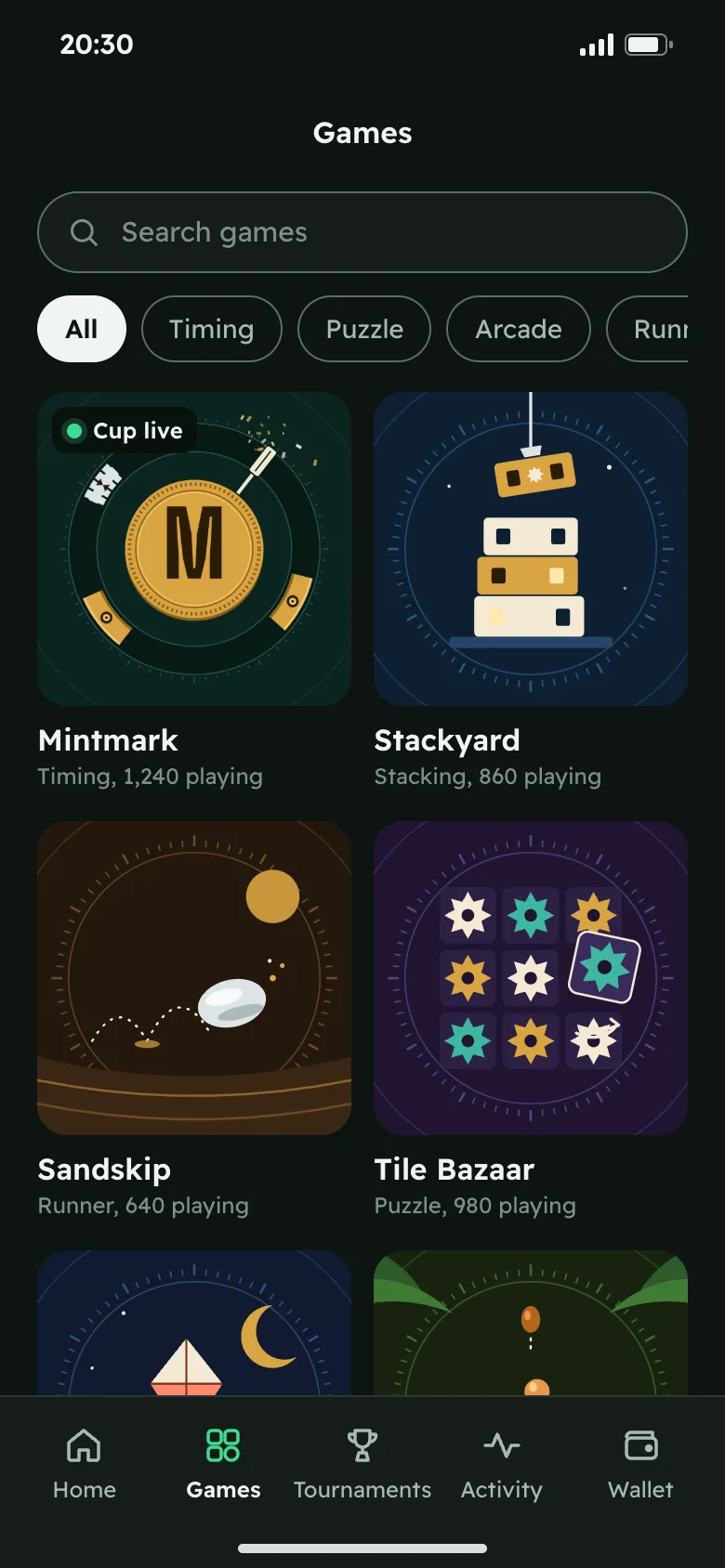
It ran as its own product, with its own owner, stakeholders and investor, and about three months from kickoff to a built product. We were two designers, working with product managers and developers. A separate team made the games themselves. Our job was everything around them: how you sign in, find a game, play it, see where you stand, and what you get for it.
02The film
Twenty-eight seconds of the product.
One evening with Fanoos: open the app, claim a daily reward, play a round, climb the leaderboard and win a share of the prize pool. Every frame is the real screens and their real animations.
03The loop
A reason to come back, then a reason to play.
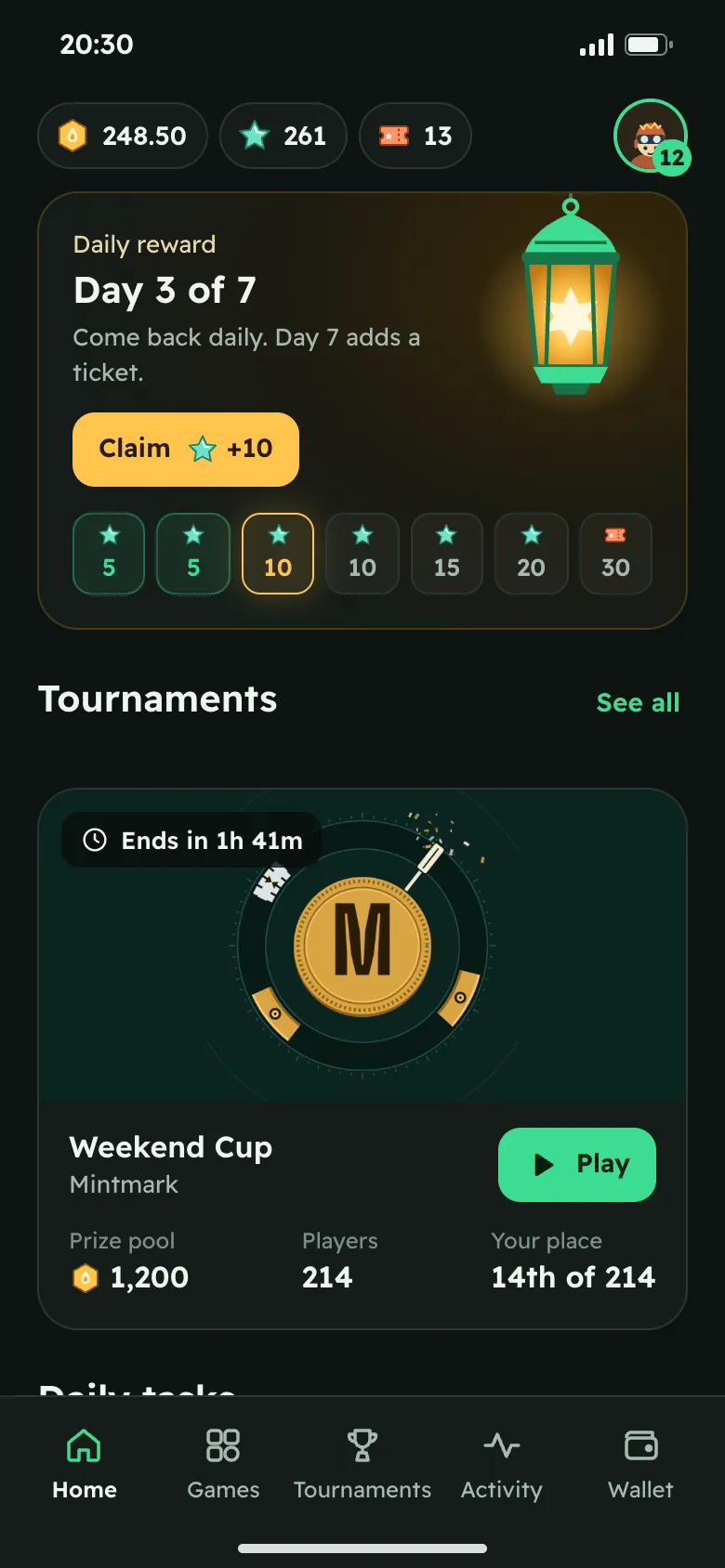
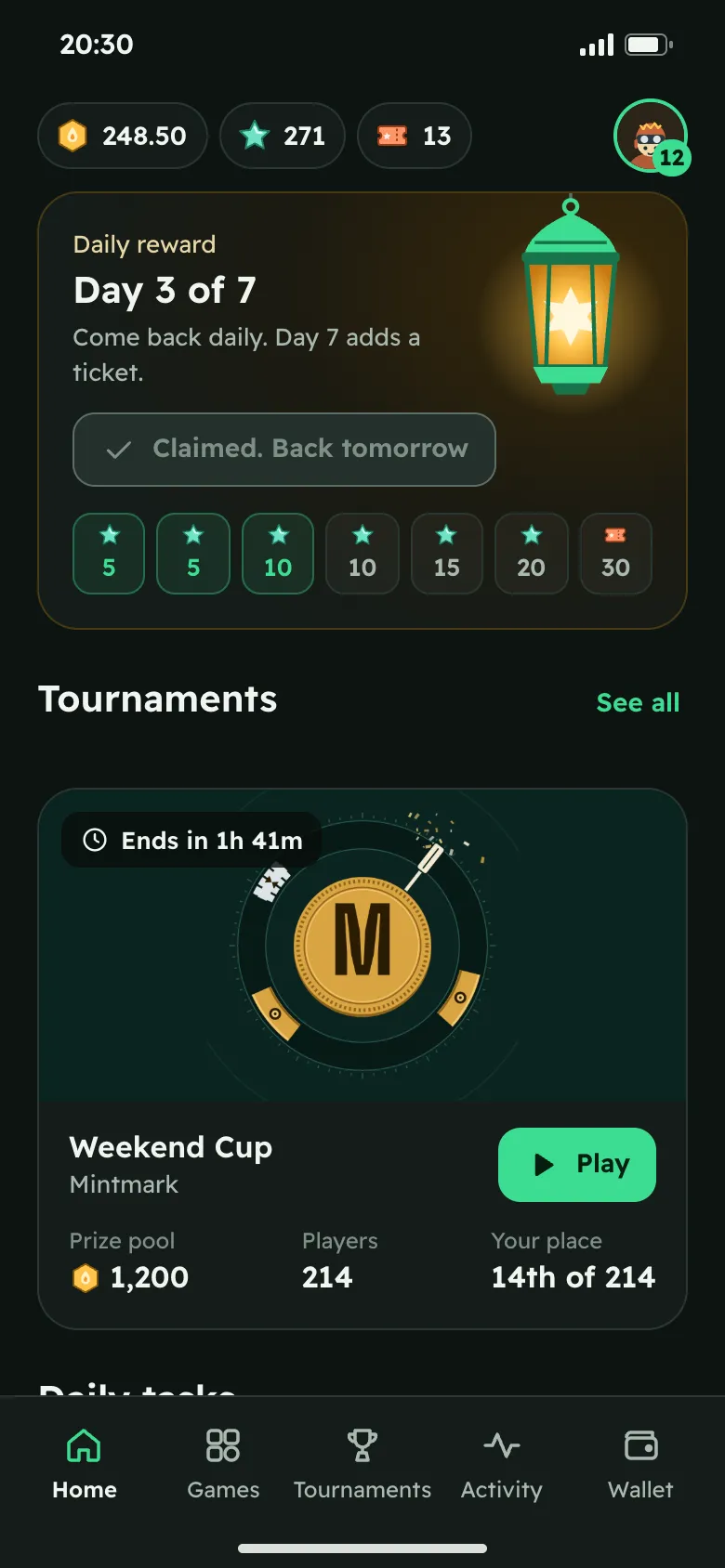
Home leads with the daily reward. It gets bigger each day for seven days, so coming back tomorrow is worth something. Claiming it is one tap, and the stars fly into your balance so you can see where they went.
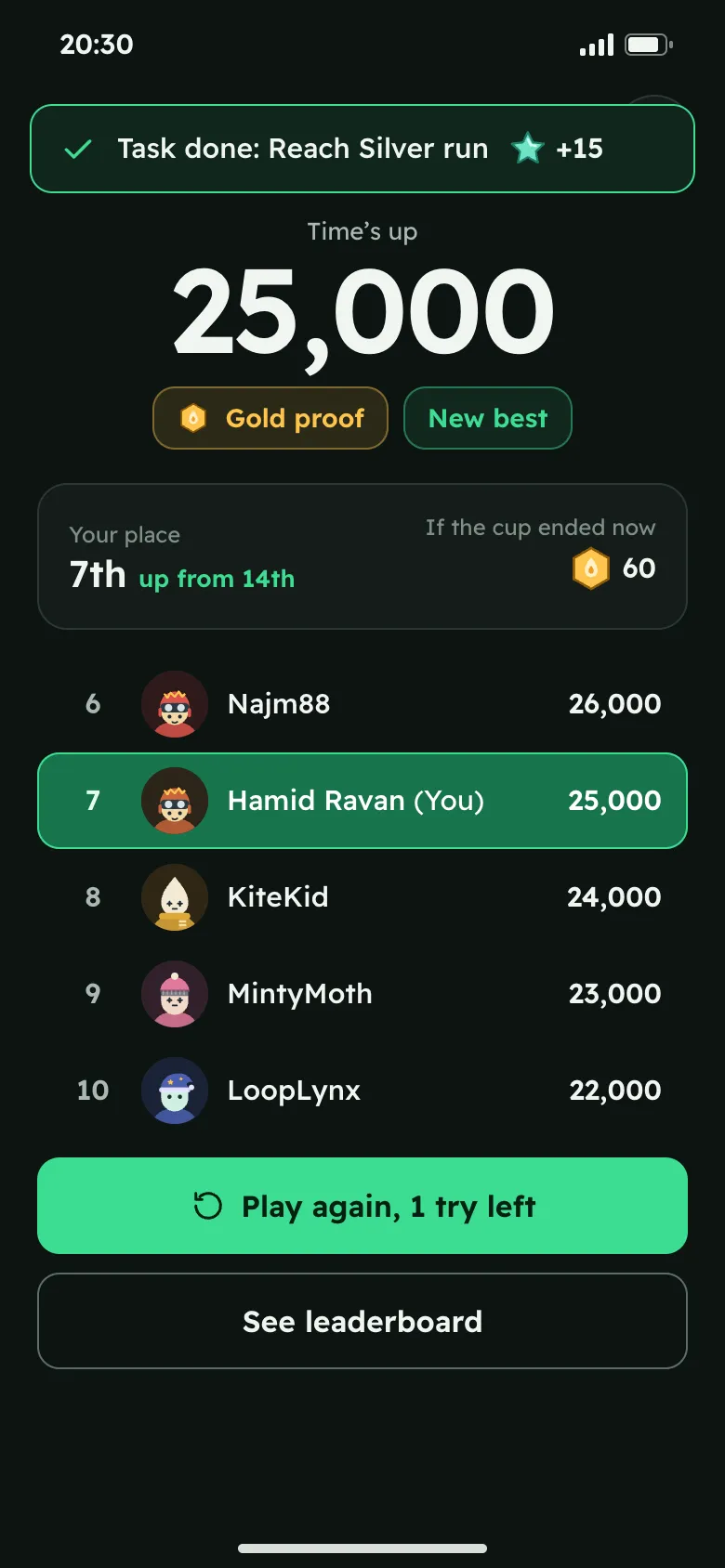
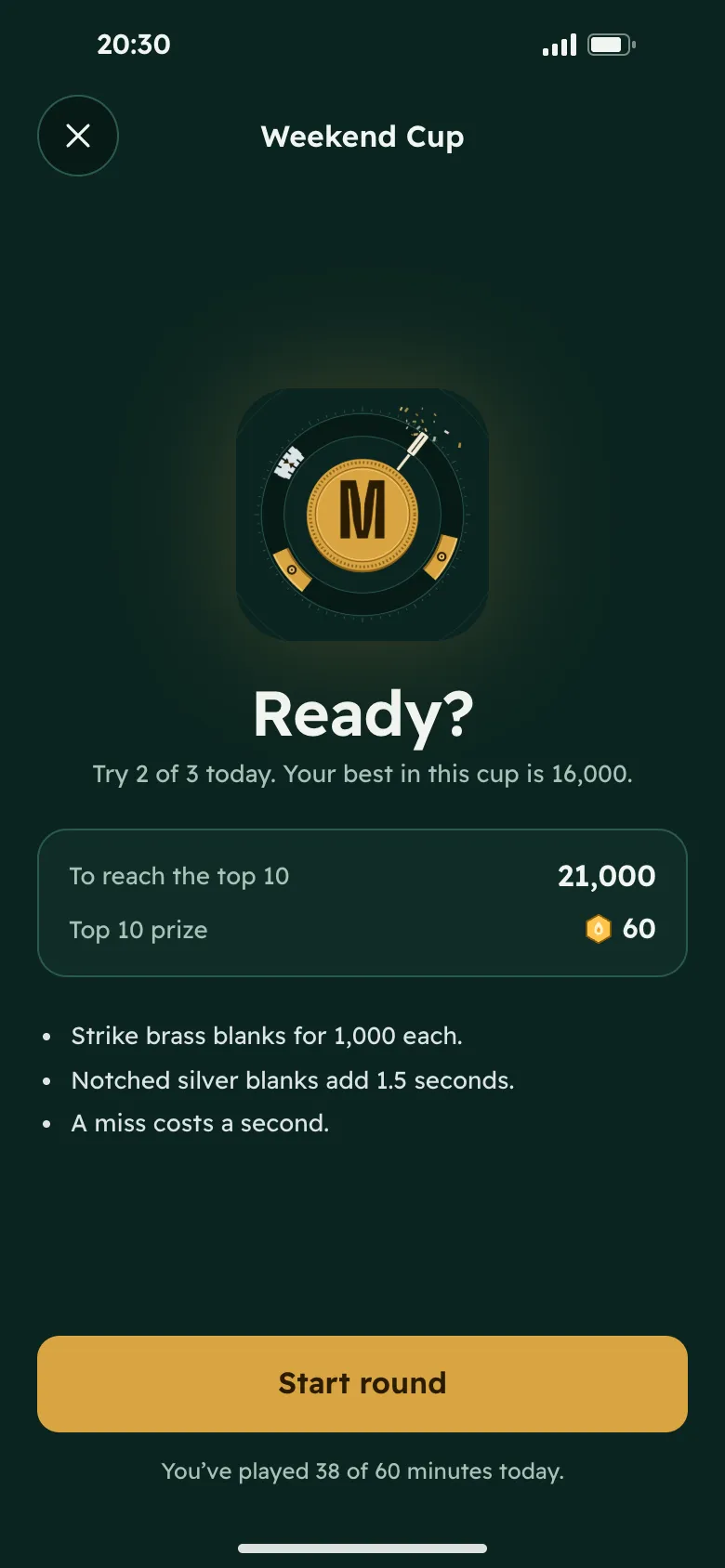
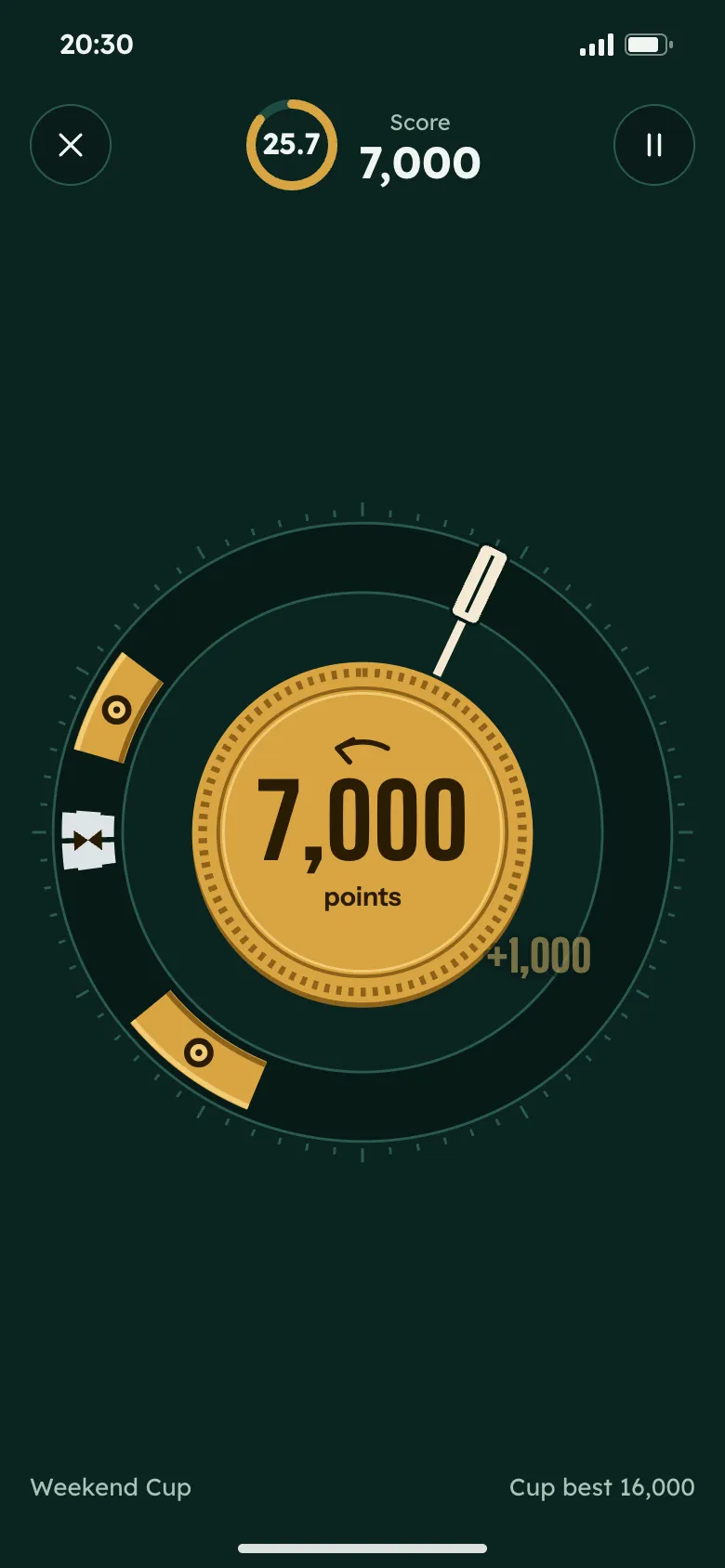
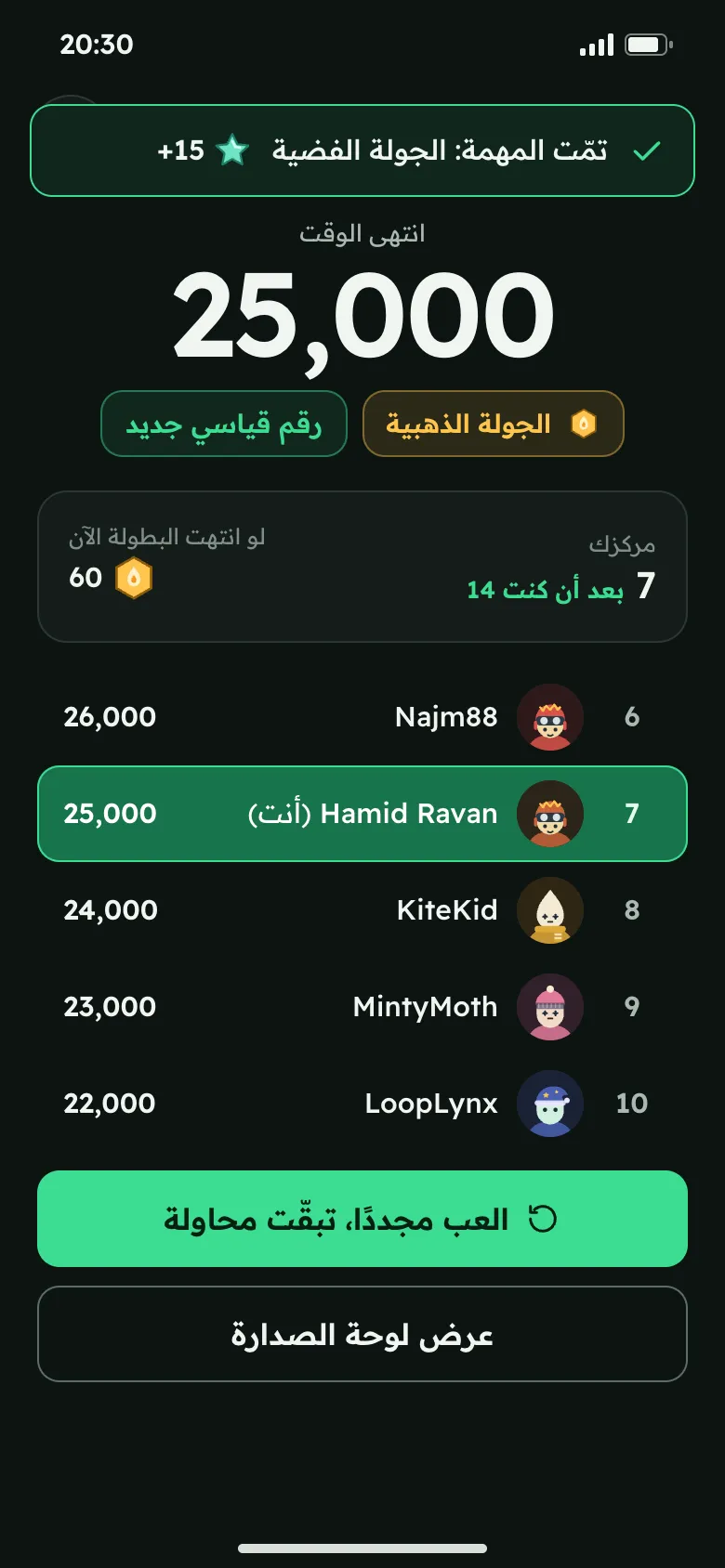
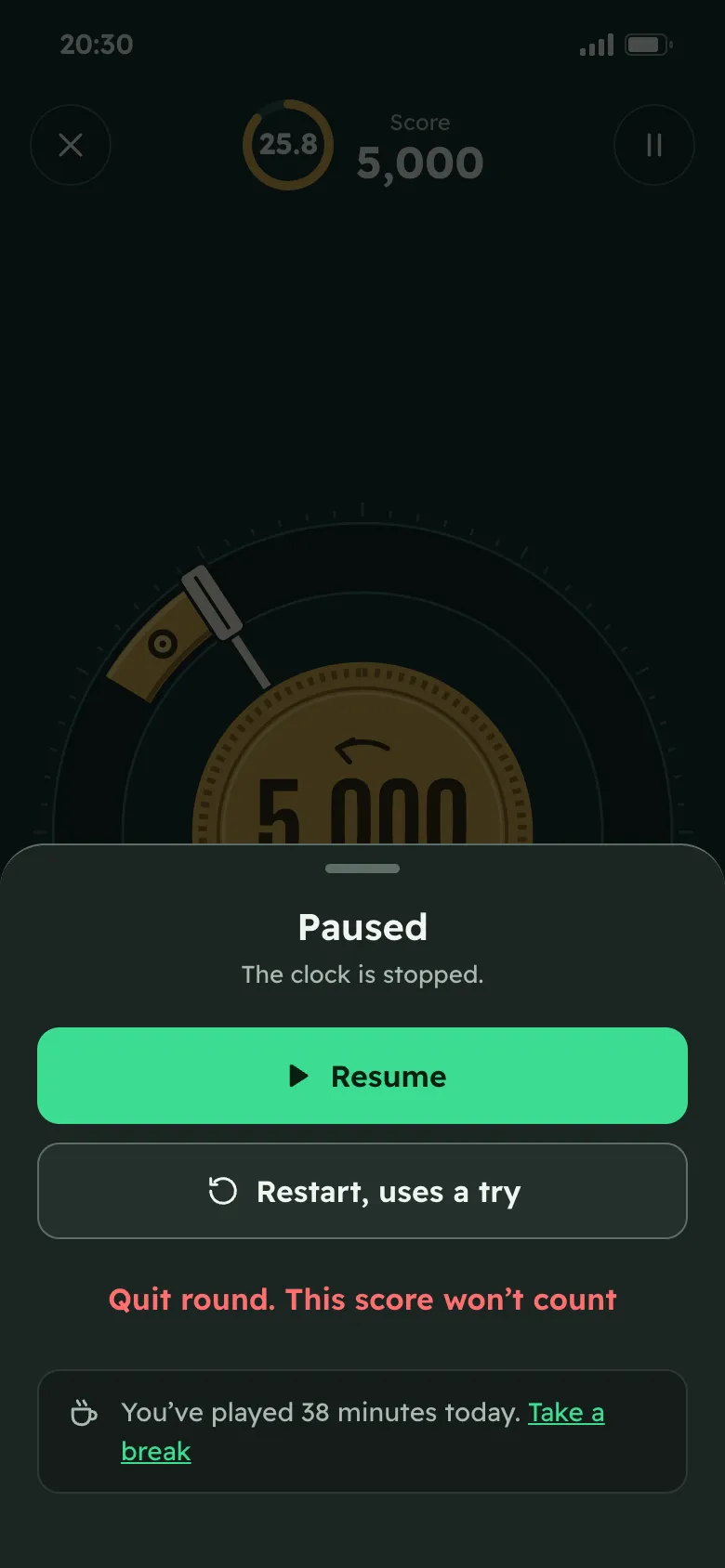
The games came from another team, so the platform’s part is the frame every game runs in. Before a round you see your tries left, the score you need for the top 10 and the rules in three lines. During the round the platform’s own overlay sits on top of the game: a timer ring, the score, pause and quit. After it, the results put your score first, then what it means: a new best, and the place you climbed to.
The game shown here is Mintmark, a small timing game I built for my Lab. It stands in for the real games.
04Tournaments
A prize pool you can read.
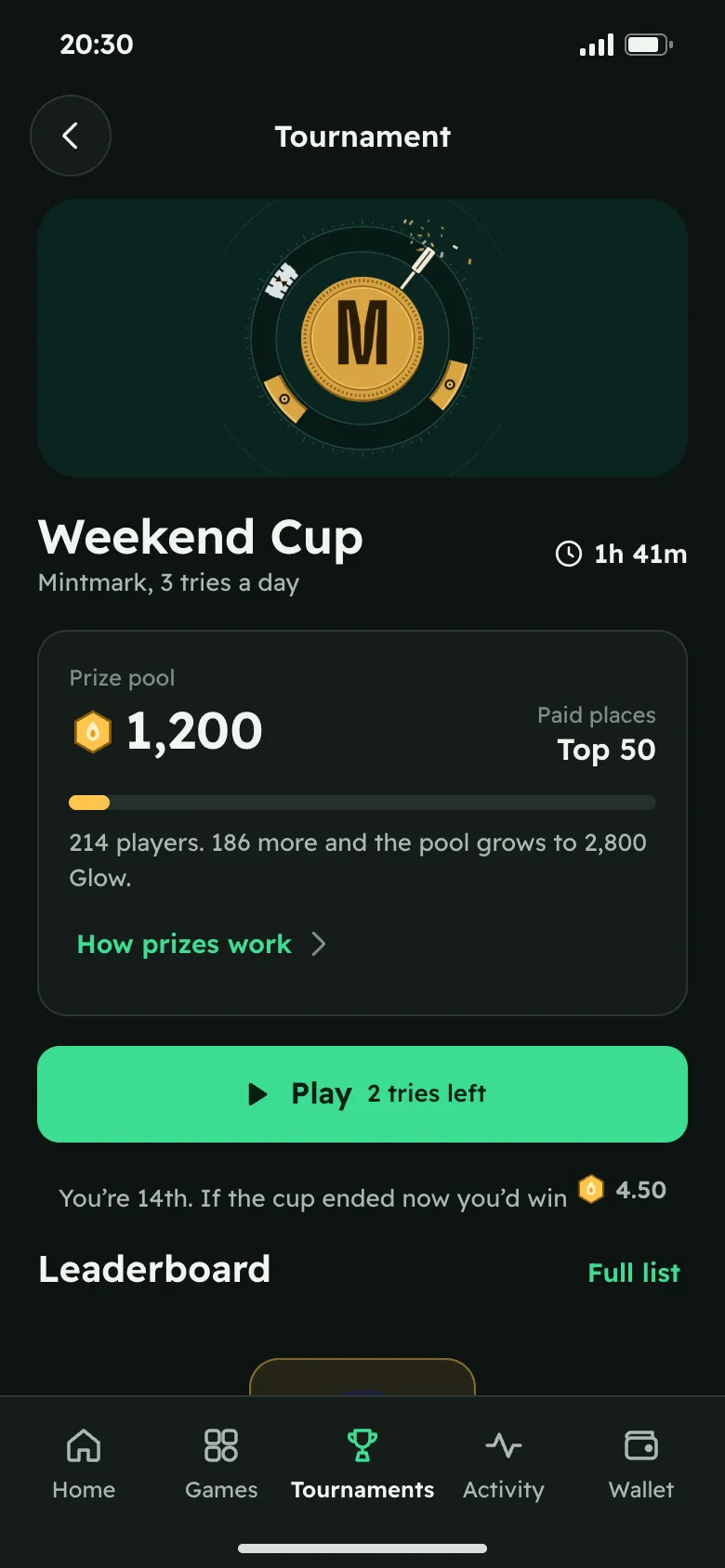
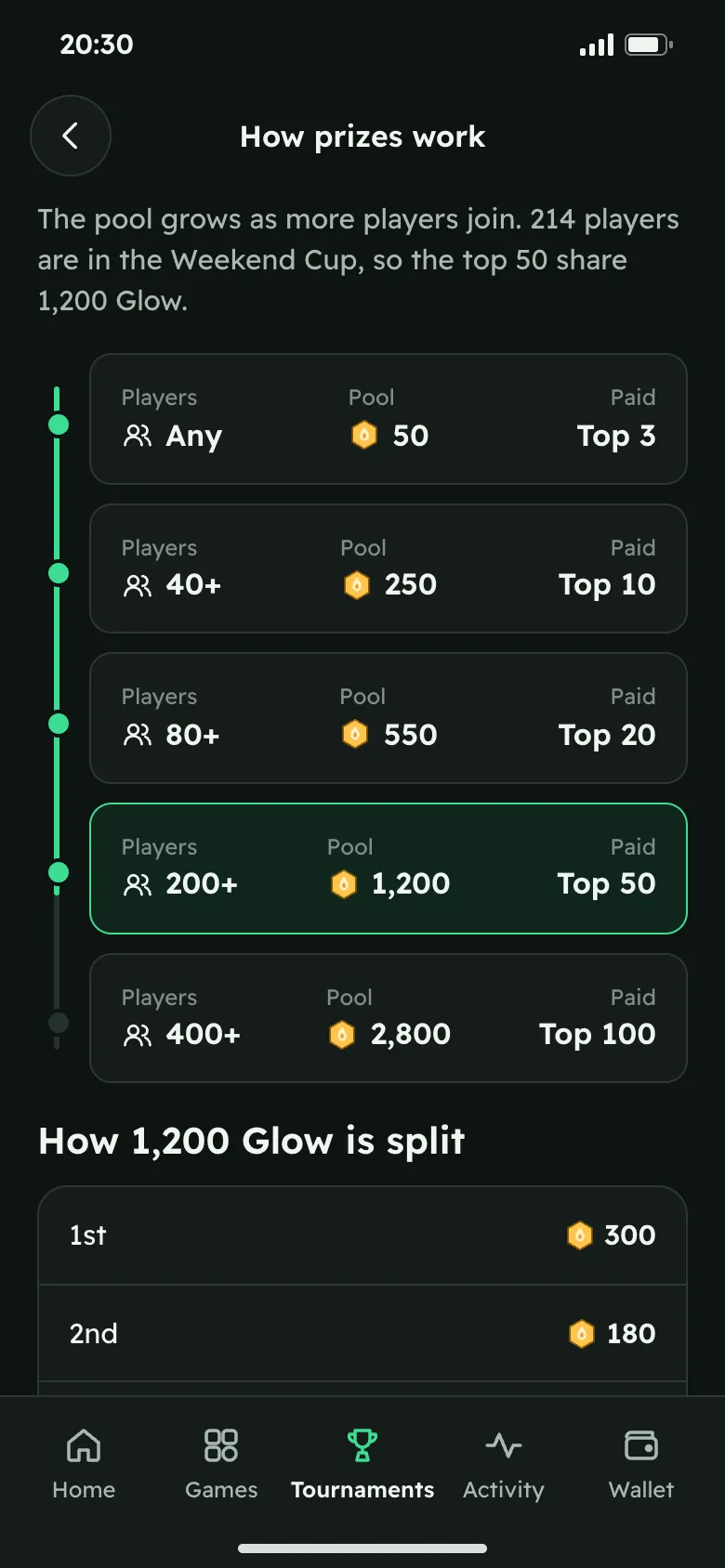
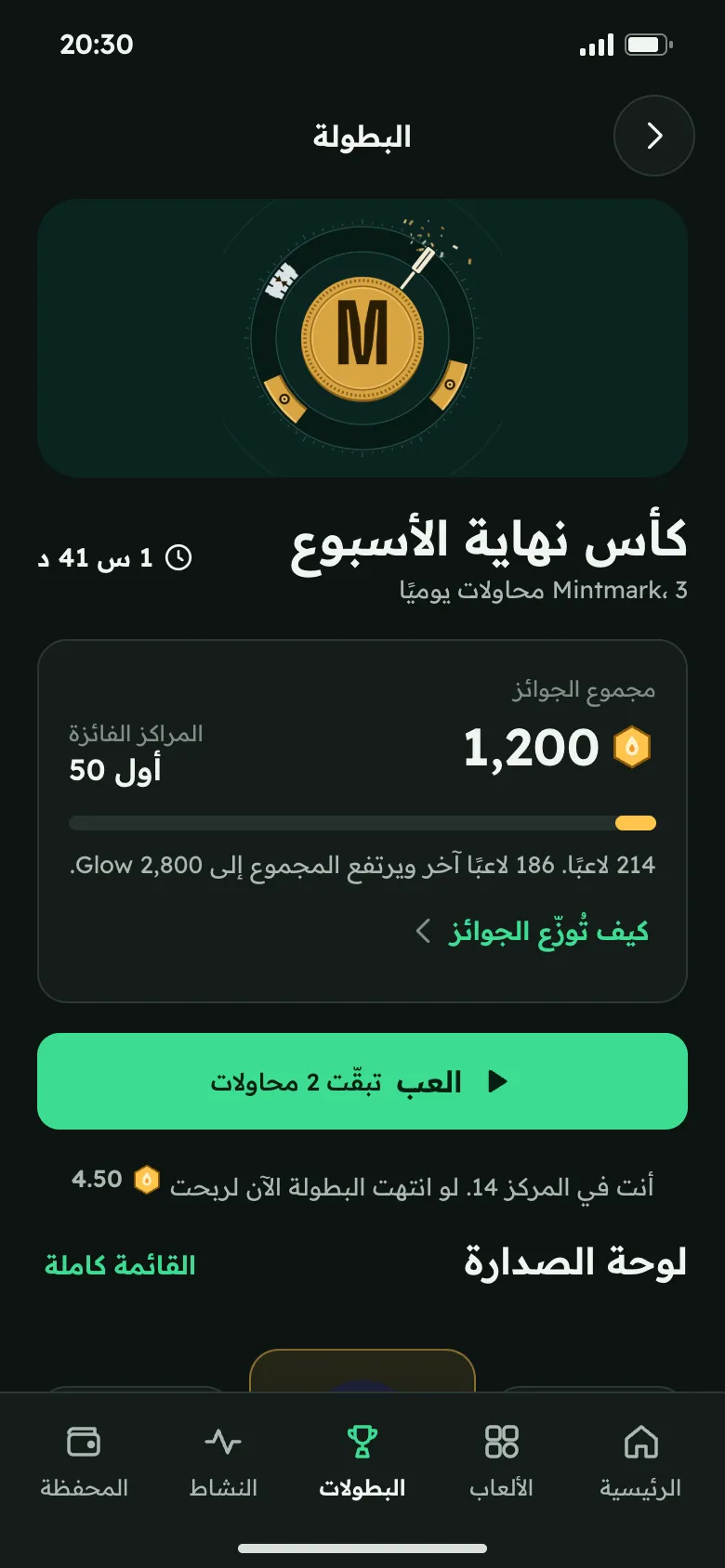
Tournaments are where the token is won, so they need to be clear about money. The Weekend Cup shows the pool, how many places are paid, your place, and what the pool grows to if more people join. “How prizes work” shows every tier and exactly how the pool is split, and the split adds up to the pool.
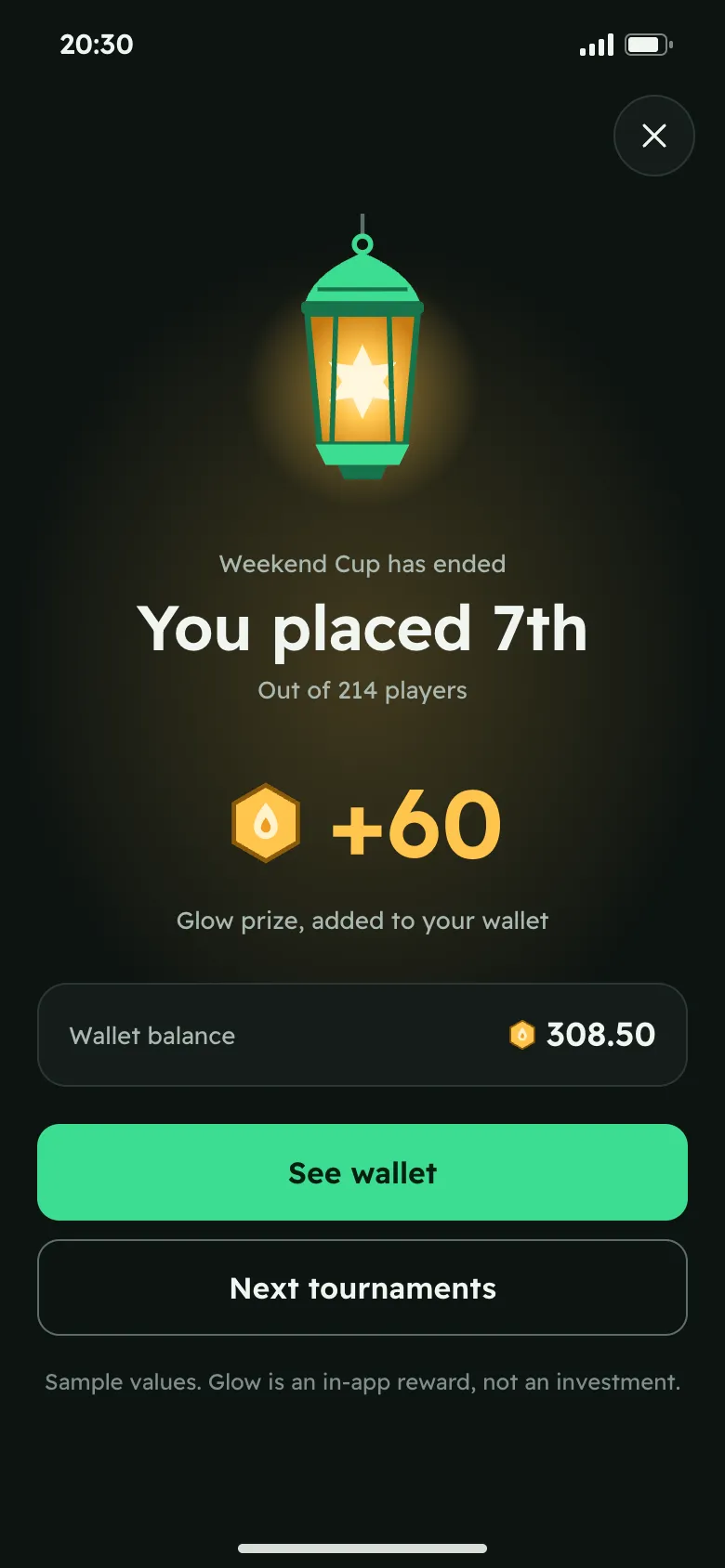
When a cup ends, the result screen tells you where you placed out of how many players, what you won, and what your wallet is now. Every number in the product comes from one set of data, so the same balance shows on every screen.
05Rewards
Rewards, not promises.
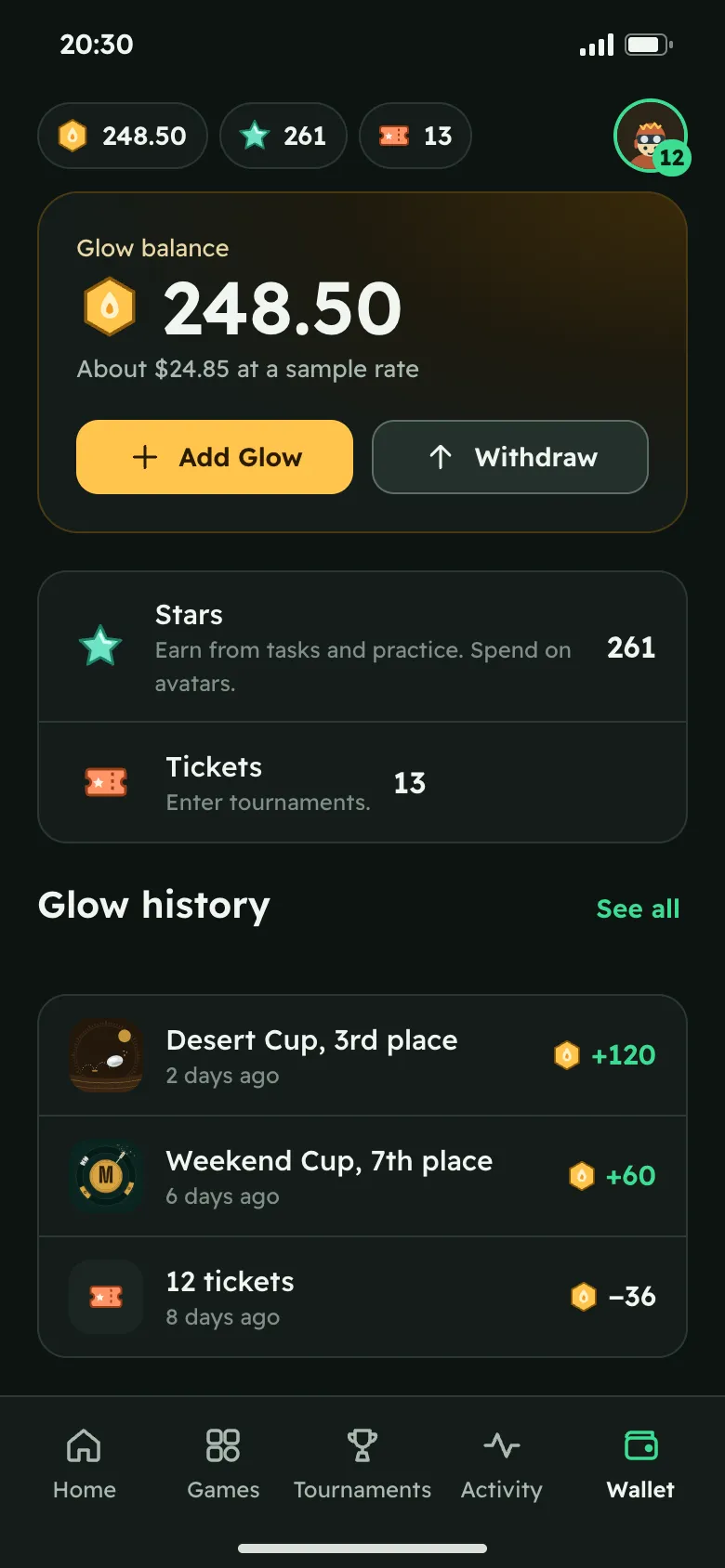
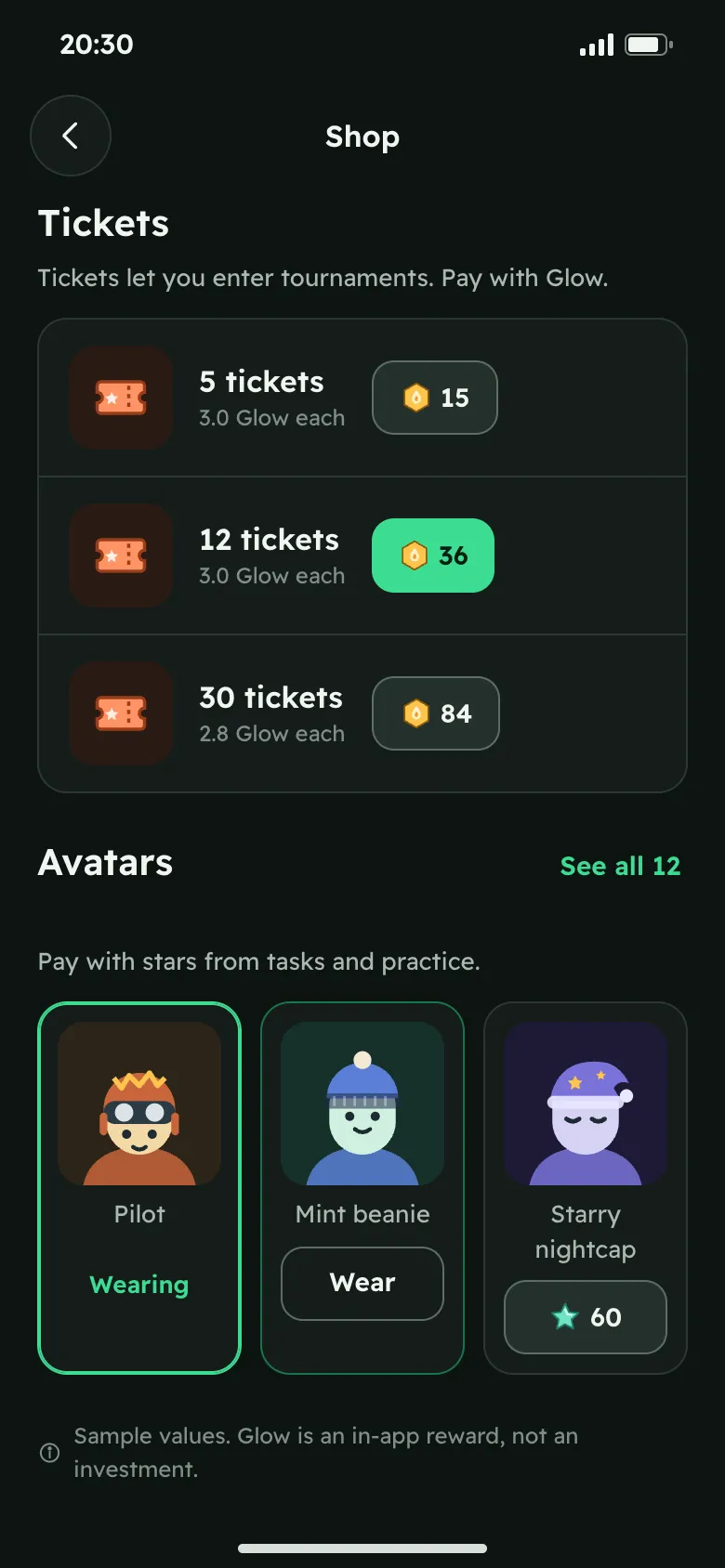
The token is called Glow, after the lantern the product is named for. In crypto it’s easy to make a reward sound like an investment, so the wallet says plainly that Glow is an in-app reward, values are marked as samples, and nothing talks about profit.
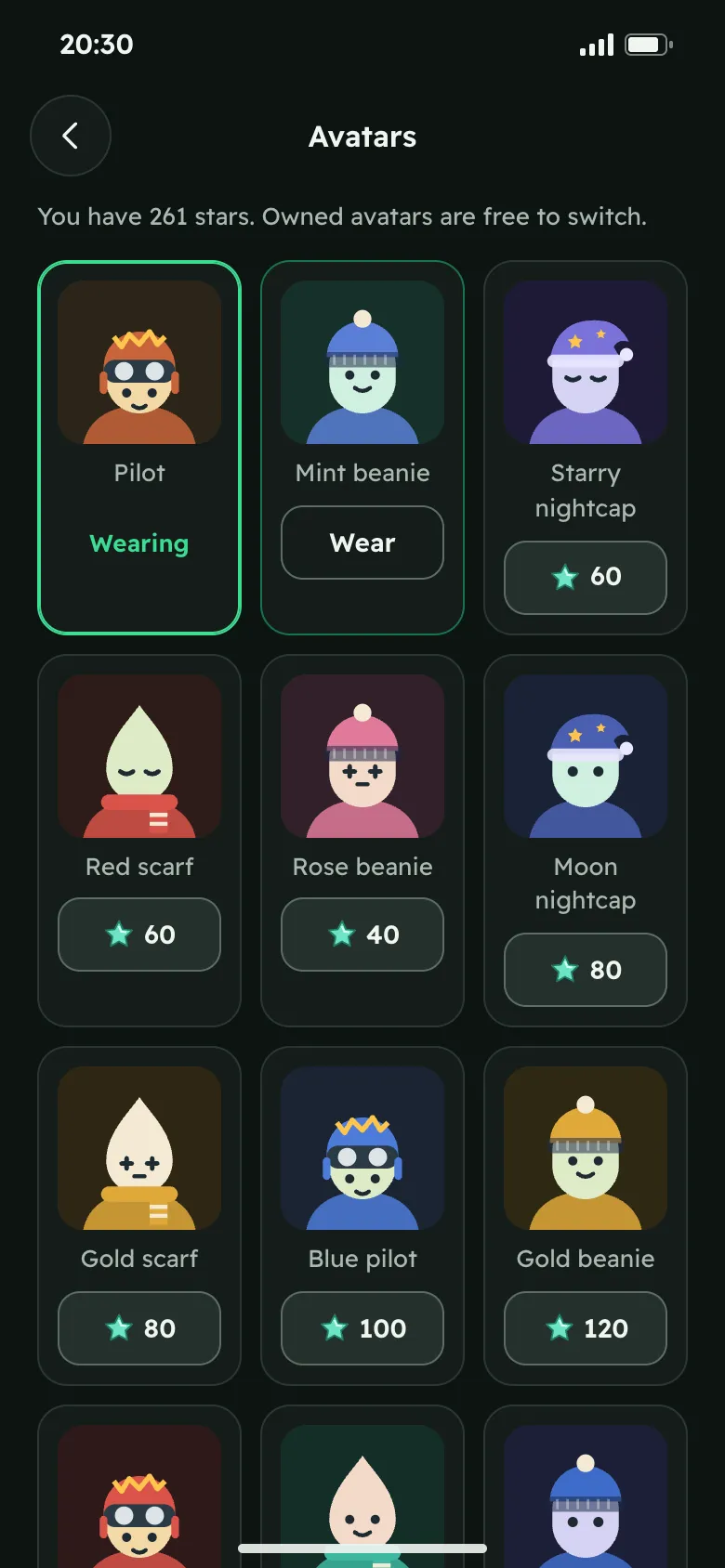
Each currency has its own colour and its own shape, so you never rely on colour alone: Glow is a gold hexagon, stars are a star, tickets are a ticket. Stars buy avatars, Glow buys ticket packs, and tickets enter tournaments.
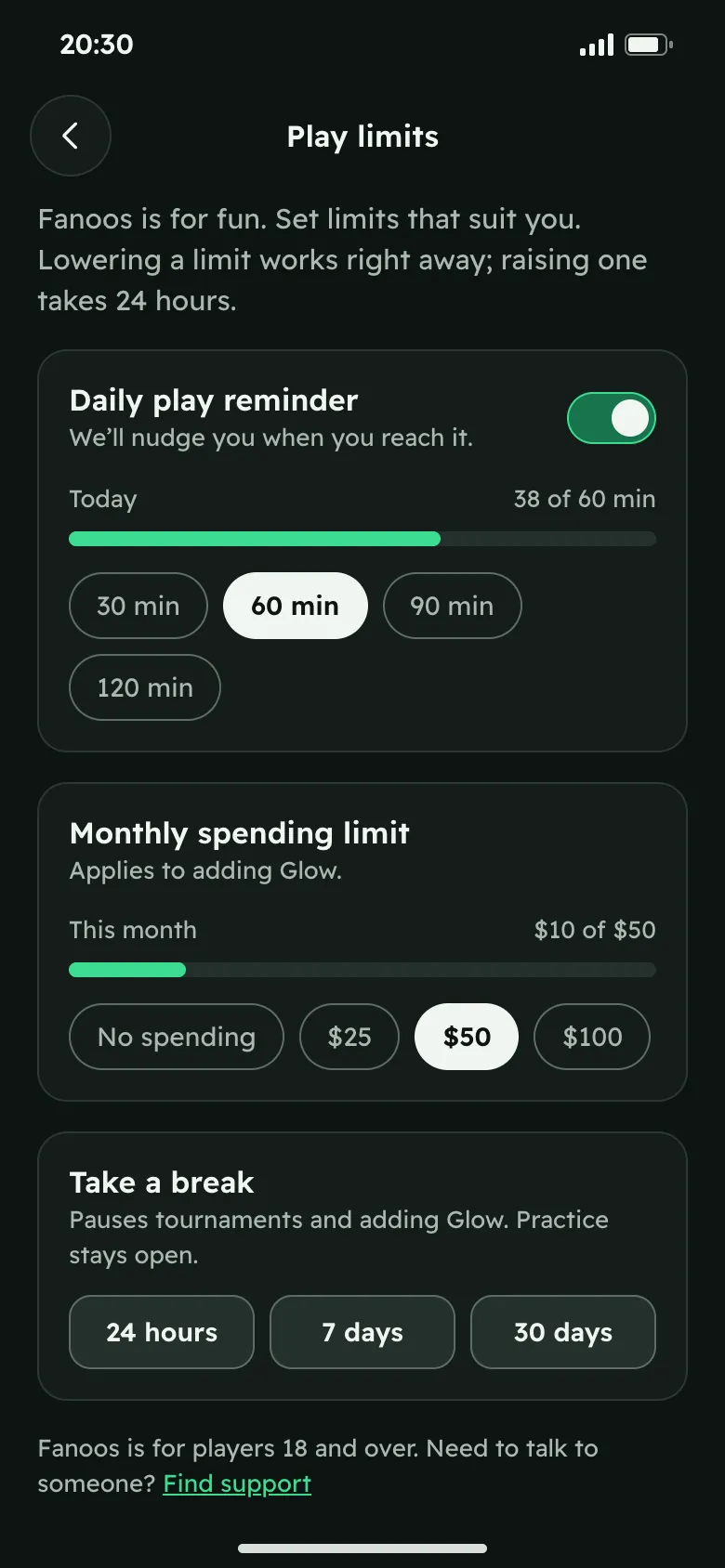
Play limits sit one tap away: a daily play reminder, a monthly spending limit and a break of a day, a week or a month. Lowering a limit works at once; raising one waits 24 hours.
06Arabic
Arabic is not a translation layer.
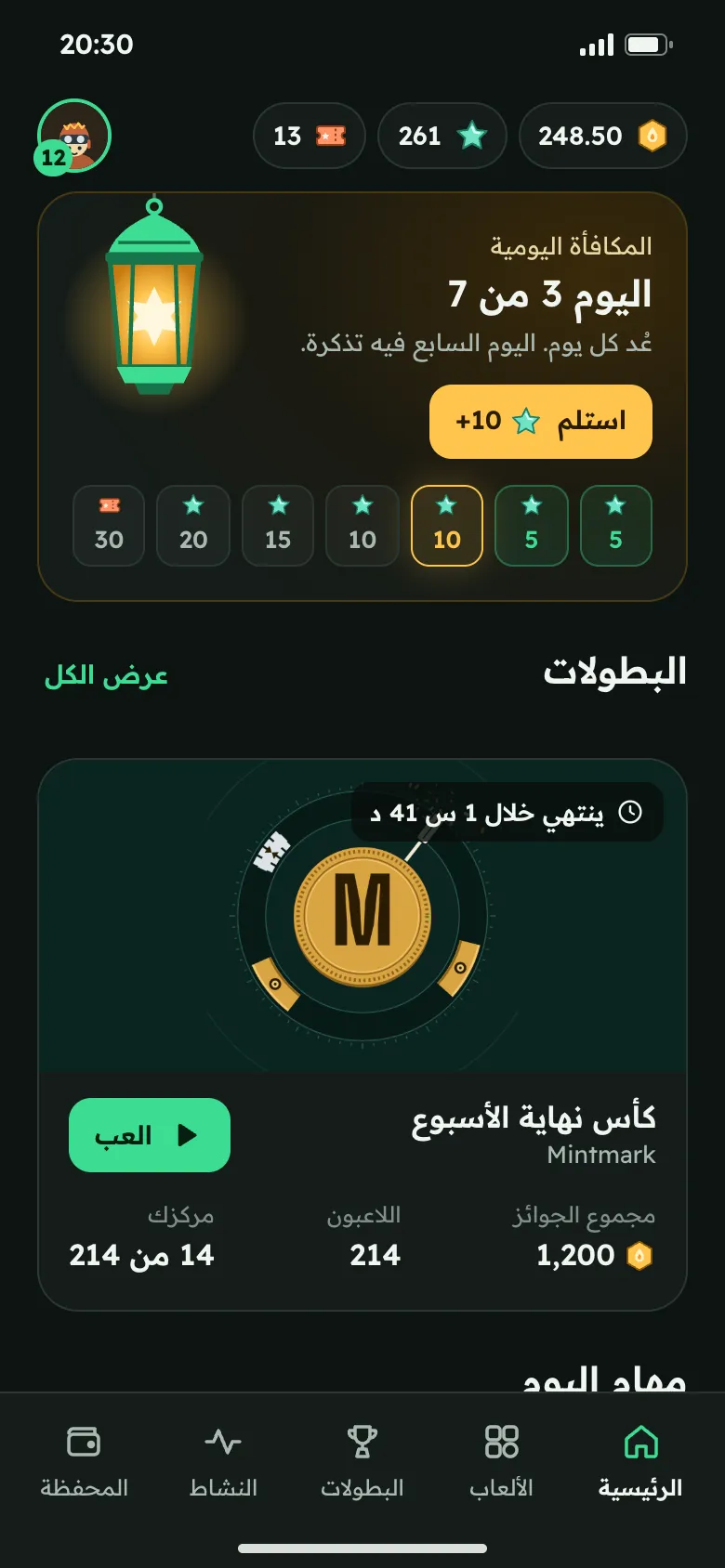
Arabic reads right to left, so the whole layout mirrors: navigation, back arrows, progress bars that fill from the right, and timer rings that run the other way. One typeface family covers both scripts at matched heights, so a mixed line like a player name next to “(أنت)” sits on one baseline. Balances and scores keep Western digits.
07Web app
The same product on a big screen.
On desktop, Fanoos is a web app with sidebar navigation. Time played today and play limits stay in view in the sidebar, balances sit in the top bar, and Home splits into two columns: tournaments and games, with rewards and tasks in a side rail. The tournament page puts the leaderboard beside the pool, and the game frame goes full focus with a live leaderboard next to the game.
08States
What happens when things go wrong.
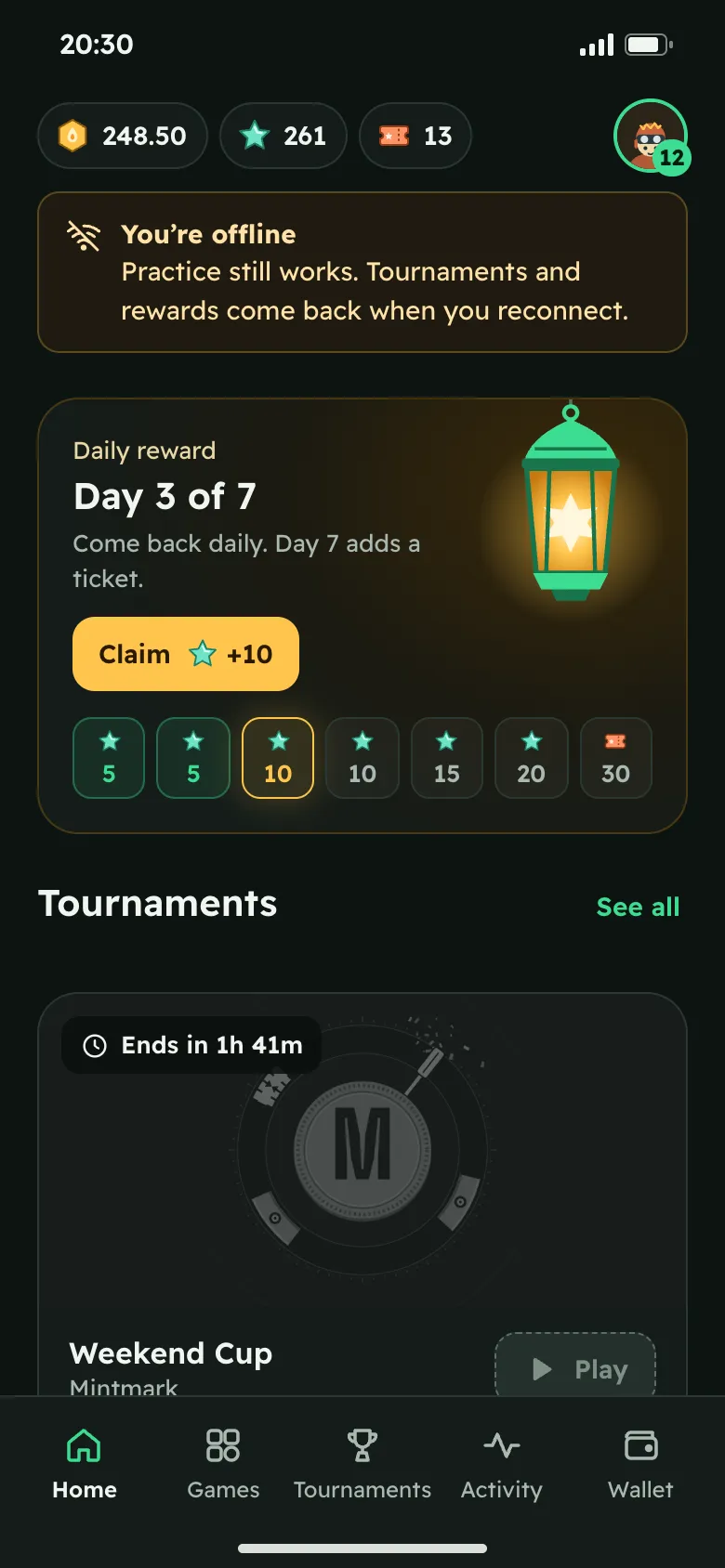
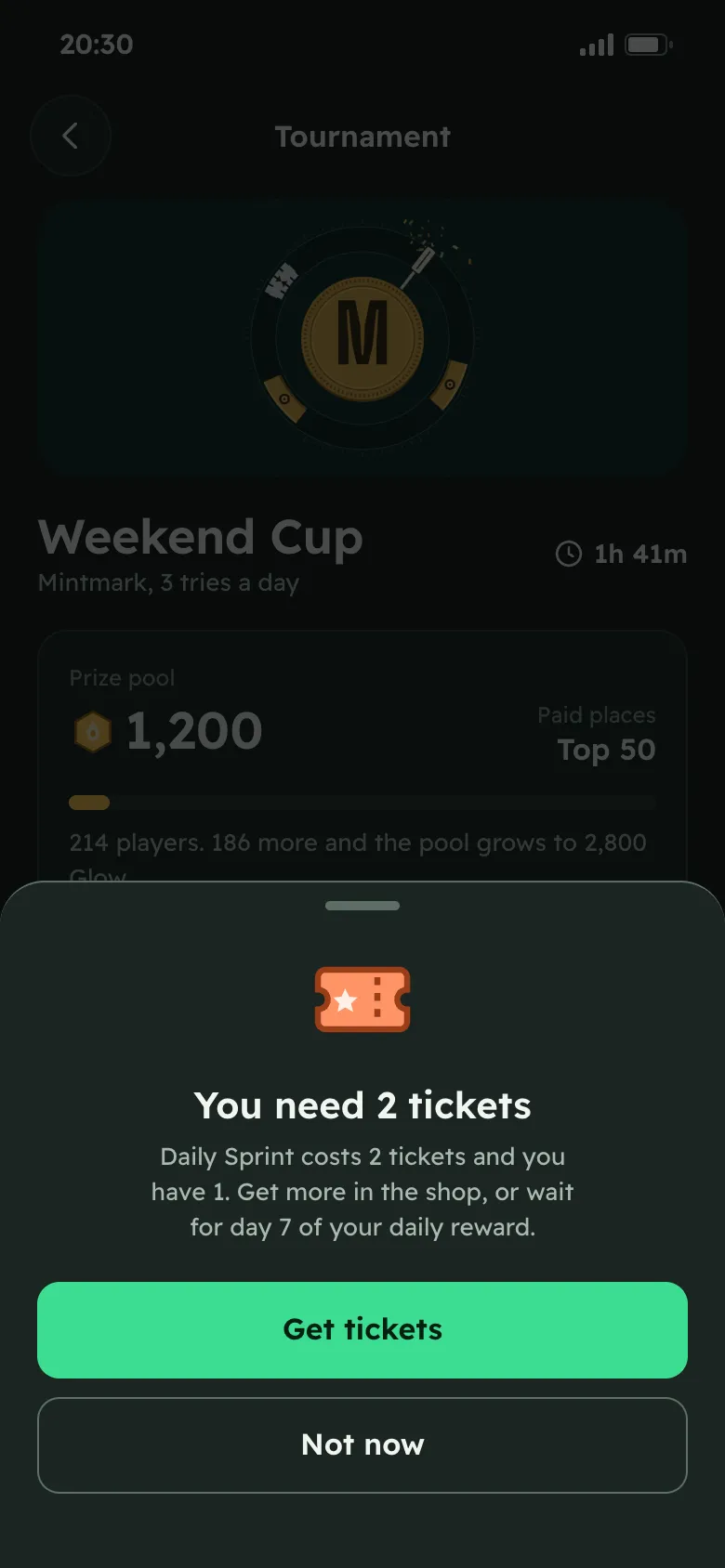
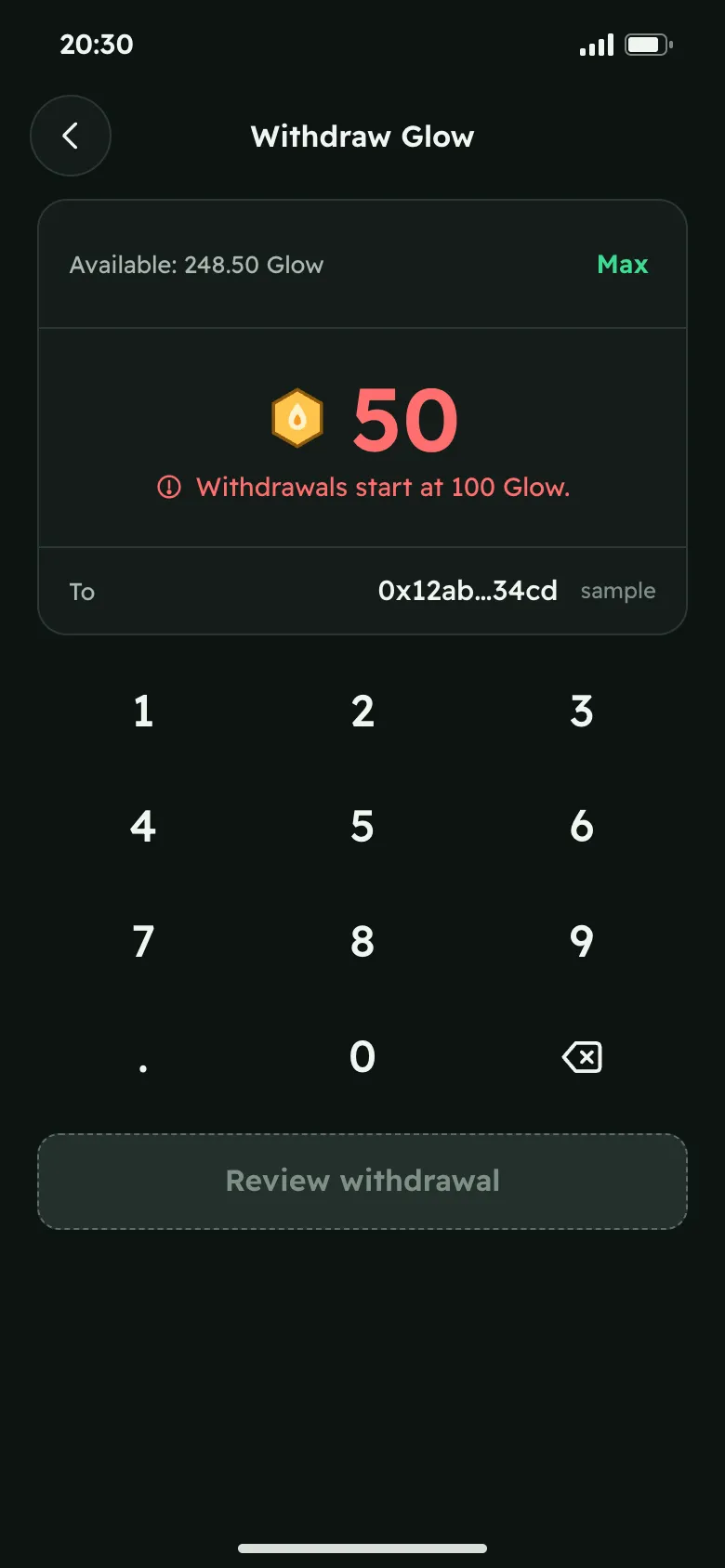
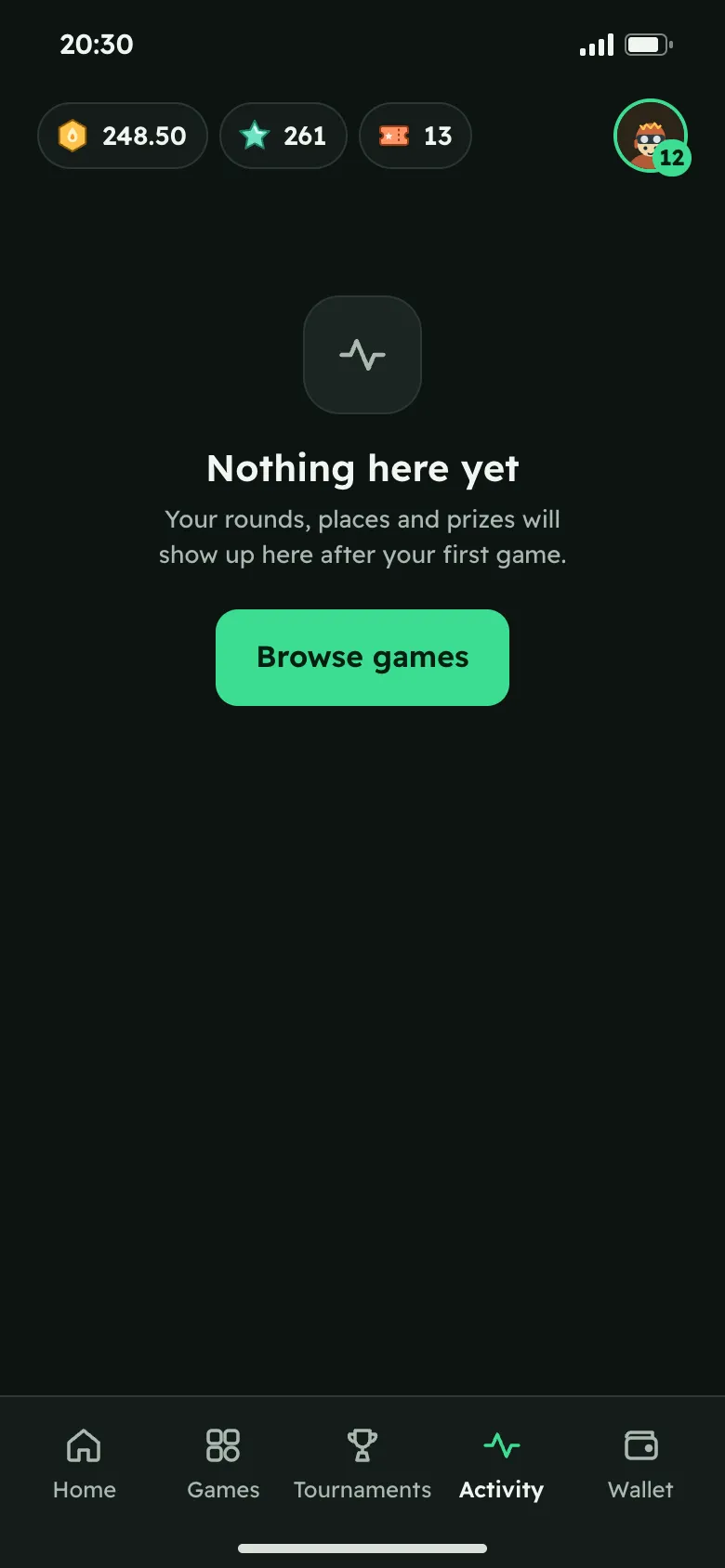
Every flow has its other states designed: offline, where practice still works and tournaments explain why they’re paused; not enough tickets, with the ways to get more; a withdrawal below the minimum, caught before you send it; an empty activity list with a next step; and a pause sheet that says plainly that quitting won’t count the score.
09Motion
Motion only answers an action.
One easing curve and three durations run the whole product. Claiming a reward sends a burst of stars from the button and the balance ticks up. Results count the score up, then the leaderboard rows reorder from your old place to your new one. A tournament win drops the lantern in, then the prize, then the wallet counts up. Screens slide in from the reading edge, which flips in Arabic.
With Reduce Motion on, all of it becomes instant: no bursts, no travel, and numbers jump straight to their final value.
10Outcome
Built, tested, then the market turned.
The platform was built and tested within the three months. Then the crypto bear market arrived, interest in play-to-earn dropped, and it didn’t reach the results the client wanted. There are no numbers to share, so I don’t quote any.
11Reflection
What I took from it.
When a product pays out a token, every screen that mentions money has to earn trust: the label matches the picture, the numbers agree everywhere, and a reward never pretends to be an investment. The games bring people in. Clear rules and honest numbers are what would make them stay.